


 Français
 Deutsch
 Italiano
ACCOMMODATIONS ATALPE CIMBRA
Discover the best Hotels, BBs and Apartments in the Mountains based on thousands of verified reviews.
AltitudeFolgaria 1,169 m · Lavarone 1,174 m · Luserna 1,333 m
WhereTrentino (Italy), on the Veneto border
From TrentoFolgaria approx. 30 km · Rovereto 18 km
Slopesover 100 km · Folgaria–Fiorentini 29 lifts
Day pass€53–60 online (2026/27)
Ski seasonusually December to April
Updated October 2026 · Sources: Alpe Cimbra tourist board, Skiarea Alpe Cimbra, Visit Trentino, Forte Belvedere, Province of Trento, Wikipedia
Find a place to stay on the Alpe Cimbra
Alpe Cimbra is a high plateau in southern Trentino, in the province of Trento, between the Adige valley and the Valsugana, on the border with the Veneto. It covers Folgaria (1,169 m), Lavarone (1,174 m) and Luserna (1,333 m); the tourist board also includes the Vigolana plateau. The name comes from the Cimbrians, a German-speaking community that settled on these plateaus in the Middle Ages. In Luserna, Cimbrian is still spoken today.
The cities are close. Folgaria is 18 km from Rovereto station and 30 km from Trento; Lavarone is 30 km from Rovereto and 35 km from Trento. On the Brenner motorway (A22), exit at Rovereto Nord or Trento Sud. The nearest airport is Verona, about 90 km away. Across the regional border lies the Asiago plateau.
In winter you get over 100 km of slopes between Folgaria, Fiorentini and Lavarone, two cross-country centres (Millegrobbe and Passo Coe) and lift passes that cost far less than in the big Dolomites resorts. In summer you walk across pastures and fir forests, swim in Lake Lavarone and visit the Austro-Hungarian forts of the First World War: the front line ran right here. It is gentle mountain country without big climbs, and it works well for families.
What to see in Alpe Cimbra
Distances are short: from Folgaria to Lavarone and on to Luserna is only a few kilometres of plateau road.
Lake Lavarone
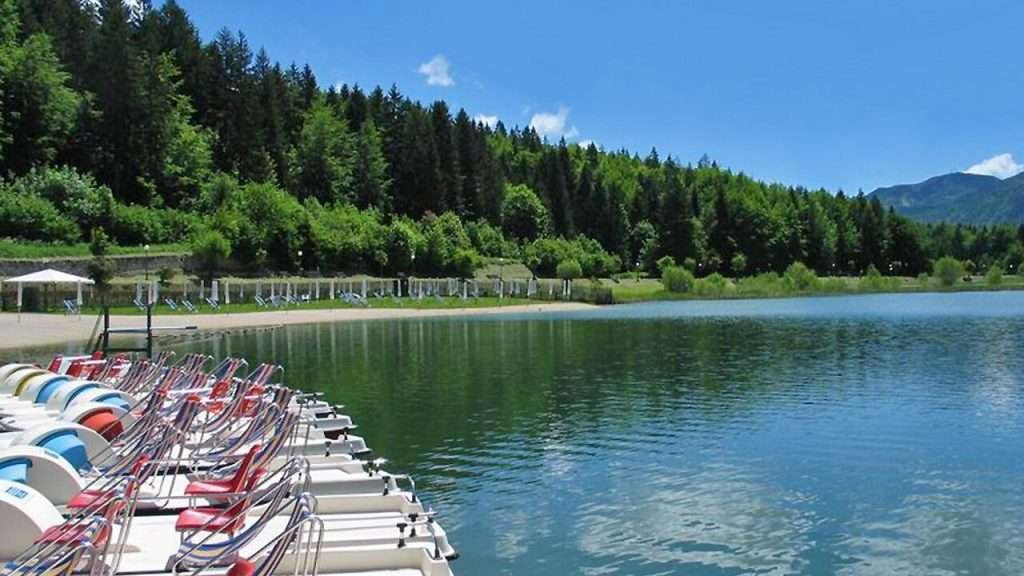
The lake is the symbol of the plateau. It sits at about 1,080 m, is small (around 64,000 m²) and up to 17 m deep. It is a karst lake, filling a hollow left by subsiding ground. In summer you can swim, and there are sun loungers, canoes and pedal boats for hire. An easy path loops around the shore through the woods.
Sigmund Freud spent his holidays here in 1906, 1907 and 1923, after a first short stay in 1900. In 1906 and 1907 he stayed with his family at a hotel on the lakeshore. Freud’s Path (Sentiero di Freud) links the village to the lake.
Forte Belvedere Gschwent
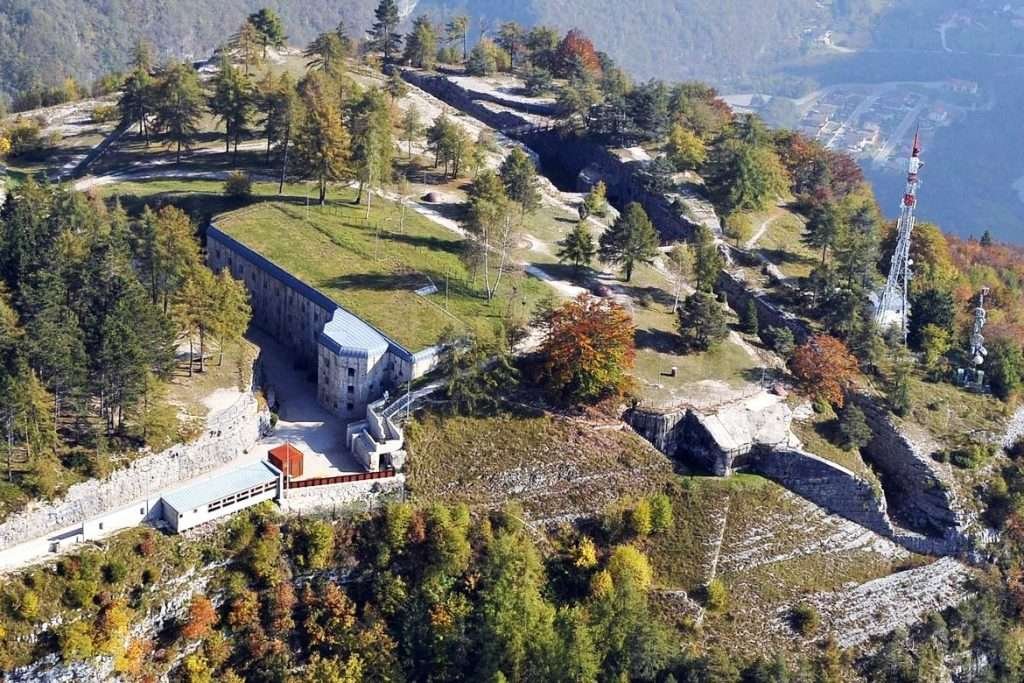
Lavarone’s Austro-Hungarian fort, completed in 1912, stands at 1,177 m on a rocky spur above the Val d’Astico, near the hamlet of Oseli. Its German name is Werk Gschwent. Together with the other forts of the plateaus, it guarded the valley leading down into the Veneto. The municipality bought it in 1996 and restored it between 2000 and 2002. Today it is a First World War museum, with tunnels, gun positions, finds, period photos and multimedia displays.
You can only get there on foot: park in one of the roughly 10 spaces at the start of the access road, then walk for about 10 minutes. In 2026 tickets cost €8 (reduced €6, family €18), or €10 with a guided tour. It opens daily in July and August; the rest of the year mostly at weekends and on public holidays, and it closes in March. Check the calendar at Forte Belvedere.
Luserna, the Cimbrian village
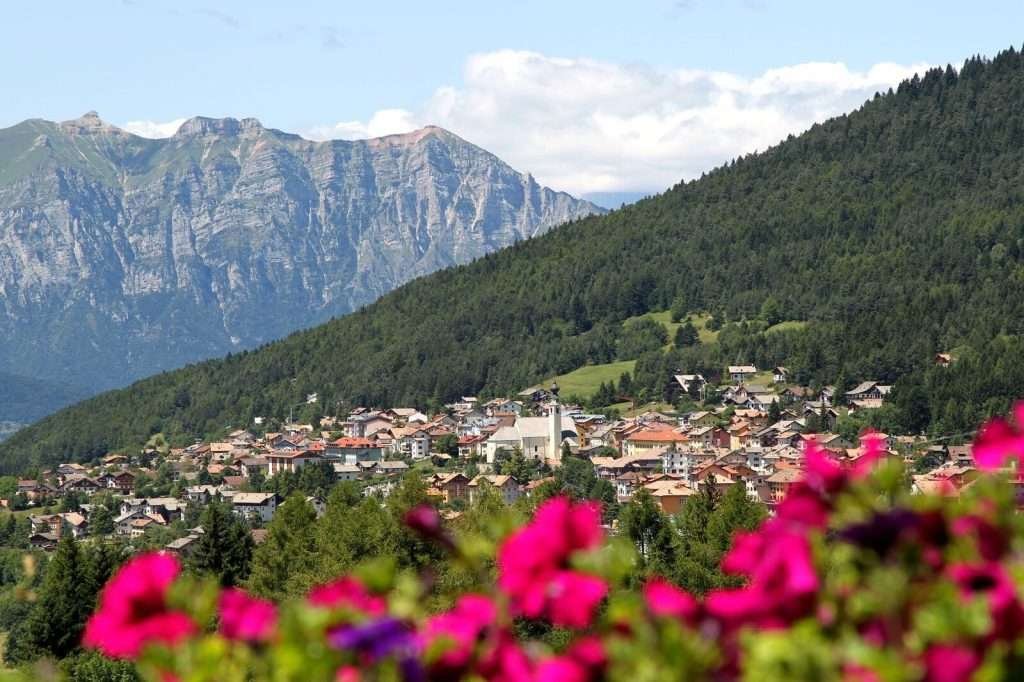
Luserna (Lusérn in Cimbrian) sits at 1,333 m on a terrace above the Val d’Astico and has about 260 residents. In the 2021 census, almost 69% of residents said they speak Cimbrian, an old Germanic language. This is the last community where it is still used every day.
In the village, the Museo Lusérn (documentation centre) covers Cimbrian culture and the Great War, and the Haus von Prükk house museum shows a traditional Cimbrian home. Opening hours change every year, so check lusern.it.
Forte Werk Lusérn on Campo Luserna
Above the village, on the summit of Campo Luserna at 1,549 m, stands Fort Lusérn (Werk Lusern), built by Austria-Hungary between 1908 and 1912. It was one of the most modern forts on the Alpine front. In 2026 it opened daily from 15 June to 31 August and on September weekends, 10am–4pm with a midday break, and it closed in bad weather. On Fridays in July and August 2026, a guided tour opened the tunnels that are normally off-limits; booking was through the Museo Lusérn.
The Vaia Dragon at Magrè
In the woods above Magrè, a hamlet of Lavarone, stands the Drago Vaia, a wooden sculpture by Marco Martalar. The first dragon was built from trees felled by the 2018 Vaia storm and was destroyed by arson in 2023. The artist rebuilt it from charred wood, and the new “Drago Vaia Regeneration” has been open since June 2024. It is about 16 m long and 7 m high.
The shortest route starts at the Cost car park, about 1 km from Magrè towards Luserna. It is an easy walk of about 30 minutes, though not suitable for pushchairs. You can also start from Bertoldi (about 45 minutes, less if you take the chairlift) or from Parco Palù in Cappella; follow the “Sentiero del Drago” signs.
Passo Vezzena, Forte Verle and Cima Vezzena
Passo Vezzena (1,428 m, in the municipality of Levico Terme) is an upland of pastures between Lavarone and Asiago, on the border with the Veneto, and home of Vezzena cheese. On the flat of the pass stand the ruins of Forte Verle, which was shelled by Italian artillery. Higher up, on Cima Vezzena (Pizzo di Levico, 1,908 m), stands Forte Vezzena, an Austro-Hungarian lookout post built between 1910 and 1914 on a sheer drop above the Valsugana and the lakes of Levico and Caldonazzo. The hike is covered in the summer section.
Base Tuono at Passo Coe
At Passo Coe, above Folgaria, Base Tuono is a former NATO missile base from the 1960s. It closed in the 1980s, and the Province turned it into an open-air Cold War museum with Nike Hercules missiles, radars and launch pads. Guided tours must be booked, and opening hours are seasonal.
Folgaria and the plateau forts
Folgaria is the largest village on the plateau, at 1,169 m. Austria-Hungary built three forts here: Dosso delle Somme, Sommo Alto and San Sebastiano. They were part of a fortified belt about 28 km long that ran across the plateaus to Luserna and Vezzena. Many military tracks are now footpaths, and the Marcia dei forti route passes Sommo Alto.
The villages of Alpe Cimbra

Alpe Cimbra is not a single resort. It is three municipalities spread over many hamlets, a few minutes from each other. Choose by what you plan to do.
Folgaria
Folgaria (Folgràit in Cimbrian) has about 3,200 residents and the most services: shops, restaurants, the Palafolgaria ice rink and the tourist office. The nearest lifts start at Fondo Grande and Fondo Piccolo. It suits skiers who want some life in the evening and anyone arriving by bus from Rovereto or Trento.
Costa, Serrada and Folgaria’s hamlets
The municipality of Folgaria has 37 hamlets. Costa and Serrada are the best known after the main village; Serrada sits on the road that climbs from Rovereto through the Terragnolo valley. Carbonare is on the road to Lavarone and the Vigolana. Guardia, Mezzomonte, Nosellari and San Sebastiano are small, quiet hamlets, good if you have a car and want lower prices.
Lavarone
Lavarone (Lavrou in Cimbrian) has no single centre. It is a scatter of hamlets across the meadows, with about 1,200 residents in total. The town hall is in Gionghi; Chiesa and Cappella are close to the lake; Bertoldi is the base for Lavarone’s slopes, Oseli for Forte Belvedere and Magrè for the Vaia Dragon. It is the right choice for families, summers by the lake and cross-country skiing at Millegrobbe.
Luserna
Luserna is the smallest and highest municipality, at 1,333 m on the eastern edge of the plateau. Expect few places to stay, a lot of quiet, Cimbrian culture and the fort above the village. It suits walkers looking for peace; for downhill skiing you need to drive to Lavarone or Folgaria.
Skiing in Alpe Cimbra
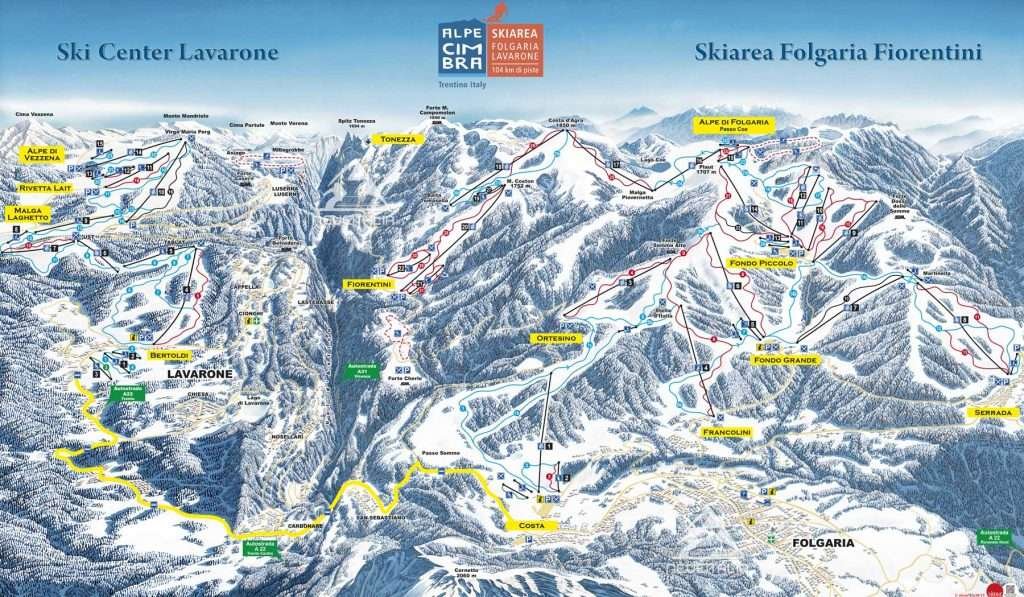
According to the tourist board and Visit Trentino, the Skiarea Alpe Cimbra has over 100 km of slopes, in two sectors covered by one pass:
- Folgaria–Fiorentini: the main sector, with about 74 km of runs (37 blue, 33 red, 4 black) and 29 lifts: 17 chairlifts, 1 gondola, 2 drag lifts and 9 magic carpets. Access points are around Folgaria, including Fondo Grande, Fondo Piccolo, Francolini and Passo Coe. The Francolini–Sommo Alto gondola is the new main lift. There is a snowpark with a boardercross course.
- Lavarone: a smaller area starting from Bertoldi, suited to beginners and families. There is also a beginners’ area at Vezzena (Basson).
Most runs are blue and red, wide and through the woods. They are ideal for families, beginners and intermediates, but experts will find few blacks. The pass is part of the Skirama Dolomiti Adamello Brenta network, and Andalo-Paganella multi-day passes include one day at Folgaria (see Andalo). There are ski schools, and ski buses run between the villages and the lifts.
Lift passes 2026/27
The official 2026/27 price list for the Skiarea Folgaria–Fiorentini–Lavarone has two adult day-pass rates:
- Weekday (Monday–Friday): €53 online, €57 at the ticket office.
- Weekend and public holiday: €60 online, €63 at the ticket office. From 19 December 2026 to 6 January 2027 and from 7 to 13 February 2027, only this rate applies, even on weekdays.
- 4 hours: €50 online, €54 at the ticket office.
Buying online saves €3–4 a day. There are junior rates (born 2009–2018) and child rates (born 2019–2025). With the Child Free offer, a child skis free for the same number of days when a relative buys a 1–14 day pass at list price. Ask when you buy, and bring the child’s ID. The Ski Center Lavarone has its own, cheaper price list. Prices and conditions are on the Skiarea Alpe Cimbra site.
Opening dates for 2026/27 are not yet official. The season usually runs from early December to April, backed by snowmaking.
Cross-country: Millegrobbe and Passo Coe
The broad, rolling plateau is made for cross-country skiing. The Millegrobbe centre in Lavarone has about 35 km of tracks, and a 21 km trail links it to the Campolongo centre on the Asiago plateau. The second centre is at Passo Coe above Folgaria, with loops across the pastures. Both Passo Coe and Millegrobbe have motorhome areas.
Winter without skis
Go snowshoeing at Passo Vezzena and up towards Cima Vezzena, sledging, or ice skating at the Palafolgaria. You can also walk to the Vaia Dragon with sturdy boots and poles or microspikes.
Summer in Alpe Cimbra
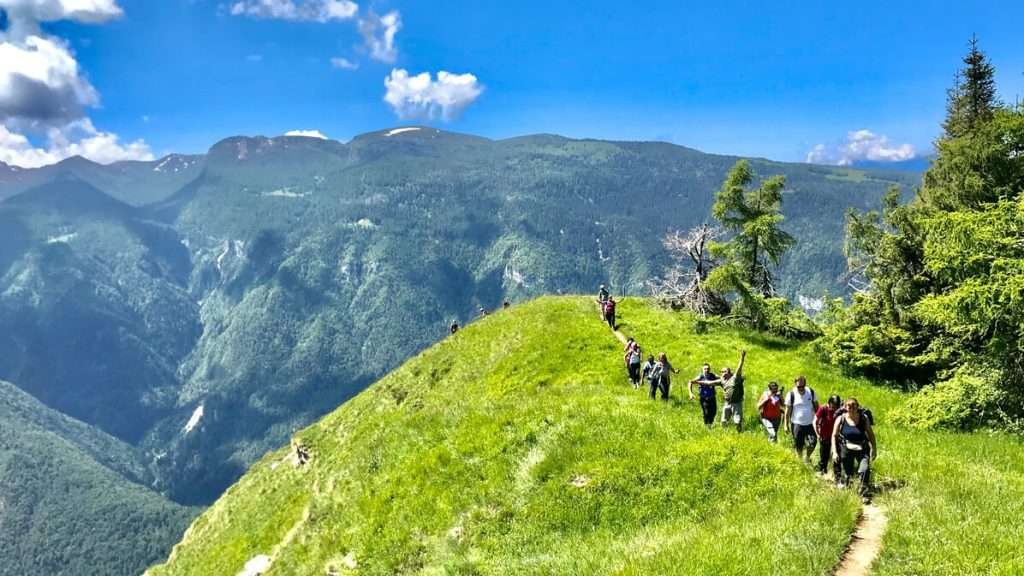
In summer the plateau is cool and green, with easy trails across pastures and through woods. It is good for walking with children and for cycling, with waymarked mountain bike and gravel routes.
Cima Vezzena from Passo Vezzena
This is the plateau’s best-known hike. Start at Passo Vezzena (1,428 m) and climb to Forte Vezzena on Pizzo di Levico (1,908 m), about 500 m of ascent. There are two ways up: the old military road past Forte Verle, which is longer and steady, or trail 205, which is steeper and more direct. Allow half a day for the round trip. From the top you look down on the Valsugana and the lakes of Levico and Caldonazzo. In winter it is done on snowshoes.
On the First World War trails
The forts of Folgaria, Lavarone and Luserna formed a fortified belt about 28 km long. The “100 km dei Forti” route links the forts of the plateaus, and its Lavarone section is about 23.6 km. Forte Belvedere, Fort Lusérn and Forte Vezzena combine well in one trip.
Easy walks and family outings
- Lake Lavarone loop: short, through the woods, with a chance to swim.
- Freud’s Path: from the village to the lake.
- Dragon Path: from the Cost car park to the Drago Vaia in about 30 minutes.
- Forte Belvedere: 10 minutes from the car park, with the museum at the end.
What to eat in Alpe Cimbra
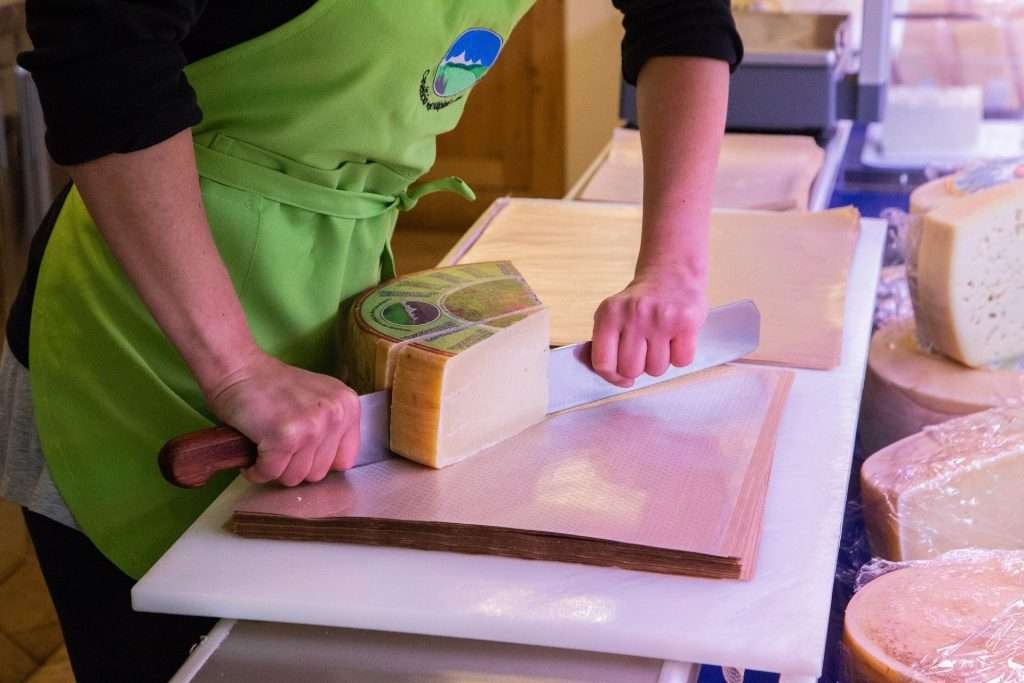
The signature product is Vezzena cheese, a hard cheese tied to the Lavarone, Folgaria and Luserna plateaus. Some Vezzena is made in dairies, and some is made in summer on the high pastures (Vezzena di malga).
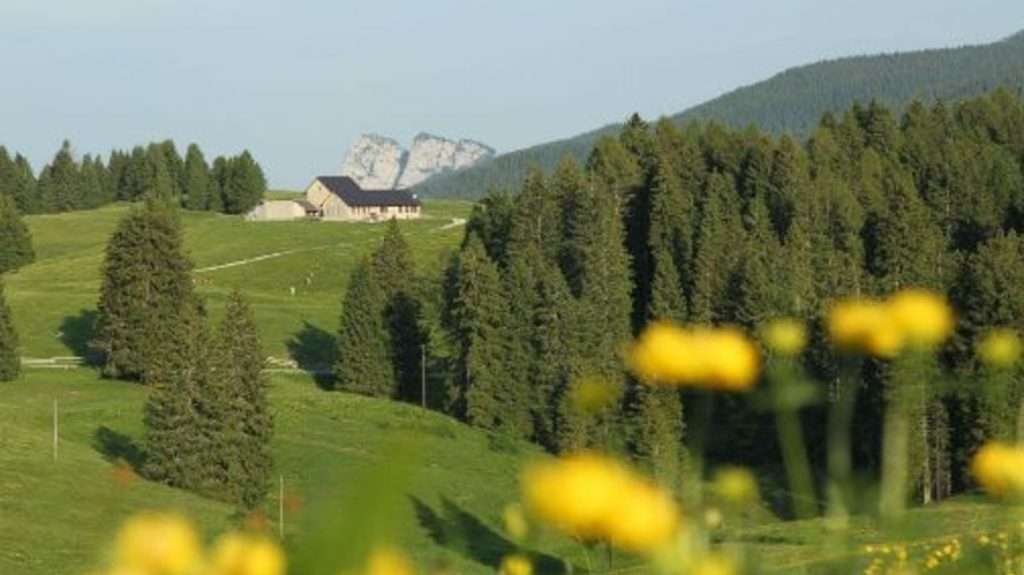
In summer many malghe (mountain dairy farms) sell cheese, butter and ricotta and serve simple dishes. The food is Trentino cooking: canederli (bread dumplings), polenta, tosèla (pan-fried fresh cheese) and tortel di patate (potato pancake). Malga opening times change every season, so ask at the tourist office.
Day trips from Alpe Cimbra
- Rovereto (18 km from Folgaria): the MART, the Bell of the Fallen (Campana dei Caduti) and the old town.
- Trento (30 km from Folgaria): Piazza Duomo, Buonconsiglio Castle and the MUSE.
- Asiago plateau: beyond Passo Vezzena, with cross-country trails linked to Millegrobbe. See Asiago.
- Lakes Levico and Caldonazzo: in the Valsugana below Cima Vezzena, for a beach day.
- Lake Tenno and Lake Garda: to the west, beyond the Adige valley. See Lake Tenno.
- Andalo and the Paganella: the same Skirama network for skiing. See Andalo.
- Brenta Dolomites and Val di Fiemme: for higher mountains. See Brenta Dolomites and Val di Fiemme.
Where to stay in Alpe Cimbra
Pick the area to match your plans.
- Folgaria centre: the most shops and restaurants, with buses from Rovereto and Trento. Good without a car.
- Costa, Fondo Grande and Francolini: close to the lifts.
- Serrada: quieter and easy to reach from Rovereto, including by bus.
- Lavarone (Chiesa, Cappella, Bertoldi, Gionghi): families, summer by the lake, cross-country at Millegrobbe, easy slopes.
- Luserna: peace and Cimbrian culture, for walkers with a car.
- Smaller hamlets and Vigolana: budget stays and apartments; you will need a car.
Most places to stay are family-run hotels, apartments, B&B-style garni, farm stays (agritur) and motorhome areas. Book early for Christmas, New Year, Carnival and August.
How to get to Alpe Cimbra
By car
Take the A22 Brenner motorway and exit at Rovereto Nord for Folgaria (via Calliano) or Trento Sud for Lavarone and the Vigolana. From the Veneto, take the A31 Valdastico to Piovene Rocchette and drive up to Lavarone, Luserna or Folgaria. In Trentino, winter tyres or snow chains on board are compulsory from 15 November to 15 April. If you rent a car at Verona airport, the drive is about 90 km.
By train
There is no railway on the plateau. The nearest stations are on the Brenner line: Rovereto (18 km from Folgaria, 30 km from Lavarone) and Trento (30 km from Folgaria, 35 km from Lavarone). From there, continue by bus or taxi.
By bus
Trentino Trasporti serves the plateau with four regional routes: Rovereto–Calliano–Folgaria–Lavarone, Trento–Calliano–Folgaria–Lavarone, Rovereto–Terragnolo–Serrada–Folgaria and Trento–Vattaro–Carbonare–Lavarone–Luserna. Timetables are on Trentino Trasporti. In winter, ski buses link the villages and the lifts.
By plane
The nearest airport is Verona Villafranca, about 90 km away. A shuttle bus takes about 10 minutes to Verona Porta Nuova station, which has direct trains to Rovereto and Trento. Bergamo, Venice and Treviso airports are further away. Taxis from the stations and airports can be booked through local firms listed by the tourist board.
Parking
There are car parks at the lift stations, for example Fondo Grande, Fondo Piccolo and Passo Coe. At Forte Belvedere there are only about 10 spaces at the start of the access road. For the Vaia Dragon, use the Cost car park or those in Bertoldi and Cappella. Motorhome areas are at Folgaria, Costa, Fondo Grande, Fondo Piccolo, Passo Coe (paid in winter), Millegrobbe and Cappella.
Frequently asked questions about Alpe Cimbra
Where is Alpe Cimbra?
In Trentino, in the province of Trento, on the plateau between the Adige valley and the Valsugana, on the border with the Veneto. Folgaria is 30 km from Trento and 18 km from Rovereto.
Which villages are part of Alpe Cimbra?
Folgaria (with hamlets such as Costa, Serrada, Carbonare and Guardia), Lavarone and Luserna. The tourist board also includes the Vigolana plateau.
What is the altitude of Folgaria?
1,169 m. Lavarone is at 1,174 m, Luserna at 1,333 m and Lake Lavarone at about 1,080 m.
How many km of slopes does Alpe Cimbra have?
Over 100 km between Folgaria, Fiorentini and Lavarone. The Folgaria–Fiorentini sector alone has about 74 km and 29 lifts.
How much is a lift pass in Folgaria in 2026/27?
An adult day pass costs €53 online on weekdays and €60 at weekends, on public holidays and over Christmas (€57 and €63 at the ticket office). With Child Free, a child skis free with a paying relative.
Can you swim in Lake Lavarone?
Yes. Swimming is allowed in summer, and you can hire sun loungers, canoes and pedal boats.
How do you get to Forte Belvedere in Lavarone?
Only on foot, about 10 minutes from the small car park at the start of the access road. Entry costs €8 (2026).
Where is the Vaia Dragon?
In the woods above Magrè, a hamlet of Lavarone. It is about a 30-minute walk from the Cost car park, towards Luserna.
Is Cimbrian still spoken in Luserna?
Yes. In the 2021 census, almost 69% of Luserna’s residents said they speak Cimbrian.
How high is Passo Vezzena?
1,428 m. From here you can climb to Cima Vezzena (Pizzo di Levico, 1,908 m) and its fort.
Weather: Alpe Cimbra
Photos: Alpe Cimbra


