


 Français
 Deutsch
 Italiano
ACCOMMODATIONS IN TRENTINO
Discover the best Hotels, B&Bs and Apartments in the Mountains based on thousands of verified reviews.
Main areasFassa and Fiemme, Primiero, Campiglio–Rendena, Val di Sole, Paganella, Alpe Cimbra, Garda
Ski areasDolomiti Superski, Skiarea Campiglio, Paganella, Alpe Cimbra
Day pass€53–89 (2026/27)
Resorts in this guide18
AirportsBolzano, Verona, Treviso, Venice
Best forskiers, families, hikers, cross-country skiers
Updated October 2026 · Sources: Visit Trentino, local tourist boards, Dolomiti Superski, Skiarea Campiglio, Paganella Ski, Trentino Trasporti, Wikipedia
Find a place to stay in Trentino
Trentino is almost all mountains. It is the autonomous province of Trento: together with the province of Bolzano (South Tyrol) it forms the Trentino-Alto Adige region, but it has its own valleys, ski passes and public transport. It runs from the northern shore of Lake Garda, at 65 metres, to the peaks of the Cevedale, over 3,700 metres, on the border with South Tyrol and Lombardy. In between are the Dolomites, the Pale di San Martino, the Brenta group and the Adamello and Presanella glaciers.
The mountains of Trentino make most sense area by area. In the north-east, the Ladin Dolomite valleys of Fassa and Fiemme; in the east, Primiero with San Martino di Castrozza; in the west, Madonna di Campiglio, Pinzolo and the Brenta Dolomites; further north, Val di Sole. In the middle, the Paganella plateau with Andalo; in the south, the Alpe Cimbra plateaus and, above Riva, the Trentino side of Lake Garda. Trento is the gateway: Andalo is about 40 km away, Madonna di Campiglio 73 km, San Martino di Castrozza about 110 km.
Skiing in Trentino means choosing between Dolomiti Superski, Skiarea Campiglio, Paganella, Alpe Cimbra and other areas, with adult day passes from about 53 to 89 euros in the 2026/27 season. In summer you hike from hut to hut, swim in mountain lakes and cycle along the valleys. Below are the 18 places in our guide, grouped by area, with who each one suits.
The best mountain resorts in Trentino
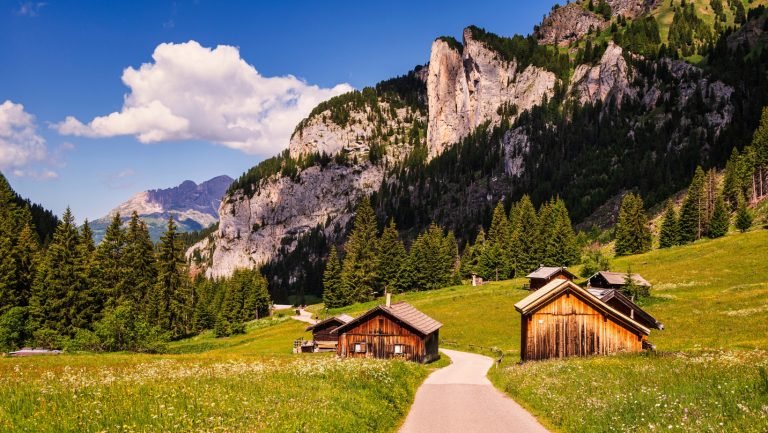 Fassa Valley
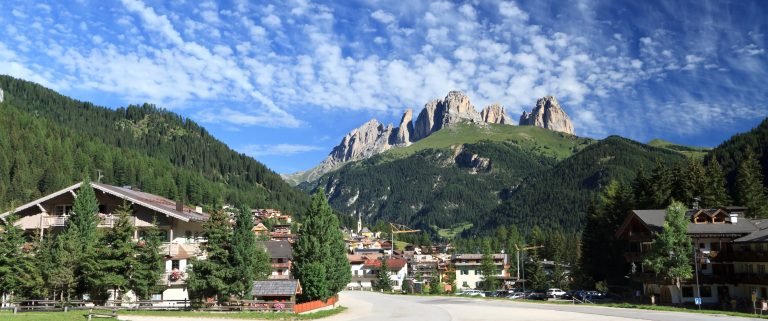 Canazei
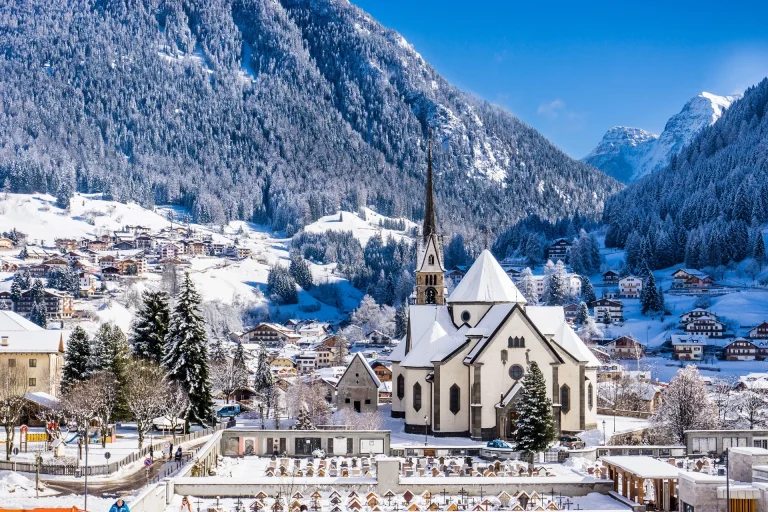 Moena
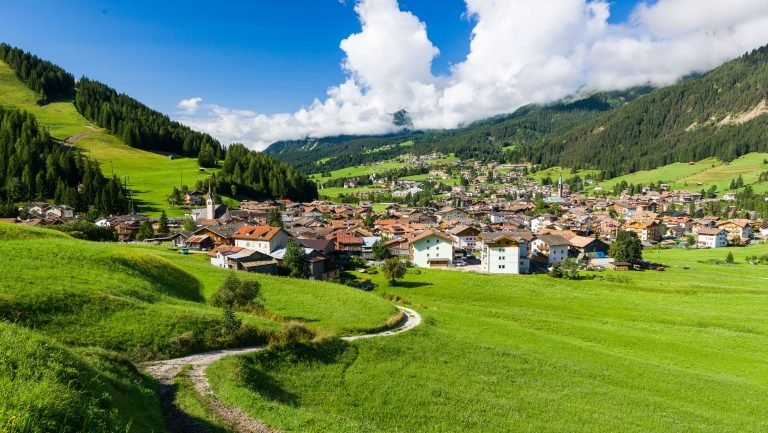 Pozza di Fassa
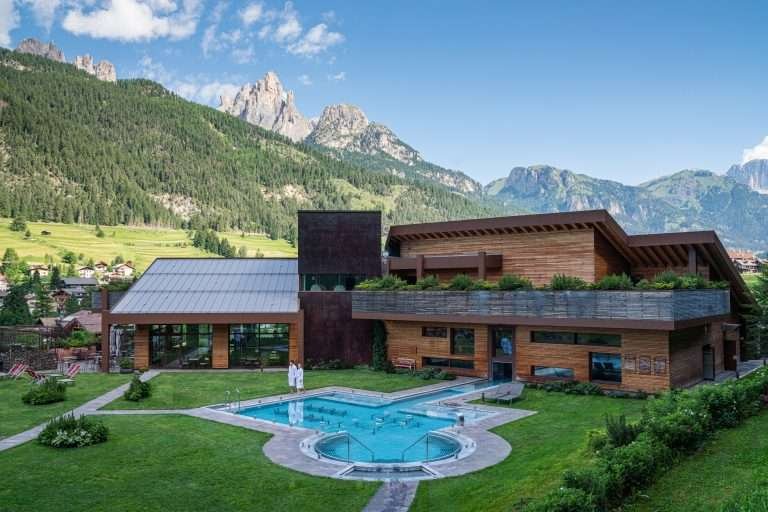 QC Terme Dolomites
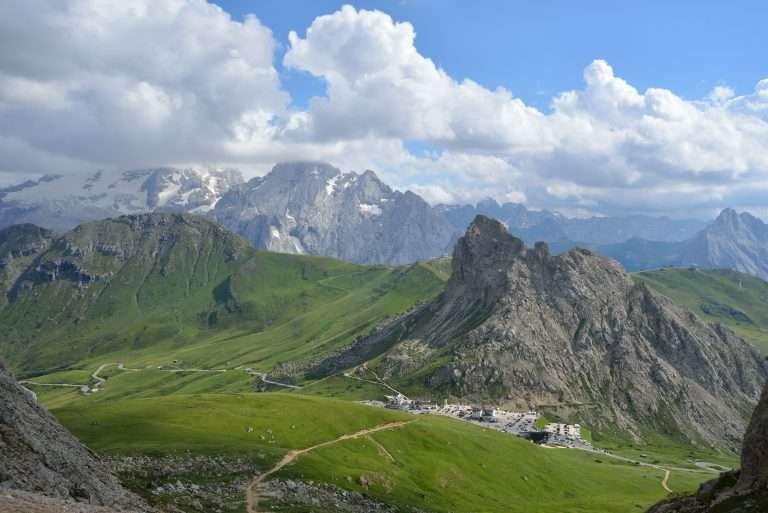 Pordoi Pass
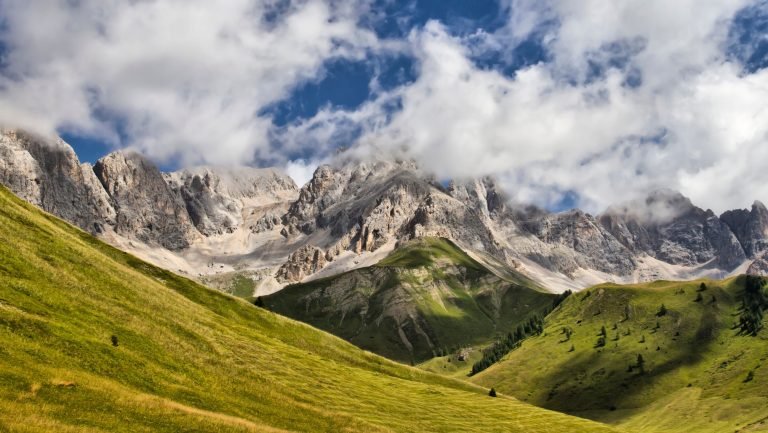 San Pellegrino Pass
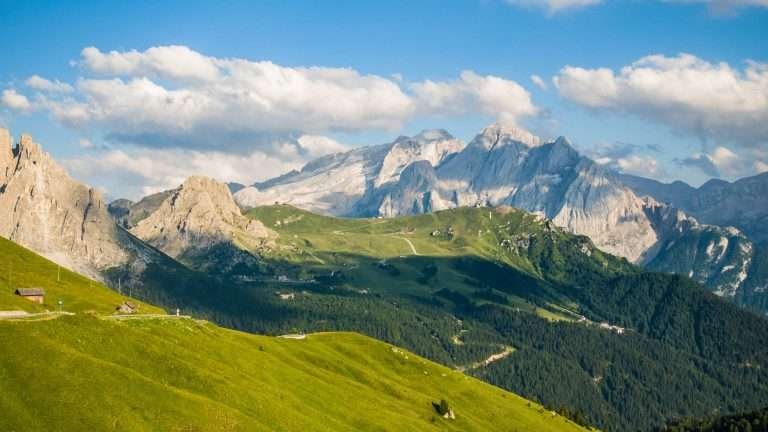 Val di Fiemme
 Cavalese
 Predazzo
 San Martino di Castrozza
 Madonna di Campiglio
 Pinzolo
 Brenta Dolomites
 Andalo
 Val di Sole
 Alpe Cimbra
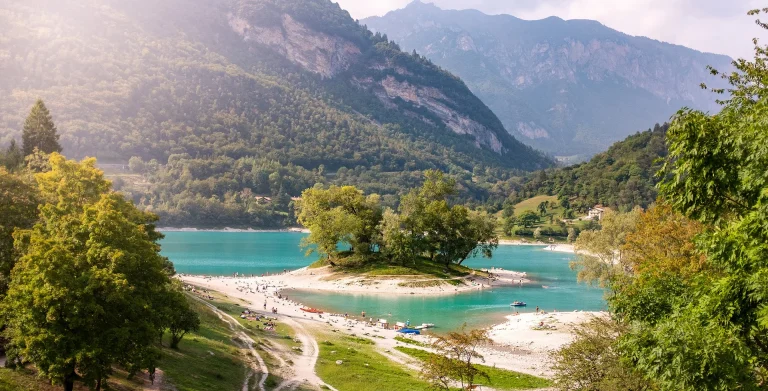 Lake Tenno
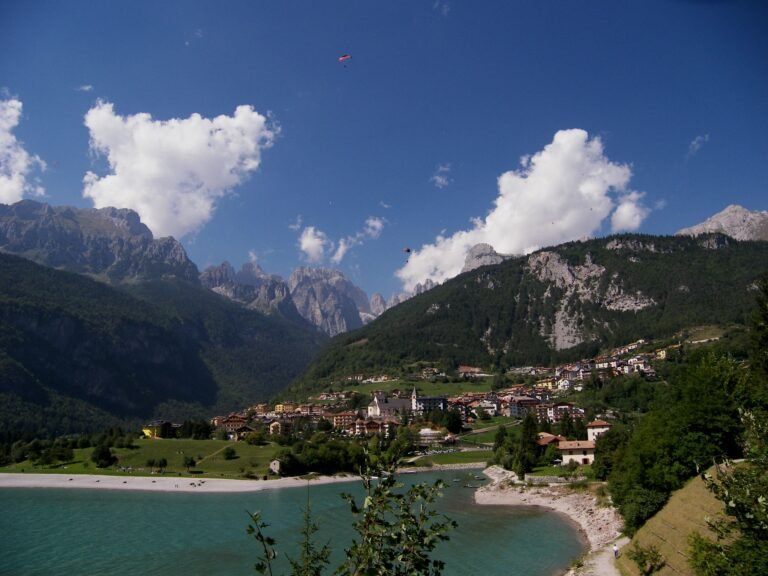 Molveno
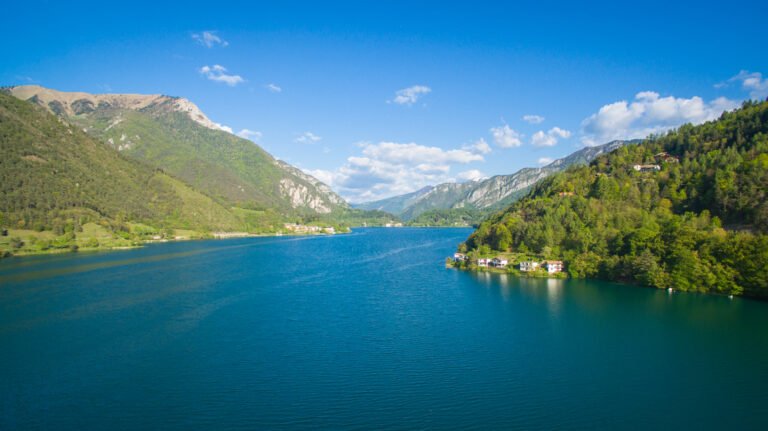 Lake Ledro
 Lake Tovel
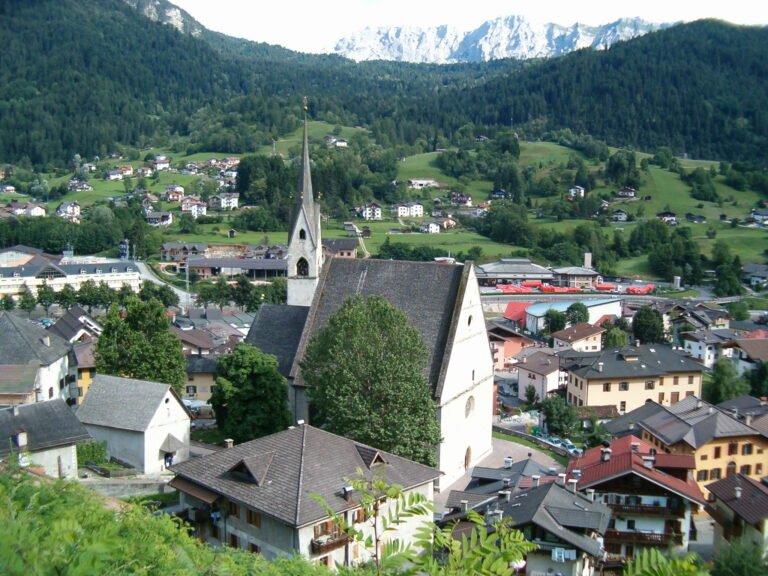 Fiera di Primiero
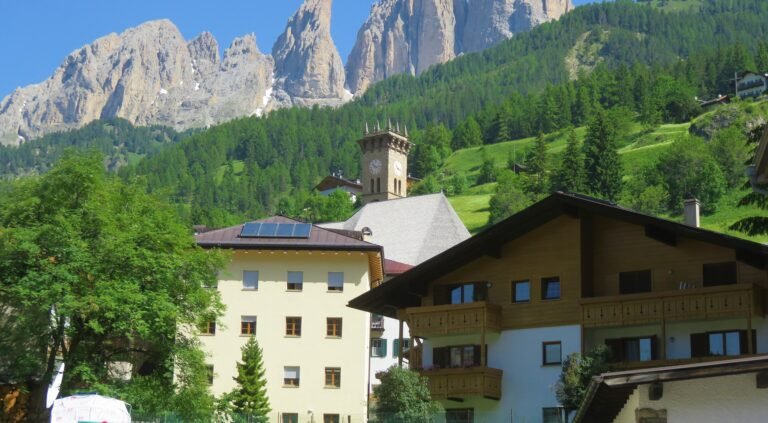 Campitello di Fassa
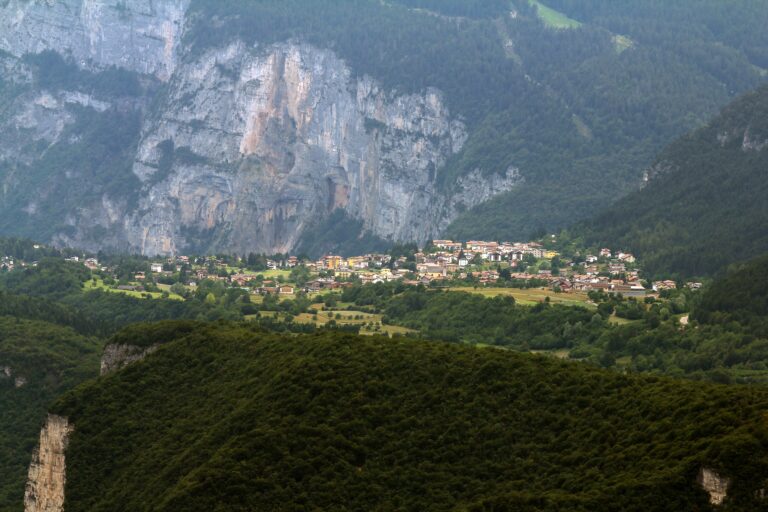 Paganella
We start with the Fassa and Fiemme Dolomites, the largest and busiest area: two valleys in a row along the Avisio river, linked by bus and by a 48 km cycle path.
Val di Fassa

Trentino’s Ladin valley, from Moena to Canazei, with villages between about 1,200 and 1,460 metres. Around it: Marmolada, Sella, Sassolungo and Catinaccio (Rosengarten). The tourist board counts six ski areas, 189 km of slopes and 77 lifts. For anyone who wants plenty of skiing and hiking from one base. Full guide: Val di Fassa.
Canazei

The last village in the valley, at 1,460 metres, below the Marmolada (3,343 m, the highest peak in the Dolomites). From the village you ride up to the Belvedere and join the Sellaronda, the ski circuit around the Sella massif. The pick for skiers who want to clock up kilometres and for hikers heading to the passes. All about Canazei.
Moena
The largest village in Val di Fassa, at about 1,200 metres, at the entrance to the valley from Fiemme. A lively old centre, Puzzone di Moena PDO cheese and the start of the Marcialonga ski marathon. Easy for families. Read the guide to Moena.
Pozza di Fassa

At 1,320 metres, part of the municipality of San Giovanni di Fassa with Vigo since 2018. The Buffaure gondola is in the village, the Catinaccio is next door and Val San Nicolò is closed to cars in summer and served by a shuttle. Good for families and good value in the middle of the valley. See Pozza di Fassa.
QC Terme Dolomiti
The spa in Pozza: over 4,000 m² on three levels, outdoor pools facing the Catinaccio and saunas, using sulphurous water from the Alloch spring. Entry from age 14: for couples and adults, not small children. Opening times and tickets: QC Terme Dolomiti.
Passo Pordoi
The 2,239-metre pass between Canazei and Arabba, on the border with the Veneto. A cable car climbs to the Sass Pordoi at 2,950 metres, the “Terrace of the Dolomites”. From there experienced hikers reach Piz Boè (3,152 m). It is one of the four passes on the Sellaronda. Details: Passo Pordoi.
Passo San Pellegrino
At 1,918 metres, about 11 km from both Moena and Falcade. In winter, 59 km of slopes shared with Falcade; a women’s World Cup is scheduled on the LaVolatA run in January 2027. In summer the easy walk to Fuciade (about 45 minutes) works even with a pushchair. See Passo San Pellegrino.
Follow the Avisio downstream and you reach Val di Fiemme: lower and cheaper than Val di Fassa, with plenty of room for cross-country skiing.
Val di Fiemme
Nine municipalities and about 20,000 people between the Latemar and the Lagorai range. The Val di Fiemme–Obereggen pass covers over 110 km of slopes; in 2026 the valley hosted the Olympic cross-country (Tesero) and ski jumping (Predazzo) events. Ideal for cross-country skiers, families and tighter budgets. Guide: Val di Fiemme.
Cavalese
The valley’s main town, at 1,000 metres, home of the Magnifica Comunità di Fiemme, founded in 1111. A gondola rises to the Alpe Cermis and the 7.5 km Olimpia run. The Marcialonga finishes here and it is the local bus hub: a good base without a car. Discover Cavalese.
Predazzo
At 1,018 metres, the most populous town in the valley. A gondola takes you to the Latemar ski area (about 50 km with Obereggen and Pampeago) and in summer you can tour the Olympic ski jump. Handy for Passo Rolle too. All about Predazzo.
Beyond Passo Rolle you drop into Primiero, the valley of the Pale di San Martino.
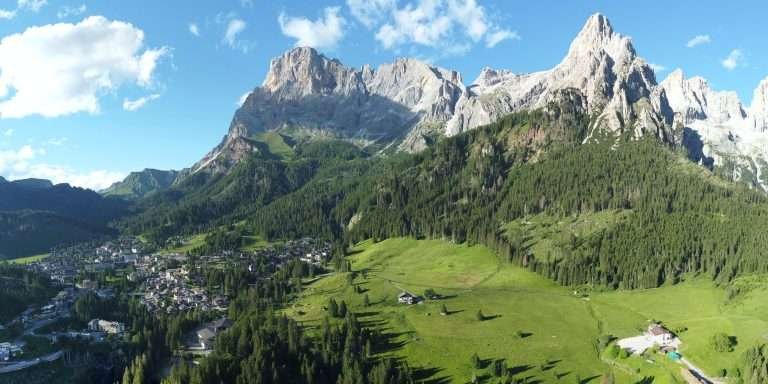
San Martino di Castrozza
At 1,450 metres, below the Pale di San Martino (Cima della Vezzana, 3,192 m), inside the Paneveggio – Pale di San Martino nature park. 60 km of slopes in the San Martino–Passo Rolle area, part of Dolomiti Superski. Elegant and quiet, for nature and hiking; the closest resort to Venice. Guide: San Martino di Castrozza.
On the other side of the province, west of the Adige: Madonna di Campiglio, Val Rendena and the Brenta.
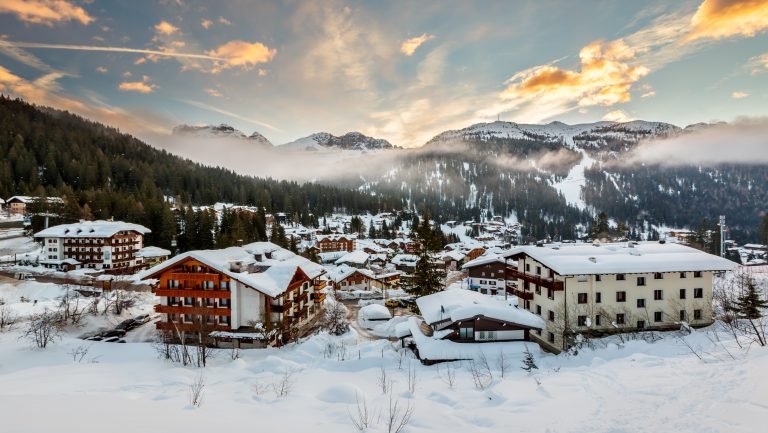
Madonna di Campiglio
At 1,550 metres, between the Brenta Dolomites and the Adamello and Presanella glaciers. Trentino’s best-known resort: the Skiarea Campiglio (about 150 km linked with Pinzolo and Folgarida-Marilleva), the 3Tre night slalom on 23 December 2026 and, in summer, the Five Lakes loop. For demanding skiers and upmarket holidays. Guide: Madonna di Campiglio.
Pinzolo
The main village of Val Rendena, at 774 metres, about 12 km below Campiglio. A gondola links it to Campiglio in about 16 minutes, so you ski the same area and usually pay less for your room. In summer, Val Genova and the Nardis falls. Good for families and mid-range budgets. Read Pinzolo.
Brenta Dolomites
The only Dolomite group west of the Adige, entirely in Trentino and inside the Adamello Brenta nature park. The highest peak is Cima Tosa (3,173 m). This is via ferrata country (the Via delle Bocchette) and hut-to-hut trekking, for fit hikers. All about the Brenta Dolomites.
Over the Campo Carlo Magno pass lies Val di Sole.
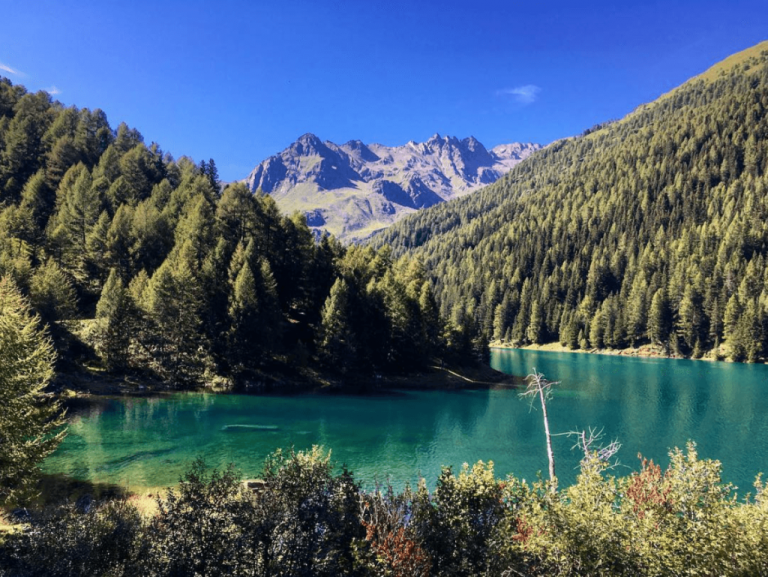
Val di Sole
The Noce valley, about 37 km long, with three ski areas: Folgarida-Marilleva (linked to Campiglio), Pontedilegno-Tonale and Pejo 3000. It is the only valley with a railway: the Trento–Malè–Mezzana line stops at the Daolasa and Marilleva gondolas. In summer, rafting on the Noce. For active travellers and anyone without a car. Guide: Val di Sole.
In the centre of Trentino, between the Brenta and the Paganella, is the Andalo plateau.
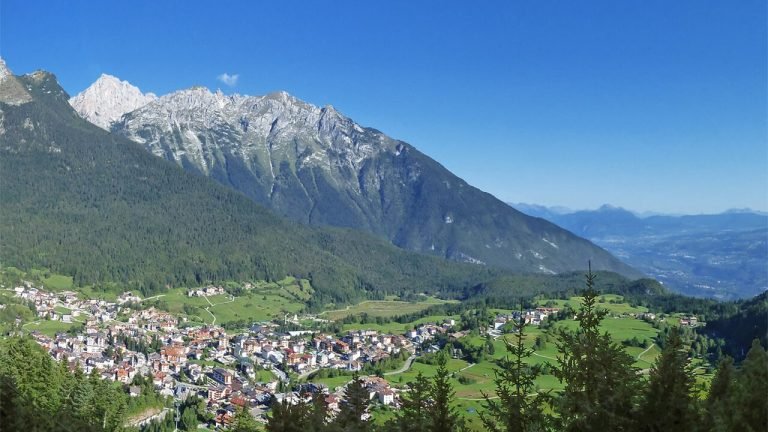
Andalo
At about 1,040 metres, roughly 40 km from Trento. The Paganella pass covers about 50 km of slopes up to 2,125 metres at Cima Paganella; in summer there is a bike park with about 100 km of trails and Lake Molveno close by. One of the best-organised family resorts in Trentino. See Andalo.
Further south, above Rovereto, the plateaus.
Alpe Cimbra
Folgaria, Lavarone and Luserna, between about 1,170 and 1,330 metres, 30 km from Trento. Over 100 km of slopes with day passes from 53 to 63 euros, Lake Lavarone, First World War forts and the Cimbrian language of Luserna. The cheapest option. Guide: Alpe Cimbra.
Finally, the Trentino side of Lake Garda, where the mountains meet the lake.
Lago di Tenno
A turquoise lake at 570 metres, about 12–13 km from Riva del Garda, formed by a landslide around the year 1100. Blue Flag 2026, a walk of about 3 km around it with a suspension bridge, and the village of Canale half an hour away. For combining Lake Garda and the mountains. Fact file: Lake Tenno.
Skiing in Trentino
There is no single ski pass: each area has its own. Here are the main ones, with 2026/27 adult day-pass prices.
Dolomiti Superski: Fassa, Fiemme, San Martino

12 ski areas and about 1,200 km of slopes on one pass. In Trentino it covers Val di Fassa and Carezza, Val di Fiemme–Obereggen, San Martino di Castrozza–Passo Rolle and Alpe Lusia–San Pellegrino. Price: 80 euros in low season, 89 in high season (6 days in high season: 453 euros). The Sellaronda starts from Canazei: about 40 km, half of it on piste. If you stay in one valley, local passes are cheaper: Val di Fiemme–Obereggen 67–74 euros a day.
Skiarea Campiglio and Skirama
The Skiarea Campiglio Dolomiti di Brenta – Val di Sole Val Rendena links Madonna di Campiglio, Pinzolo, Folgarida-Marilleva and Pejo: about 150 km. Price: 75, 87 or 89 euros depending on the period; children born 2019–2023 ski free with a paying adult. The Skirama Dolomiti Adamello Brenta extends this to 380 km and 150 lifts, including Paganella and Alpe Cimbra.
Smaller areas
- Paganella (Andalo, Fai): about 50 km, 69–76 euros, children born 2019 or later free with an adult.
- Alpe Cimbra: over 100 km, 53–63 euros: the cheapest of the large areas.
- Pontedilegno-Tonale (from Val di Sole): 100 km, 52–70 euros, with the Presena glacier up to 3,000 metres.
Cross-country skiing
The Marcialonga (70 km classic, Moena to Cavalese) takes place on Sunday 31 January 2027. Main centres: Passo di Lavazè (80 km), Lago di Tesero (2026 Olympic venue), Campo Carlo Magno (22 km), Millegrobbe (about 35 km), Alochet (about 18 km).
The season usually runs from early December to early April: Val di Fassa from 4 December 2026 to 4 April 2027; Campiglio and Pinzolo open on 3 December 2026.
Summer in Trentino
Lifts and mountain huts usually open from mid-June to September. Lake Garda and the plateaus are also good in spring and autumn.
Classic hikes
- Catinaccio and the Vajolet Towers from Vigo or Pera: fine for families as far as the Vajolet hut; beyond that there are sections with fixed cables.
- Viel del Pan: an almost flat path from Passo Pordoi facing the Marmolada, about 2 hours to the hut.
- Baita Segantini from Passo Rolle (about 40 minutes), with the Pale di San Martino in front of you.
- Five Lakes loop at Campiglio: 17.2 km and 6 hours, difficult.
- Rifugio Tuckett from Vallesinella: 10.6 km loop, 768 m of ascent, 4.5 hours.
- Nardis falls in Val Genova, over 130 metres, 10 minutes from the start of the waterfall trail.
- Val di Rabbi suspension bridge: over 100 metres long, about 60 metres high.
Dolomite passes
Pordoi (2,239 m) and Sella (2,245 m) above Canazei, Fedaia (2,057 m) below the Marmolada, San Pellegrino (1,918 m), Rolle (1,984 m) towards San Martino. By bike, motorbike, car and in summer (2026 timetable) by public bus from Canazei. Sellaronda Bike Day closes the roads over the four passes on 5 June and 11 September 2027, 9am to 4pm.
Parks
The Adamello Brenta nature park (620 km²) is Trentino’s largest protected area and home to about a hundred bears (2021 estimate). There is also the Paneveggio – Pale di San Martino park and, in Val di Sole, the Stelvio National Park.
Cycling
The Fassa and Fiemme Dolomites cycle path runs 48 km from Alba di Canazei to Molina di Fiemme (about 650 m of height difference), with the Bike Express to get back up; in Val di Sole it is 35 km from Cogolo to Mostizzolo. For mountain bikers: about 100 km of trails on the Paganella.
Good to know: in summer Val San Nicolò and the Passo Rolle–Baita Segantini road are closed to private cars; at Vallesinella and in Val Genova parking had to be booked in 2026, while at Lake Tovel booking was recommended. Check the current year’s rules.
Mountain lakes in Trentino
Trentino’s lakes range from Lake Garda to glacial basins above 2,000 metres. The easiest to reach from the places in this guide:
- Lake Molveno (845 m): 3.27 km², a beach for swimming (cold water), a few kilometres from Andalo.
- Lake Tovel (1,178 m), in Val di Non, in the Adamello Brenta park: in 2026 parking and shuttle had to be booked.
- Lake Tenno (570 m): turquoise, Blue Flag 2026, no inflatables, no drones.
- Lake Lavarone (about 1,080 m): swimming, pedalos and canoes, on the Alpe Cimbra.
- Five Lakes and Lake Nambino above Madonna di Campiglio; Nambino is a 45-minute walk from Patascoss.
- Lake Fedaia (2,053 m), a reservoir below the Marmolada, above Canazei.
- Colbricon lakes (about 1,900 m), around an hour from Passo Rolle.
- Caldonazzo and Levico, in Valsugana: Caldonazzo is the largest lake lying entirely within the region.
Lake Carezza is often listed among Trentino’s lakes, but it sits just over the Costalunga pass in South Tyrol; from Val di Fassa you drive up via Vigo.
Trentino vs South Tyrol: what's the difference
People often talk about “Trentino-Alto Adige” as one place. In fact it is two autonomous provinces: Trento (Trentino) and Bolzano (South Tyrol/Alto Adige). Canazei, Val di Fassa, Val di Fiemme, Madonna di Campiglio and San Martino di Castrozza are in Trentino; Val Gardena, Alta Badia, the Alpe di Siusi and Lake Braies are in South Tyrol. Over the Sella and Costalunga passes you cross from one to the other, and Dolomiti Superski is valid on both sides.
How to choose the right resort
- With children: Andalo (kids ski free, Andalo Life park and pool), Pozza di Fassa, Pinzolo, Alpe Cimbra. In summer, Fuciade from Passo San Pellegrino and Lake Lavarone.
- Strong skiers: Canazei for the Sellaronda and Sass Pordoi, Madonna di Campiglio for the Canalone Miramonti and the Spinale.
- No car: Cavalese (buses from Ora and Trento), Val di Sole (train from Trento), Moena and Canazei on bus B101.
- On a budget: Alpe Cimbra, Val di Fiemme, Predazzo, Pinzolo instead of Campiglio.
- Upmarket: Madonna di Campiglio and San Martino di Castrozza.
- Nature and quiet: San Martino di Castrozza, the Brenta Dolomites hut to hut, Val di Rabbi.
- Spa and relaxation: QC Terme Dolomiti (from 14) and, in spring and autumn, Lake Tenno.
- Easy high-level walks: Passo Pordoi (Viel del Pan) and Val di Fassa (Catinaccio).
Where to stay in Trentino
Pick the area first, then the village:
- For lots of skiing: Canazei, Campitello or Alba (Sellaronda access) and Madonna di Campiglio near the lifts. Book early for Christmas and February.
- Families: Andalo, Pozza, Moena and Pinzolo, ideally an apartment or residence near the lifts and ski schools.
- No car: Cavalese, Predazzo and Moena on bus lines B104 and B101; in Val di Sole, the villages along the railway from Malè to Mezzana.
- On a budget: Alpe Cimbra, Val di Fiemme, Val Rendena; prices drop in early December and late March.
- Nature and hiking: San Martino di Castrozza, Val di Peio, Molveno.
- Pool and spa: if your accommodation has none, Pozza has QC Terme, Canazei the Dòlaondes aquatic centre, Andalo the AcquaIn pool.
- Lake and mountains: Tenno and the area around Riva del Garda.
How to get to Trentino
By car
The main route is the A22 Brenner motorway, which crosses Trentino from south to north along the Adige valley. For Fiemme and Fassa exit at Ora/Egna (then the SS48) or Bolzano Nord (over the Costalunga pass). For Madonna di Campiglio, Pinzolo and Andalo exit at Trento Nord or Trento Sud; for Val di Sole at San Michele all’Adige; for Lake Garda at Rovereto Sud; for the Alpe Cimbra at Rovereto Nord or Trento Sud. Winter tyres or snow chains on board are compulsory from 15 November to 15 April. If you hire a car at the airport, check it has them.
By train
The Brenner line links Verona, Trento and Bolzano; since 20 June 2026 there has been a direct Frecciarossa from Milan to Trento, and direct EuroCity trains run from Munich. Useful stations: Ora/Auer for Fiemme and Fassa, Mezzocorona for Andalo, Rovereto for Lake Garda and the Alpe Cimbra, Feltre for San Martino di Castrozza. From Trento the Trento–Malè–Mezzana railway runs into Val di Sole.
By bus
Trentino Trasporti serves every valley: B104 Trento–Ora–Cavalese, then B101 to Predazzo, Moena and Canazei; B201 Trento–Tione–Madonna di Campiglio and B231 Campiglio–Pinzolo; B611 to Andalo and Molveno; B332 Rovereto–Riva and B211 to Tenno. In winter, at weekends, the Fly Ski Shuttle runs from the airports to Val di Fassa (19 December 2026 to 29 March 2027, 50 euros per trip).
By plane
The closest airport to the Fassa and Fiemme Dolomites is Bolzano (about 40–46 km). Verona serves central and southern Trentino (about 90 km from the Alpe Cimbra, 130 km from Andalo); Brescia is 125 km from Campiglio; Treviso (about 85 km) and Venice are best for San Martino di Castrozza. Bergamo, Milan, Innsbruck and Munich have more international flights but longer transfers.
Frequently asked questions about Trentino
What are the most beautiful mountains in Trentino?
The Fassa Dolomites (Marmolada, Catinaccio, Sella), the Pale di San Martino, the Latemar and the Brenta Dolomites, plus the Adamello and Presanella glaciers. The Marmolada (3,343 m), the highest peak in the Dolomites, sits on the Trentino–Veneto border.
Where should I go in Trentino in summer?
Val di Fassa, San Martino and Campiglio for high-level hiking; Andalo and Val di Sole for cycling and families; Lake Tenno to combine lake and mountains.
Which Trentino resorts are best for families?
Andalo, Pozza di Fassa, Pinzolo and the Alpe Cimbra: easy slopes and, on the Paganella and Skiarea Campiglio passes, free skiing for young children.
How much is a ski pass in Trentino in 2026/27?
An adult day pass costs from 53 euros (Alpe Cimbra, weekday, online) to 89 euros (Dolomiti Superski and Skiarea Campiglio in high season). Val di Fiemme–Obereggen 67–74 euros, Paganella 69–76 euros.
Are Trentino and South Tyrol the same thing?
No. They are two autonomous provinces of the same region: Trento and Bolzano. Canazei and Val di Fassa are in Trentino; Val Gardena and Alta Badia are in South Tyrol.
Where are the Dolomites in Trentino?
Mainly in the north-east (Val di Fassa, Val di Fiemme, Primiero) and west of the Adige with the Brenta, the only Dolomite group on that side. They have been a UNESCO World Heritage Site since 2009.
Can you visit Trentino without a car?
Yes: train to Trento, Ora or Rovereto, then bus; in Val di Sole the train runs right to the gondolas. Good bases: Cavalese, Moena, Canazei, Andalo, Campiglio.
What is the nearest airport to Trentino?
Bolzano for Val di Fassa and Val di Fiemme, Verona for Trento, Andalo, the Alpe Cimbra and Lake Garda, Treviso or Venice for San Martino di Castrozza.
Photos: Trentino


