


 Français
 Deutsch
 Italiano
ACCOMMODATIONS IN COGNE
Discover the best Hotels, B&Bs and Apartments in Mountain based on thousands of verified reviews.
Altitude1,534 m
WhereAosta Valley, Gran Paradiso National Park
From Aosta26.5 km · bus about 50 min
Slopesdownhill 9 km (7 runs) · cross-country about 80 km
Ski pass 2026/27prices not yet published
Seasonsummer: hiking · winter: cross-country, snowshoes, ice
Updated October 2026 · Sources: Aosta Valley Region (lovevda.it), Cogne tourist consortium, Gran Paradiso National Park, Fondation Grand Paradis
Cogne is in the Aosta Valley, in a side valley south of Aosta, inside Gran Paradiso National Park. The main village sits at 1,534 metres. Aosta is 26.5 km away by road, Turin about 140 km and Geneva about 160 km. Cogne is the largest municipality in the region by area, over 213 km², but only about 1,300 people live here.
The village is built around a large meadow, the Prati di Sant’Orso, where building is banned. Around it are the hamlets: Valnontey and Lillaz at the end of the side valleys, Gimillan high on the sunny slope, Épinel and Crétaz towards Aosta. From Valnontey you reach the foot of Gran Paradiso (4,061 m), the only 4,000-metre peak entirely on Italian territory.
In summer Cogne is a base for walking in Italy’s oldest national park (together with Abruzzo): easy valley trails, old royal hunting paths up to the huts, and ibex and chamois close to the path. In winter it is mainly a cross-country skiing resort, with a small downhill area and more than 150 frozen waterfalls for ice climbers. There is little nightlife: Cogne suits families, hikers and anyone looking for quiet.
What to see in Cogne
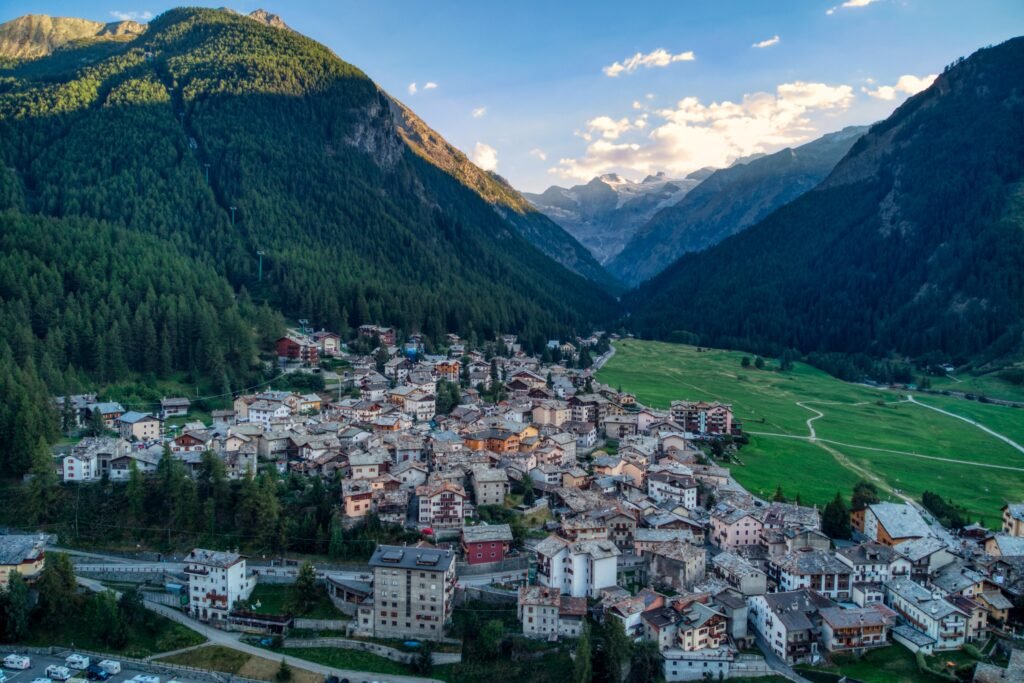
Everything is close: you can walk the centre and the Prati di Sant’Orso, while Valnontey and Lillaz lie at the end of the two valleys that start from the village. Most sights need no effort, even with small children.
Prati di Sant’Orso and the village centre
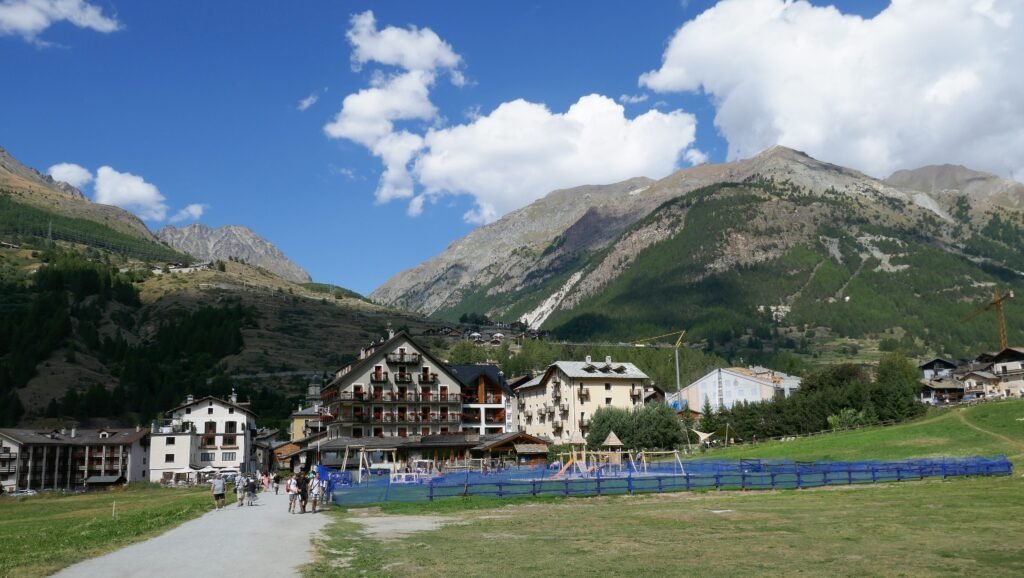
The Sant’Orso meadow is the heart of Cogne: a wide grassland between the village and the mountains, protected by the municipal statute. No houses, no roads. On its edge stands the parish church of Sant’Orso; from there you look south into Valnontey and up to the Gran Paradiso glaciers.
In summer a flat loop goes around the meadow, fine for buggies. In winter it becomes the cross-country stadium. In the village you will find shops, bars, the tourist consortium office in Piazza Chanoux and the base of the gondola to Montseuc.
Valnontey
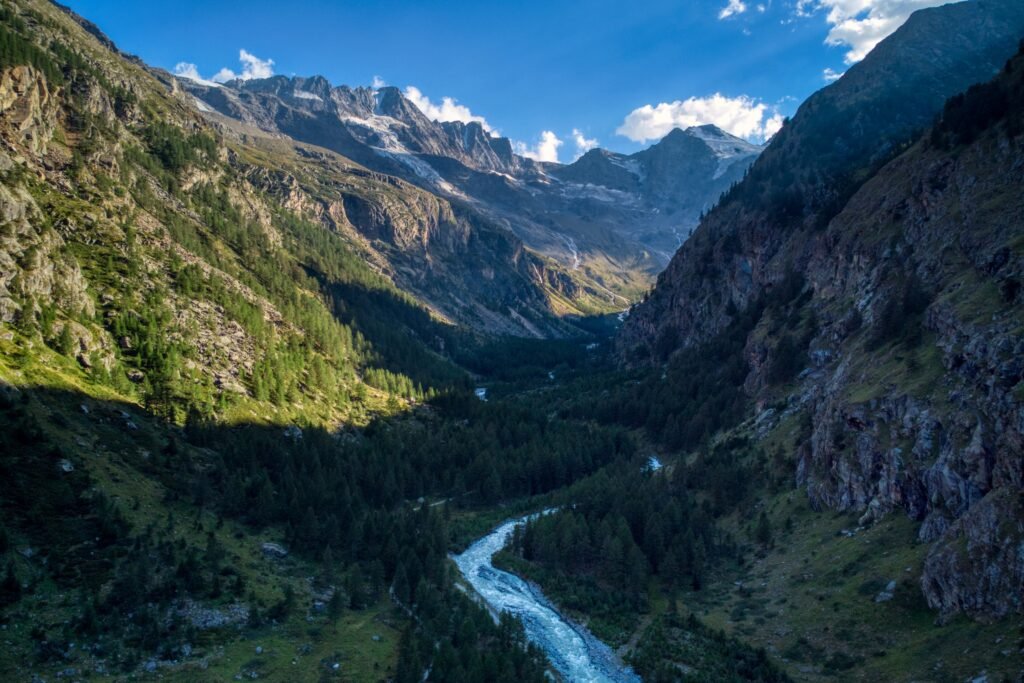
Valnontey is the hamlet at the end of the valley of the same name, at 1,666 metres. The road ends here at a large car park. Ahead, the valley climbs towards Gran Paradiso and the Grivola, between larch woods and meadows.
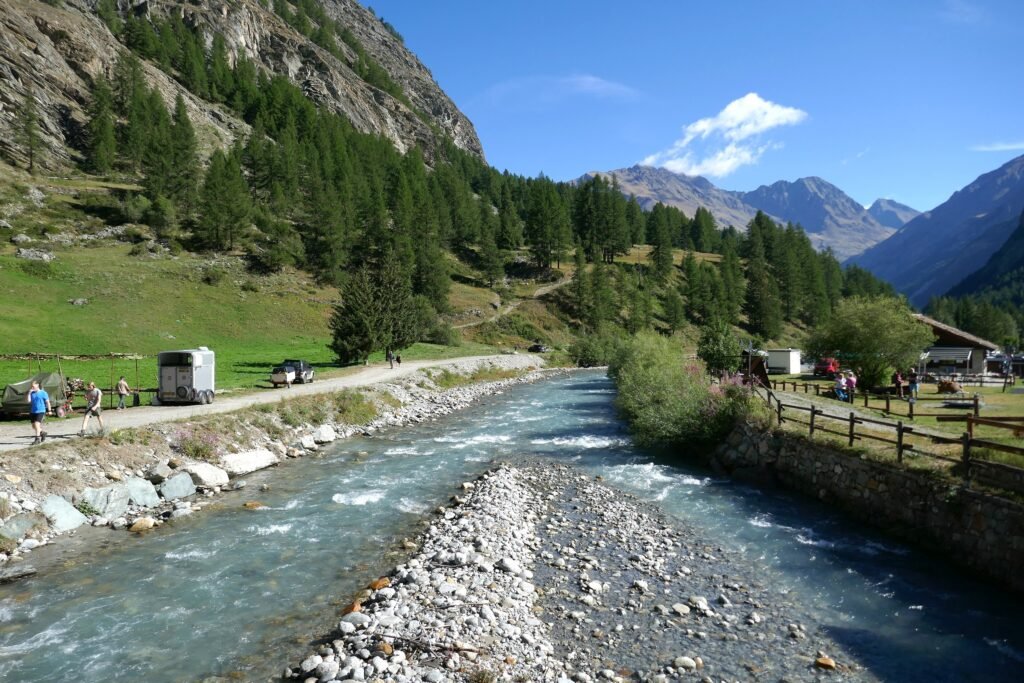
It is the park’s busiest trailhead on the Cogne side. A flat path follows the stream, and the trails to Rifugio Vittorio Sella and the Lauson lakes start here. In winter there is a 5 km cross-country loop.
Paradisia alpine botanical garden
Paradisia is the park’s botanical garden, in Valnontey at 1,700 metres. It opened in 1955 and is named after St Bruno’s lily (Paradisea liliastrum), a white flower of the nearby meadows. It holds around 1,000 species from the Alps and the Apennines, plus some mountain plants from other continents, with labels that tell medicinal plants from poisonous ones.
There is also a lichen trail and a butterfly garden. The best time is mid-June to mid-July, at peak bloom. The garden only opens in summer (in 2026 from 30 May): check opening hours and tickets before you go.
Lillaz waterfalls
At Lillaz, at about 1,600 metres, the Urtier stream drops in three steps, about 150 metres in total. The waterfall loop is about 1.8 km with 100 metres of ascent: 35–40 minutes at an easy pace. It is the classic family walk, from May to October.
The path is waymarked and easy, but the rocks near the water are wet: wear shoes with good grip. You can also walk from Cogne to Lillaz along the valley floor. In winter the falls freeze and become an ice-climbing venue.
Gimillan
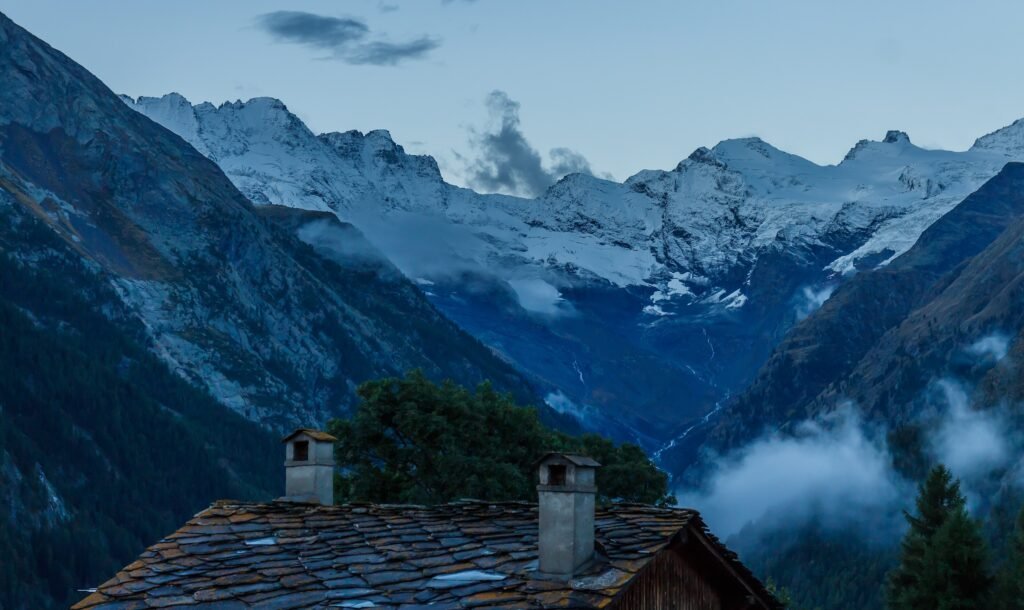
Gimillan is the highest hamlet, on the sunny slope above the main village, a few minutes’ drive up. It offers one of the widest views of the valley and Gran Paradiso, especially in the morning.
It is also the gateway to the Grauson valley, outside the park and quieter than Valnontey, with trails to the Lussert lakes and Rifugio Grauson.
The Cogne mines
For centuries Cogne lived on iron. The magnetite mines of Colonna, Licony and Larsinaz worked until 1979. Today you can visit them: the guided tour goes about 1.5 km into the tunnels on a vintage mine train, to the halls with the original machinery.
In summer 2026 tours ran from 30 May to 30 September, at 10:30 and 14:30, meeting at Costa del Pino. Booking is required, with a minimum of ten people. In the Miners’ Village, the Mining Park exhibition centre tells the story of life in the mines.
Cogne lace
Cogne lace is a bobbin lace in linen thread, worked on a lace pillow. Local women have made it for centuries, and the patterns are passed down from memory, without paper designs. Today the Les Dentellières cooperative keeps the tradition alive in a traditional house, the Maison di Pitz.
A permanent exhibition shows the lace. Also worth a look: the Maison Gérard-Dayné ethnographic museum, a traditional Aosta Valley farmhouse, and an exhibition of wood sculptures by Dorino Ouvrier. Opening hours vary: ask at the tourist consortium.
Ibex and Gran Paradiso National Park
The park was founded in 1922 from the royal hunting reserve created in 1856 to save the ibex, then close to extinction. It covers about 71,000 hectares across the Aosta Valley and Piedmont and borders France’s Vanoise National Park. The ibex even appears on Cogne’s coat of arms.
You do not need an expedition to see one. In summer they move up high: look on the pastures above the tree line, for example around the Lauson lakes. In spring they come lower, onto slopes clearing of snow. Bring binoculars, stay on the trail and keep your distance: national park rules apply. Cogne also has a park visitor centre.
Gran Paradiso
From Cogne you see Gran Paradiso at the end of Valnontey, but the summit (4,061 m) is a mountaineering climb. The normal routes start on the other side, in Valsavarenche, with Rifugio Vittorio Emanuele II and Rifugio Chabod as bases. It takes two days over a crevassed glacier: you need alpine gear and, without experience, a mountain guide.
Skiing in Cogne
Cogne is first of all a cross-country resort. There is downhill skiing, but the area is small: good for families, beginners, or a few hours while others ski cross-country. For a big ski area, look at Courmayeur or La Thuile.
Downhill skiing on Montseuc
The lifts climb from the village onto Montseuc: a Cogne–Montseuc gondola, two chairlifts (Sylvenoire and Bois du Sylvenoire–Crou du Montseuc) and a magic carpet for beginners. In total 9 km of runs: 2 blue, 4 red, 1 black. The slopes face north and almost all have snowmaking, so the snow holds well. Lifts run from 9:00 to 16:30.
For children there is the Baby Snow Park with a magic carpet and a sledging and snow-tubing run. The area is run by Funivie Gran Paradiso (the Pila company). Season dates and ski pass prices for 2026/27 have not been published yet: in 2025/26 the area opened in early December and closed on 6 April. Check the official regional page before you travel.
Cross-country skiing
The region quotes about 80 km of cross-country trails in the valley. The groomed loops listed in the technical sheet add up to about 48 km: in Cogne (from 1.5 to 15 km, some used for World Cup races and with snowmaking), in Valnontey (5 km), in Lillaz (1.5, 3.5 and 5 km) and in Épinel (3 km). Classic and skating, from 9:00 to 17:00.
The base is the Foyer de Fond in the Maison de la Grivola, in the main village: rental, ski service, changing rooms, showers and sauna. Day tickets are sold at the cross-country stadium, the tourist consortium, Valnontey, Lillaz or online. Every winter, usually between late January and February, the Marcia Gran Paradiso is held, a classic-technique long-distance race starting from the Prati di Sant’Orso.
Snowshoeing and ice climbing
On snowshoes you can follow the same valley paths as in summer: Valnontey, the Sant’Orso loop, the path to Lillaz. They are flat and easy. For anything higher, always check the avalanche bulletin.
The valley has more than 150 frozen waterfalls, from easy to very hard: for ice climbers, Cogne is a key destination. Without experience, go with a guide.
Summer in Cogne
Summer is the best season. Park trails are well marked and many follow old royal hunting paths: wide, with a steady gradient.
From Valnontey to Rifugio Vittorio Sella
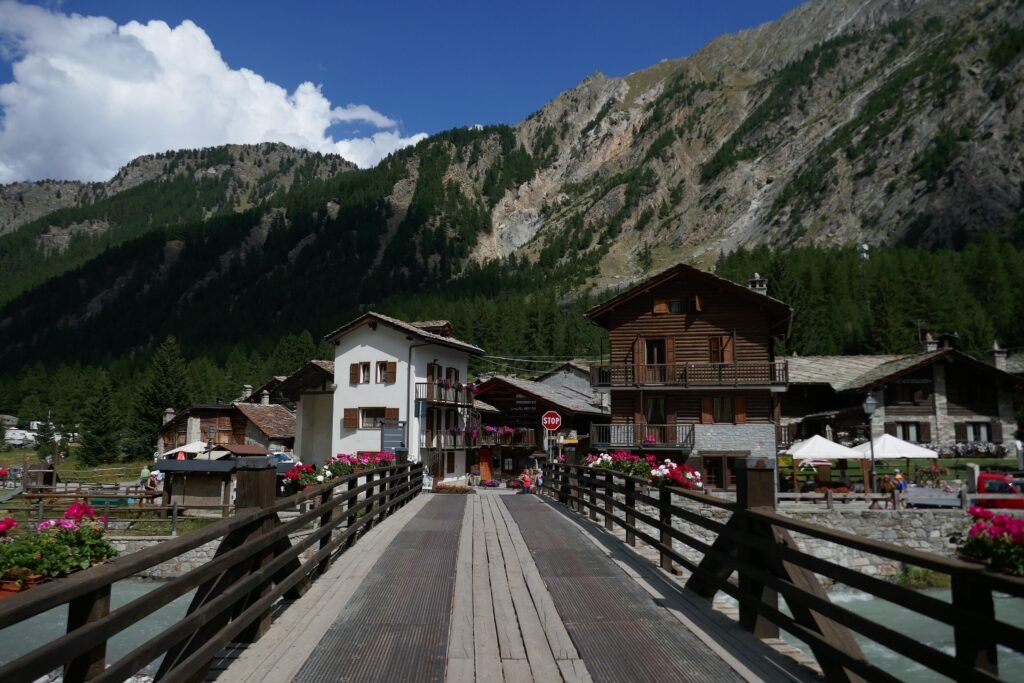
This is Cogne’s classic hike. From the Valnontey car park (1,666 m), follow the Alta Via 2, trail 18: cross the stream, pass Paradisia and climb through the forest. It is 900 metres of ascent, about 2 h 30 up, graded E (hiking trail), with no exposed sections.
Above the hut lie the Lauson lakes, one of the best places to see ibex, chamois and marmots.
Easy walks for families
Without gaining much height: the loop around the Prati di Sant’Orso, the stream-side path in Valnontey, the Lillaz waterfall loop and the Cogne–Lillaz footpath. All are fine for children, and some for buggies.
Gimillan and the Grauson valley
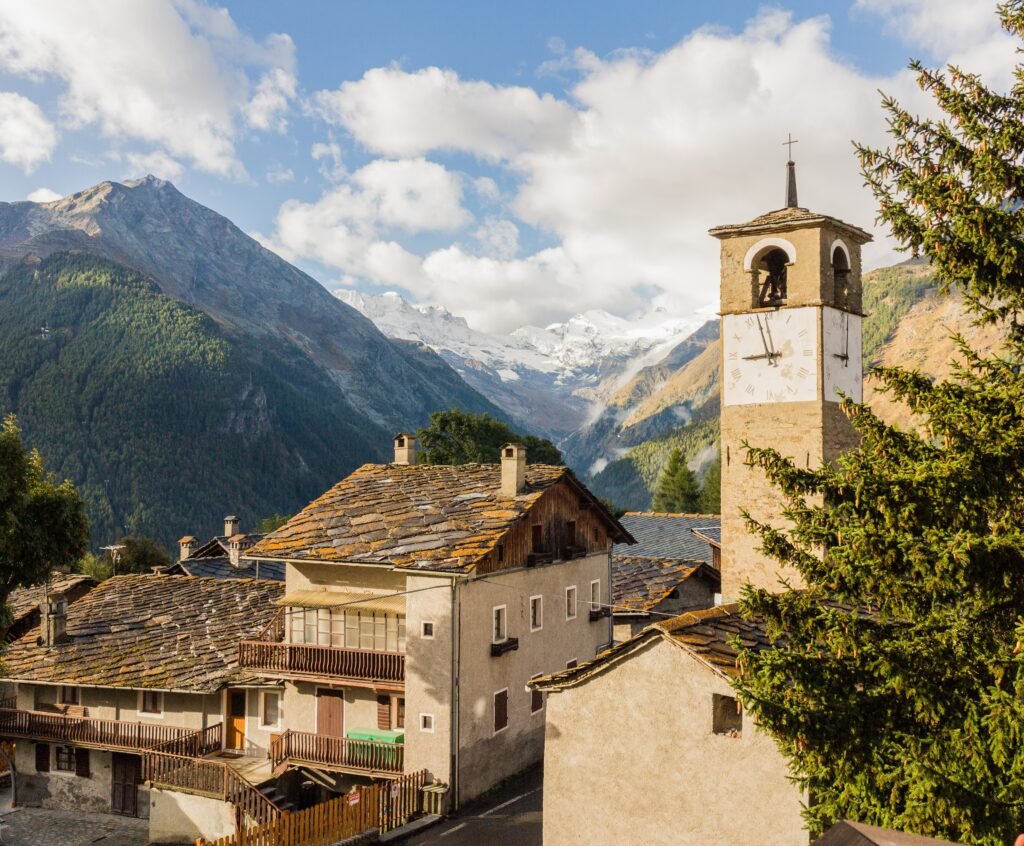
From Gimillan, trail 8 heads into the Grauson valley, outside the park and quieter. Going all the way to the Lussert lakes is a full day with more than 1,000 metres of ascent. Rifugio Grauson, opened in 2020, makes a good stop.
Cycling, climbing and events
The valley floors are good for cycling on quiet roads and tracks; inside the park, follow the rules on which trails are open to bikes. At the end of summer there is the Devétéya, when the herds come down from the high pastures, and Cogne hosts the Gran Paradiso Film Festival, devoted to nature films. Ask the tourist consortium for dates.
What to eat in Cogne
The local dish is seupetta de Cogne, a thick soup of rice, bread, fontina, butter and spices. For dessert there is crema di Cogne, made with cream, eggs and chocolate. At the end of the year, in Lillaz, the village oven bakes mécoulin, the traditional festive cake.
Trattorias serve classic Aosta Valley food: fontina, polenta, meat and cured meats. Look out for the Cantine Gourmet evenings, a progressive tasting of wines and local dishes.
Day trips from Cogne
- Pont d’Aël (Aymavilles): a Roman aqueduct bridge from 3 BC, about 56 metres above the stream, on the road between Aosta and Cogne. You can walk through the covered passage; not for anyone with vertigo.
- Aosta (26.5 km): the Roman town with the Arch of Augustus and the theatre, shops and the railway station.
- Pré-Saint-Didier: thermal baths, for a rest day after hiking.
- Courmayeur and Mont Blanc: Skyway and Val Ferret, about 60 km away via Aosta.
- Valsavarenche and Val di Rhêmes: the park’s other Aosta Valley valleys, wilder, reached by car via the main valley.
- Champoluc and Gressoney: the Monte Rosa valleys, for a large ski area.
Where to stay in Cogne
Main village (Prati di Sant’Orso): the most convenient. Shops, restaurants, gondola, cross-country trails and the bus stop for Aosta are all close. The right choice without a car, and for both cross-country and downhill skiers.
Valnontey: for hikers and wildlife watchers. Step outside and you are on the trail to Rifugio Sella or at Paradisia. In winter there is a cross-country loop, but fewer services.
Lillaz: quiet, close to the waterfalls and to cross-country loops. Good for families and ice climbers.
Gimillan and Épinel: Gimillan for views, sun and the Grauson valley; Épinel, lower down towards Aosta, often cheaper and handy with a car.
Accommodation is mostly family-run hotels, holiday apartments, B&Bs and summer campsites. In August and during the Marcia Gran Paradiso, book early.
How to get to Cogne
By car
Take the A5 Turin–Aosta motorway and exit at Aosta Ovest, near Aymavilles. Then follow signs to Cogne: about 21 km on regional road 47 up the valley. It is the only road in: after the June 2024 flood the village was cut off for four weeks, and the road reopened on 27 July 2024. Heavy rain can still close it, so check road news before you set off. In winter, carry winter tyres or chains.
By train
The nearest station is Aosta, on the Chivasso–Ivrea–Aosta line from Turin. Note: until 13 December 2026 the Ivrea–Aosta section is replaced by buses because of electrification works. At Aosta station, the bus to Cogne leaves from in front of the station.
By bus
The Aosta–Cogne public bus takes about 50 minutes and stops along the valley. Buy your ticket on board; the Cogne terminus is at Revettaz, near the campervan area. Departures are not very frequent: download the current timetable before you travel. Aosta has bus links with Turin and Milan.
By plane
The nearest airport is Turin Caselle, about 150 km away. Geneva is about 160 km away, through the Mont Blanc or Great St Bernard tunnel. Milan Malpensa is further. From any airport, the simplest options are a rental car or a bus to Aosta; private transfers can also be booked.
Parking
In the main village there are car parks near the Prati di Sant’Orso and the gondola. In Valnontey and Lillaz the road ends at a car park, the start of trails and cross-country loops. In August they fill up early: arrive before mid-morning or walk from the main village.
Frequently asked questions about Cogne
Where is Cogne?
In the Aosta Valley, in a side valley south of Aosta, inside Gran Paradiso National Park. It is 26.5 km from Aosta.
What is the altitude of Cogne?
The main village is at 1,534 metres, Valnontey at 1,666 metres, Lillaz at about 1,600 metres.
What can you see in Cogne in one day?
The Prati di Sant’Orso, Valnontey with the Paradisia garden (in summer) and the Lillaz waterfall loop. With more time, the mines and their underground train.
Where can you see ibex in Cogne?
In summer above the tree line: the classic area is the Lauson lakes above Rifugio Vittorio Sella, starting from Valnontey. In spring they come lower.
How long is the Lillaz waterfall walk?
The loop is about 1.8 km with 100 metres of ascent: 35–40 minutes, from May to October.
Can you ski in Cogne?
Yes, but downhill skiing is limited to a small area on Montseuc: 9 km of runs with a gondola and two chairlifts. Cross-country is the strong point: about 80 km of trails according to the region.
Can you climb Gran Paradiso from Cogne?
The summit is usually climbed from Valsavarenche, over two days on a glacier: it is a mountaineering route, best with a guide. From Cogne you can see it up close in Valnontey.
How do you get from Aosta to Cogne?
By car, about 21 km from the Aosta Ovest exit of the A5. By bus, about 50 minutes from Aosta station.
Can you visit the Cogne mines?
Yes, in summer on a guided tour with compulsory booking. A mine train takes you about 1.5 km into the tunnels.
When is the best time to visit Cogne?
Mid-June to September for hiking and wildflowers; December to March for cross-country skiing, snowshoeing and ice climbing.
Photos of Cogne
Photos from Wikimedia Commons: Hagai Agmon-Snir حچاي اچمون-سنير חגי אגמון-שניר (CC BY-SA 4.0), Hagai Agmon-Snir حچاي اچمون-سنير חגי אגמון-שניר (CC BY-SA 4.0), Tiia Monto (CC BY-SA 4.0), Hagai Agmon-Snir حچاي اچمون-سنير חגי אגמון-שניר (CC BY-SA 4.0), Tiia Monto (CC BY-SA 4.0), Dominicus Johannes Bergsma (CC BY-SA 4.0), Tiia Monto (CC BY-SA 4.0), Agnes Monkelbaan (CC BY-SA 4.0).


