Français
 Deutsch
 Italiano
ACCOMMODATIONS IN VAL D’ULTIMO
Discover the best Hotels, BBs and Apartments in the Mountains based on thousands of verified reviews.
In the heart of South Tyrol, shrouded in a natural setting of incomparable beauty, lies Val d’Ultimo (Ultental), a destination that can be described without hesitation as one of the region’s most precious and least known jewels.
This valley, with its tranquil atmosphere, breathtaking landscapes, and well-preserved ancient traditions, offers an unforgettable experience for those seeking an escape from the daily hustle and bustle, immersing themselves in an authenticity rarely found elsewhere.
Val d’Ultimo stretches along the Stelvio National Park, one of the largest national parks in the Alpine arc.
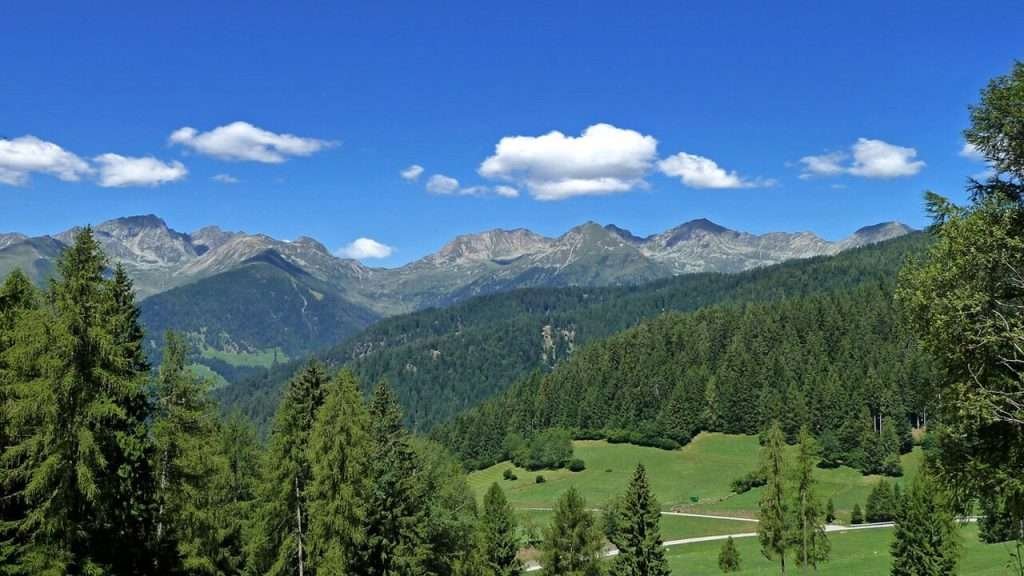
Here, nature reigns supreme, with its centuries-old forests, green meadows, stunning waterfalls and mountains that rise majestically to guard the valley.
The area is a paradise for outdoor enthusiasts: hiking, trekking on trails of varying difficulty, cycling and, in winter, skiing and snowboarding at nearby resorts are just some of the sports available.
Val d’Ultimo is not only nature; it is also a place rich in history and culture.
As you visit the small villages scattered along the valley, you can still sense the deep connection that the locals have with their traditions.
The ancient farms, some of whose structures date back more than 700 years, tell stories of times past, keeping alive the memory of a way of life in harmony with nature.
Val d’Ultimo also seduces the palate, with cuisine that is a perfect reflection of its environment: genuine, simple, and rich in flavor.
Traditional dishes such as “Knödel,” dumplings that can be served in broth or dry, “Schlutzkrapfen,” Tyrolean dumplings, and delicious apple strudel, find the right accompaniment in South Tyrolean wines and craft beers.
The Villages of Val d'Ultimo
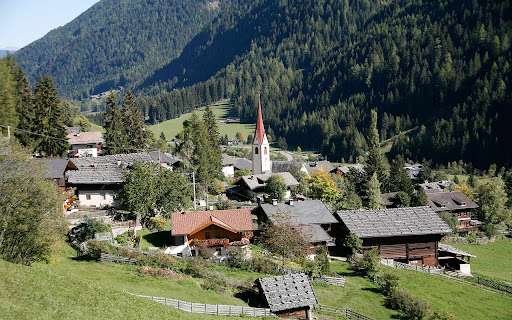
La Val d’Ultimo, è una valle affascinante che si estende per circa 40 chilometri, costellata di piccoli villaggi pittoreschi, ognuno dei quali custodisce le tradizioni e la cultura sudtirolese.
Visitare questi paesi significa immergersi in un ambiente autentico, lontano dalla frenesia delle aree turistiche più affollate.
San Pancrazio (St. Pankraz)
Il villaggio di San Pancrazio si trova all’imbocco della Val d’Ultimo, a circa 735 metri di altitudine. È il primo paese che si incontra entrando nella valle e ha una storia antica, risalente al Medioevo. Il paese prende il nome dal santo patrono dell’omonima chiesa gotica, che merita una visita per i suoi affreschi e l’architettura suggestiva. San Pancrazio è anche famoso per i suoi masi tradizionali, alcuni dei quali risalgono a oltre 700 anni.
Santa Valburga (St. Walburg)
Santa Valburga, situata a circa 1.190 metri di altitudine, è il cuore della Val d’Ultimo e uno dei villaggi più grandi. Il paese si trova vicino al Lago di Zoccolo, un lago artificiale creato negli anni ’60 per scopi idroelettrici ma che oggi è un punto d’attrazione per escursionisti e famiglie. Santa Valburga è il luogo ideale per chi desidera esplorare la valle, con numerosi sentieri che partono direttamente dal paese.
San Nicolò (St. Nikolaus)
Proseguendo verso l’interno della valle, si trova il villaggio di San Nicolò, a circa 1.250 metri di altitudine. San Nicolò è noto per la sua tranquillità e per essere il punto di accesso ad alcune delle escursioni più belle della zona, come quelle che portano al Lago di Fontana Bianca e al Parco Nazionale dello Stelvio. Il paese è anche famoso per la sua chiesa dedicata a San Nicola, che risale al 1300 e contiene affreschi e opere d’arte di pregio.
Santa Gertrude (St. Gertraud)
Santa Gertrude è l’ultimo villaggio della Val d’Ultimo, situato a circa 1.500 metri di altitudine. Questo borgo è il più remoto della valle, immerso in un paesaggio alpino mozzafiato, ai piedi del Parco Nazionale dello Stelvio. Santa Gertrude è il punto di partenza per numerose escursioni ad alta quota, tra cui quelle che conducono ai ghiacciai e ai laghi alpini della zona. Il villaggio è anche famoso per la sua chiesa, costruita nel 1399, che è un importante esempio di architettura religiosa alpina.
What to see in Val d'Ultimo
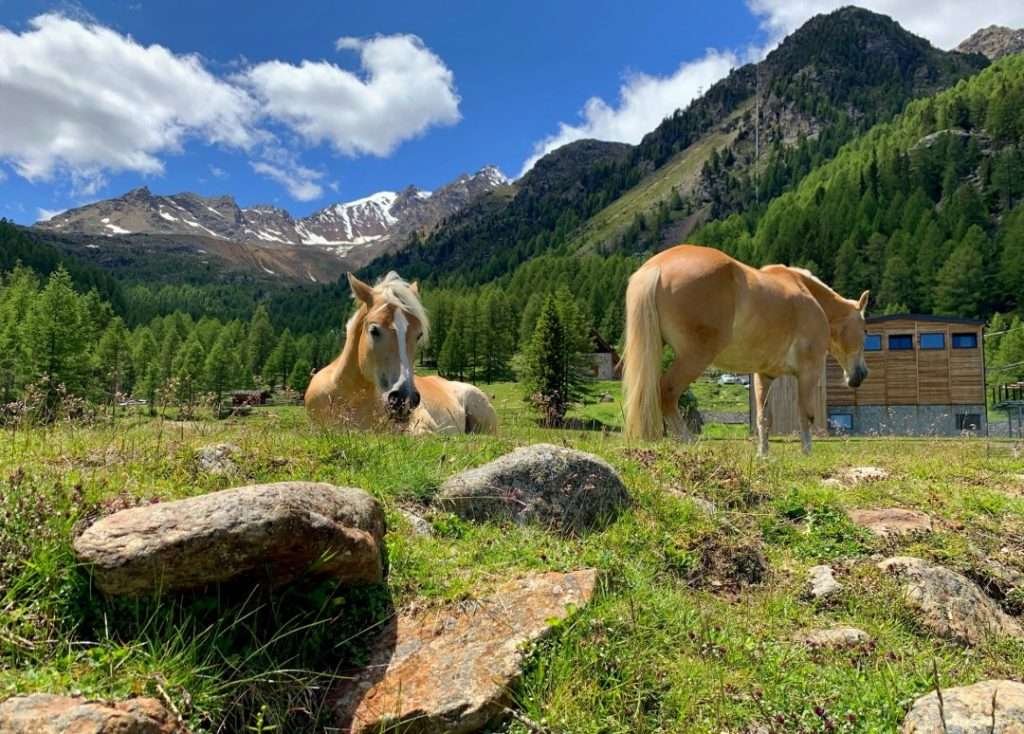
Annidata nel cuore dell’Alto Adige, la Val d’Ultimo si estende da Lana fino alle imponenti cime del gruppo Ortles-Cevedale.
Questa zona appartata, lontana dai percorsi turistici affollati, offre paesaggi naturali incontaminati, un ricco patrimonio culturale e un’infinità di attività per gli amanti del plein air. Sia che tu sia un appassionato della natura, un cultore della storia o un ricercatore d’avventure, la Val d’Ultimo ha qualcosa di speciale in serbo per te.
Ecco le meraviglie che questa valle ha da offrire.
Farmstead Trail
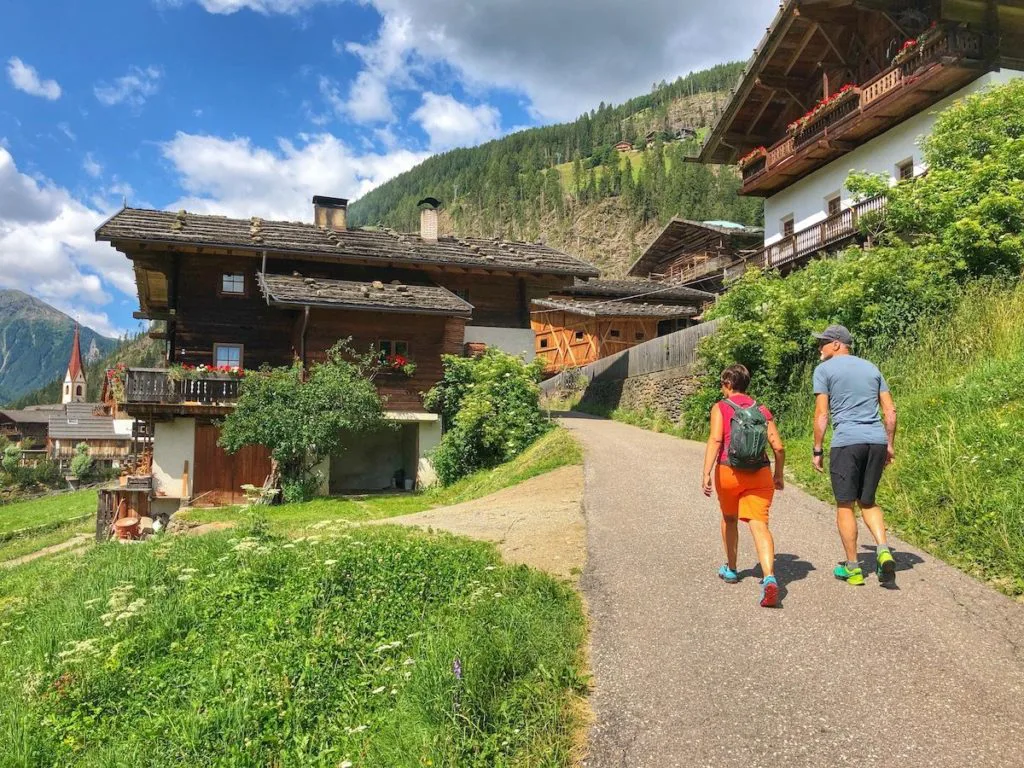
The Ultimo Farmstead Trail is a hiking trail that winds through Val d’Ultimo, offering an immersion in the history and rural traditions of South Tyrol.
This trail is ideal for those who want to explore local culture, admire the traditional architecture of the masi (typical alpine farms) and enjoy spectacular natural landscapes.
The Trail passes through some of the most picturesque landscapes in the valley, connecting the villages of St . Pancras, St . Walburga, St. Nicholas, and St. Gertrude.
Along the way, hikers can visit numerous historic farms, many of which date back centuries and have been carefully preserved in their original state.
The farmsteads encountered along the trail offer a glimpse of rural life in the past.
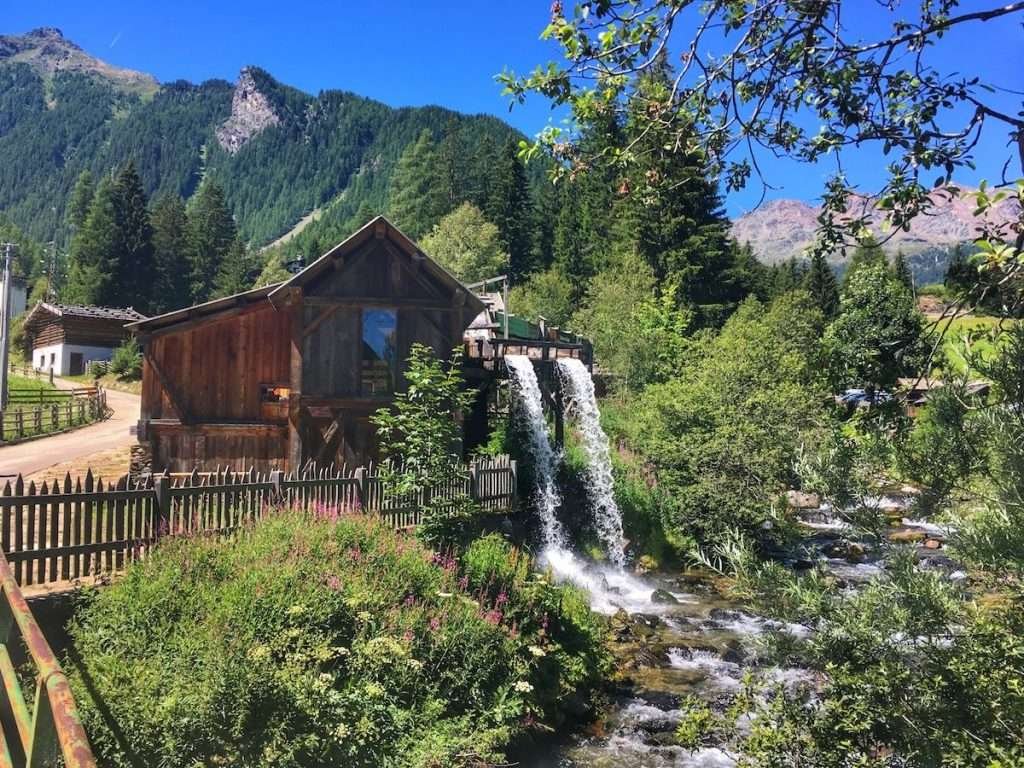
These structures were traditionally self-sufficient, with large cultivated fields, cattle sheds and mills.
Some of these farms are still inhabited and functioning, while others have been converted into museums or agritourisms, where visitors can savor local products and have an authentic experience.
The trail is well-marked and accessible to hikers of all levels, making it a popular choice for families and quiet walkers.
The length of the trail varies depending on the section chosen, but generally covers a distance that can be covered in a half-day.
Along the way, you can admire the typical landscapes of Val d’Ultimo: green meadows, lush forests and mountain streams.
The trail is especially impressive in autumn, when the leaves of the trees are tinged with warm colors, creating a breathtaking panorama.
You will be able to admire:
- Historic farms: These traditional buildings are the heart of the trail.
Built mainly of wood and stone, they are a perfect example of South Tyrolean alpine architecture. - Mills and Sawmills: Along the route are old mills and sawmills, some of which are still functioning, that tell of the ingenuity of mountain communities in exploiting natural resources.
- Viewpoints: The trail offers numerous viewpoints from which to admire the pristine beauty of Val d’Ultimo and the surrounding mountains.
Hoof Lake
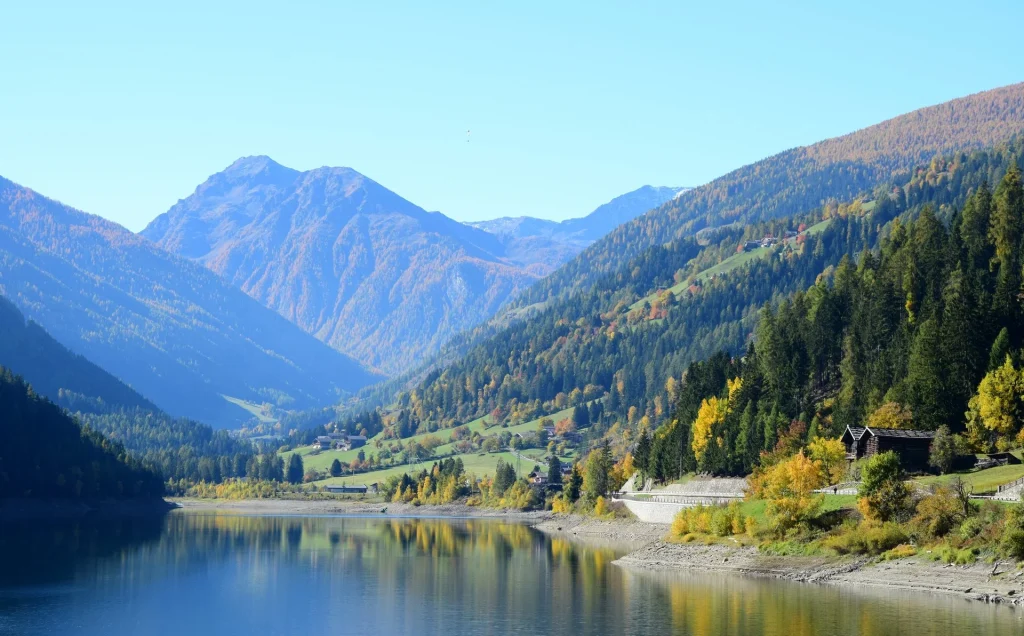
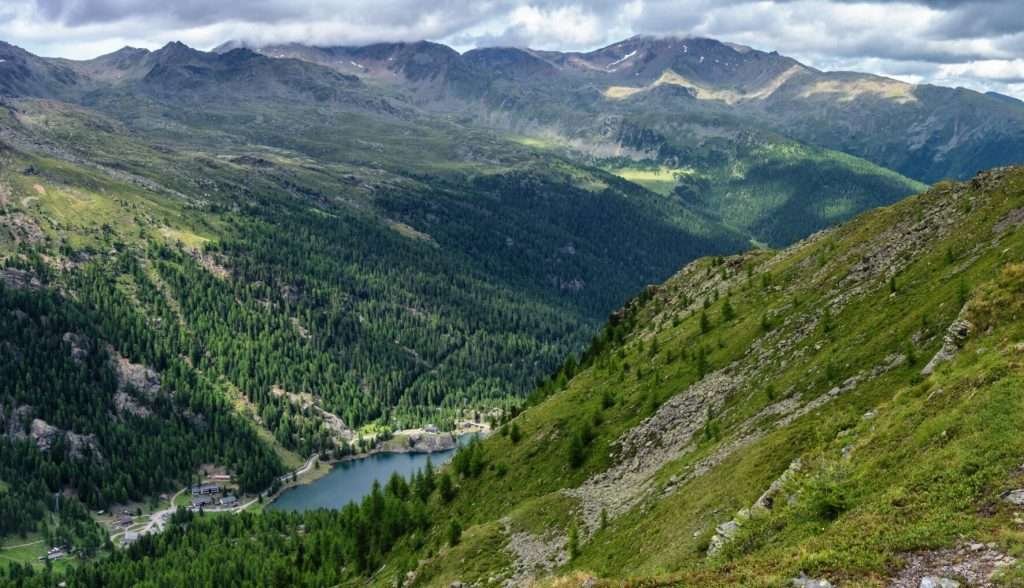
Hoof Lake, is the largest man-made lake in the valley and is one of the main natural attractions in the area.
Built between 1957 and 1963, the lake is located at an elevation of 1,137 meters and covers an area of about 143 hectares.
Its creation involved the construction of a large earthen dam, over 500 meters long and about 66 meters high, which submerged as many as twelve ancient farms, once among the most beautiful in the valley.
Lake Zoccolo is fed by the Valsura stream, and its clear mountain waters, deep blue-turquoise in color, make it a popular spot for both fishing, where trout and char can be found, and outdoor recreation.
In fact, a pleasant scenic path winds along its banks, offering spectacular views and leading to the Kneipp Oasis of Santa Valburga, an area dedicated to wellness inspired by the principles of the famous hydrotherapist Sebastian Kneipp.
The lake is an ideal destination for hikers and families, thanks to the many trails that surround it.
In summer, you can walk the easy path from St. Walburga across the dam, while in winter the area turns into a cross-country ski trail, offering a unique experience surrounded by the pristine nature of Val d’Ultimo.
If you’re looking for a place to relax and enjoy the tranquility of the South Tyrolean mountains, Hoof Lake is definitely a destination to consider.
With its combination of breathtaking scenery, outdoor activities, and a serene atmosphere, it represents one of the hidden gems of the region.
Lake White Fountain
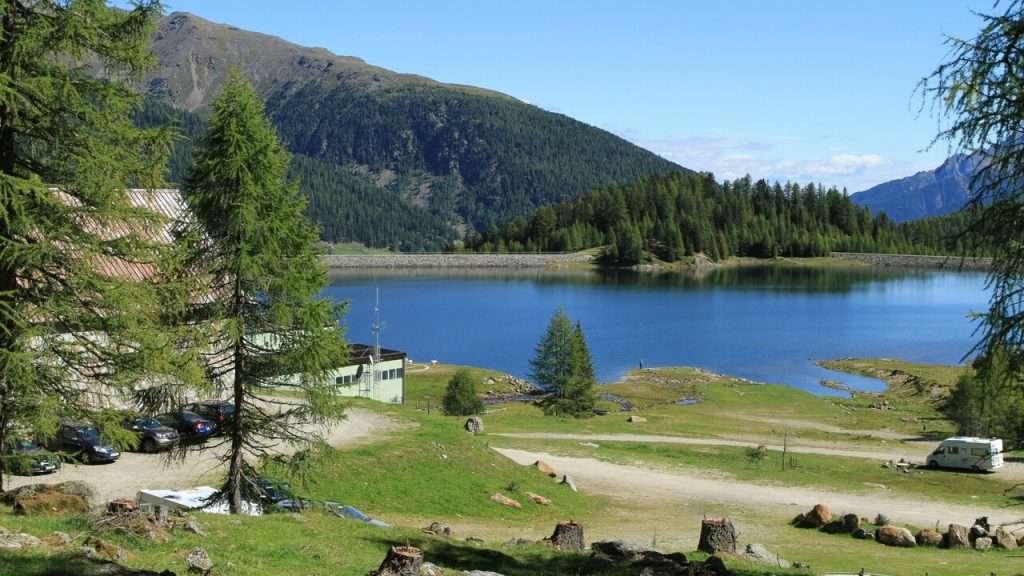
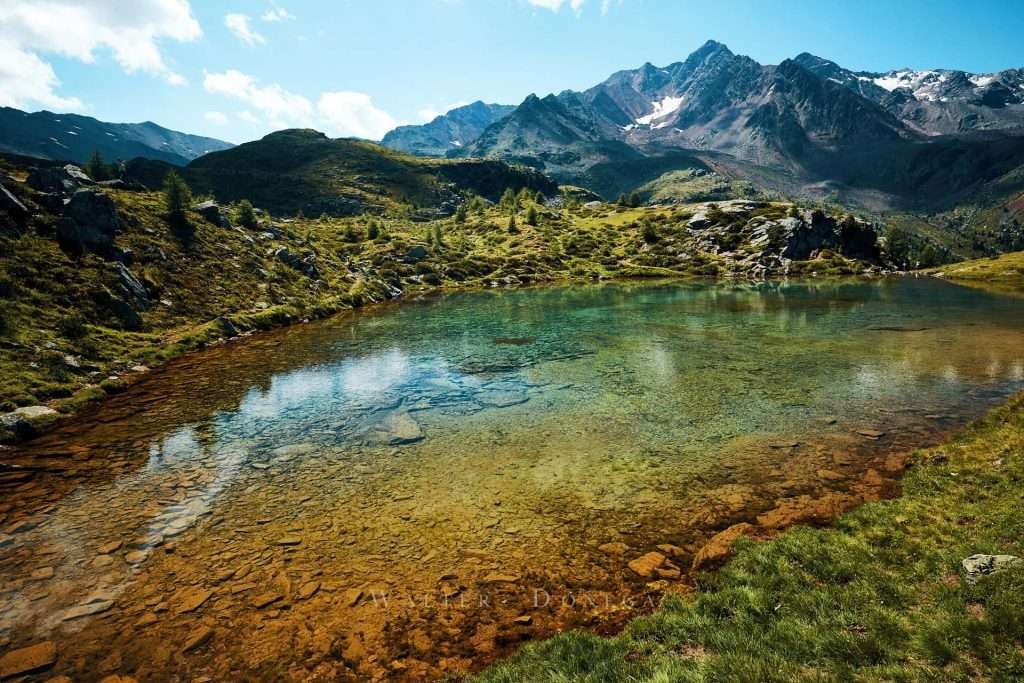
Lake Fontana Bianca is one of the most striking alpine lakes in Val d’Ultimo, located at an elevation of about 1,872 meters above sea level.
This man-made lake, surrounded by the majestic peaks of the Rhaetian Alps, is a must-see destination for those wishing to immerse themselves in the unspoiled nature of South Tyrol.
Lake Fontana Bianca is located in the upper part of Val d’Ultimo, near the Stelvio National Park.
It was created in the 1960s for hydroelectric purposes, but today it is mainly a tourist destination for hikers, fishermen and nature lovers.
The lake’s waters are fed by mountain streams and have a characteristic deep blue color, particularly striking on sunny days.
The area around White Fountain Lake is perfect for hiking.
Trails from the lake lead to many fascinating destinations, including:
- Rifugio Canziani (2,560 meters): Located about a two-hour walk from the lake, this hut offers breathtaking views of the surrounding glaciers and is a starting point for further hikes to mountain peaks.
- Covolo Lakes: A hike that leads to a series of alpine lakes set among rocks, offering an unforgettable hiking experience.
In winter, the area becomes a popular destination for cross-country skiing and snowshoeing, thanks to the abundant snow and the tranquility of the place.
The environment around Lake Fontana Bianca is characterized by rich biodiversity.
The larch and stone pine forests are home to numerous animal species, including deer, roe deer, and marmots.
During summer, the alpine meadows are colored with wildflowers, making hiking even more enjoyable.
Lake Fontana Bianca is easily reached by car from Santa Gertrude, the last village in Val d’Ultimo.
Although the road is winding, it offers spectacular views and numerous rest stops to admire the view.
Once there, parking is available near the lake, from where the main trails start.
Skiing in Val d'Ultimo
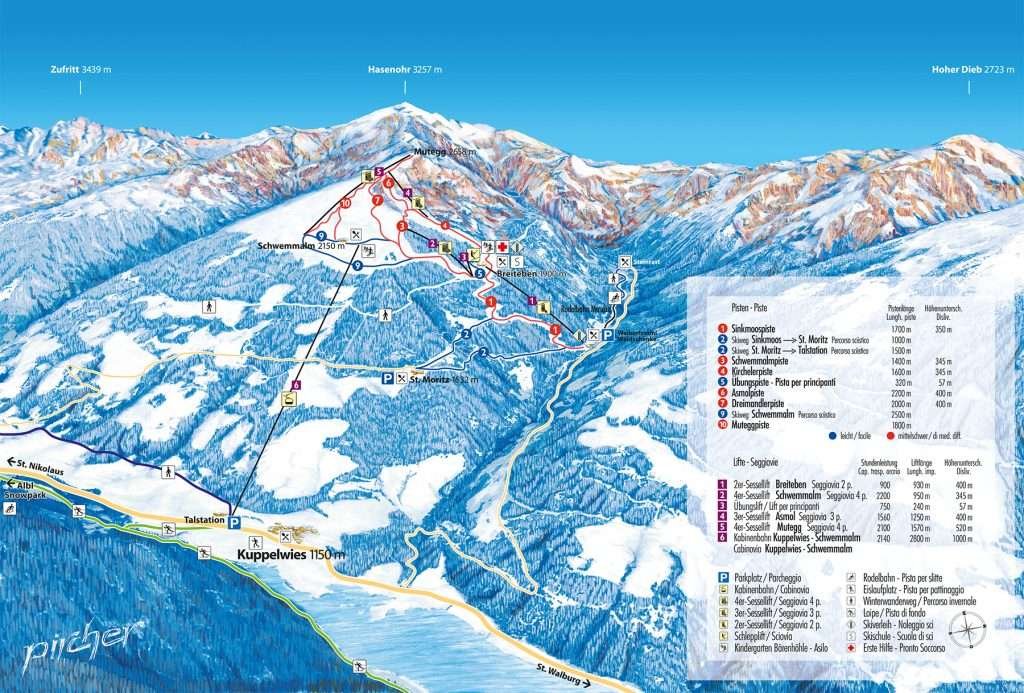
La Val d’Ultimo, è una destinazione ideale per chi cerca un’esperienza sciistica autentica e tranquilla, lontano dalle folle delle più grandi stazioni sciistiche dell’Alto Adige.
Il fulcro delle attività invernali della valle è l’area sciistica Schwemmalm, che offre una combinazione perfetta di paesaggi mozzafiato, piste ben curate e un’atmosfera accogliente.
La Schwemmalm si estende tra i 1.150 e i 2.625 metri di altitudine, garantendo neve abbondante per tutta la stagione, che di solito va da dicembre ad aprile. Con 25 chilometri di piste, la maggior parte delle quali di media difficoltà, Schwemmalm è adatta a sciatori di tutti i livelli, dalle famiglie con bambini agli sciatori più esperti. La pista più lunga, la Asmol, si estende per 5 chilometri, offrendo una discesa entusiasmante e panoramica.
Schwemmalm è particolarmente apprezzata dalle famiglie grazie alle sue infrastrutture dedicate ai più piccoli. Il Mondo Neve Schwemmy, situato presso la stazione a monte della cabinovia, è un’area giochi sulla neve con scivoli, una tenda indiana e un castello di neve. Inoltre, la scuola di sci locale offre lezioni per bambini e principianti, garantendo un ambiente sicuro e divertente per imparare a sciare.
Oltre allo sci alpino, la Val d’Ultimo offre molte altre attività invernali. Gli amanti dello sci di fondo possono esplorare i 25 chilometri di piste immerse nei boschi e nei prati della valle. Per chi cerca un’esperienza più avventurosa, ci sono percorsi per escursioni con le ciaspole e tour di sci alpinismo. Inoltre, è possibile divertirsi sulla pista naturale di slittino Moscha o cimentarsi nel pattinaggio su ghiaccio.
L’area sciistica Schwemmalm è facilmente raggiungibile in auto da Merano, seguendo la superstrada MeBo e poi la strada verso Lana e la Val d’Ultimo. Il parcheggio principale si trova vicino al Lago di Zoccolo, da dove una cabinovia porta rapidamente gli sciatori fino alle piste.
Where to sleep in Val d'Ultimo
Quando si sceglie dove alloggiare nella pittoresca Val d’Ultimo, i visitatori possono optare per una varietà di accoglienti opzioni di soggiorno adatte a ogni tipo di viaggiatore.
Gli amanti della natura e della tranquillità apprezzeranno le tipiche strutture in stile chalet e i romantiche pensioni che riflettono l’architettura tradizionale alpina, offrendo un autentico tocco di montagna e una calorosa ospitalità altoatesina.
Per coloro che cercano un tocco di lusso pur rimanendo immersi nel paesaggio alpino, la valle offre anche hotel di alta gamma con centri benessere che includono saune, piscine interne ed esterne, e trattamenti spa.
Gli alloggi agrituristici e i bed and breakfast, diffusi nella zona, permettono agli ospiti di vivere la vita di campagna e spesso coinvolgono i visitatori nelle attività agricole quotidiane.
Le case vacanza e gli appartamenti ammobiliati sono altresì disponibili per coloro che preferiscono indipendenza e flessibilità. I campeggi, chic o rustici, permettono un contatto diretto con la natura e sono ideali per le famiglie e gruppi in cerca di avventure all’aperto.
Qualunque sia la preferenza, un soggiorno in Val d’Ultimo promette di essere un’esperienza rilassante e rinvigorente, perfetta per disconnettersi dalla routine ed esplorare i rilassanti sentieri e le spettacolari montagne della regione.
How to get to Val d'Ultimo
La Val d’Ultimo è facilmente raggiungibile sia in auto che con i mezzi pubblici. Se viaggi in auto, puoi prendere l’autostrada A22 del Brennero, uscire a Bolzano Sud e proseguire sulla superstrada MeBo (Merano-Bolzano) in direzione di Merano.
Da lì, segui le indicazioni per Lana e poi per la Val d’Ultimo. La strada provinciale SP9 attraversa l’intera valle, da San Pancrazio fino a Santa Gertrude, l’ultimo paese della valle.
Per chi preferisce i mezzi pubblici, è possibile arrivare in treno fino a Merano o Lana e poi prendere l’autobus di linea 245 che collega Merano con tutti i principali villaggi della valle. Il servizio di autobus è ben collegato e rende la valle accessibile anche senza auto.
Weather Val d'Ultimo
Photographs of Val d'Ultimo