


 Français
 Deutsch
 Italiano
ACCOMMODATION IN VAL DI FIEMME
Discover the best Hotels, B&Bs and Apartments in the Mountains based on thousands of verified reviews.
AltitudeCavalese 1,000 m · Predazzo 1,018 m
WhereTrentino (Italy), Dolomites
From Bolzanoabout 42 km
Slopes110+ km · 5 areas
Fiemme–Obereggen pass€67–74 a day (2026/27)
Marcialonga31 January 2027
Updated October 2026 · Sources: Fiemme Valley tourist board, Latemar Dolomites, Dolomiti Superski, Trentino Trasporti, Wikipedia
Find a place to stay in Val di Fiemme
The Val di Fiemme (Fiemme Valley) is a Dolomites valley in north-eastern Trentino, in the province of Trento, Italy. It is the middle section of the Avisio valley: upstream is the Fassa Valley, downstream the Val di Cembra. It runs for about 28 km, from Predazzo to Capriana, between the Latemar group to the north-east and the Lagorai range to the south.
There are nine municipalities with about 20,000 people: Cavalese (the main town, at 1,000 m), Predazzo (the largest, at 1,018 m), Tesero, Ziano, Panchià, Castello-Molina di Fiemme, Ville di Fiemme, Capriana and Valfloriana. From the Ora/Egna exit of the Brenner motorway (A22) you reach the valley in about 20 km. Bolzano is about 42 km away, Trento about 60 km. The nearest airport is Bolzano (about 46 km); the main international ones are Verona (about 160 km) and Venice (about 220 km).
In winter one lift pass covers five ski areas and more than 110 km of slopes, including the 7.5 km Olimpia run on the Cermis. It is also one of Italy’s great cross-country valleys: the Marcialonga finishes here, and the 2026 Olympic cross-country and ski jumping events were held here. In summer you hike in the Lagorai and the Paneveggio nature park, ride the lifts up the Latemar and cycle the Avisio valley bike path.
In questa guida
What to see in the Fiemme Valley
The valley is compact: Castello to Predazzo is about 20 minutes by car.
Cavalese and the Palazzo della Magnifica Comunità
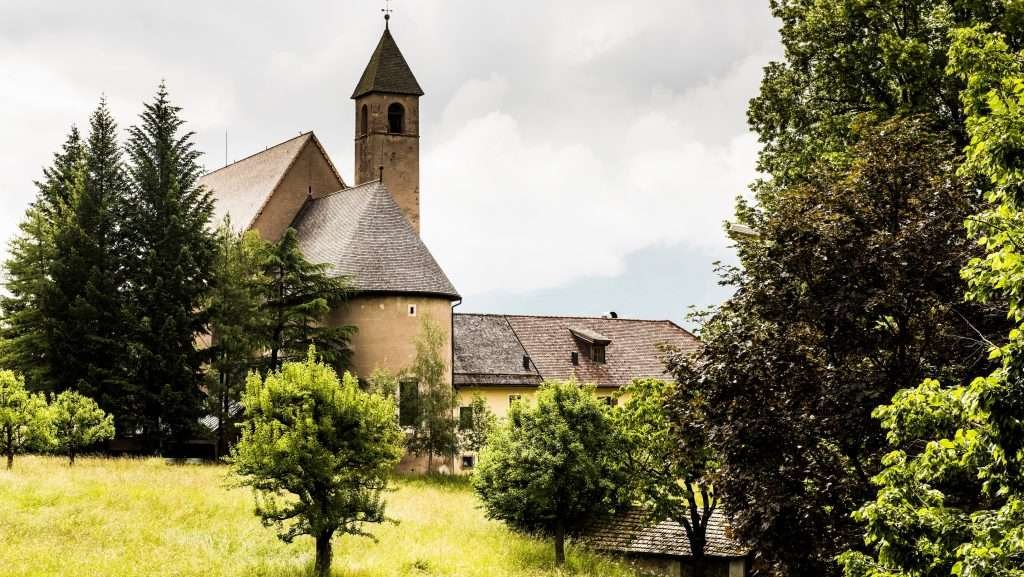
Cavalese is the main town, at 1,000 m, on a sunny terrace above the Avisio. In the centre stands the medieval Palazzo della Magnifica Comunità di Fiemme, once the residence of the prince-bishops of Trento and now a museum and art gallery. The Magnifica Comunità dates back to the Gebhard Pacts of 1111 and still exists: it owns and manages much of the valley’s forests. The museum has seasonal hours and is usually closed on Tuesdays.
Parco della Pieve and the Cavalese waterfall
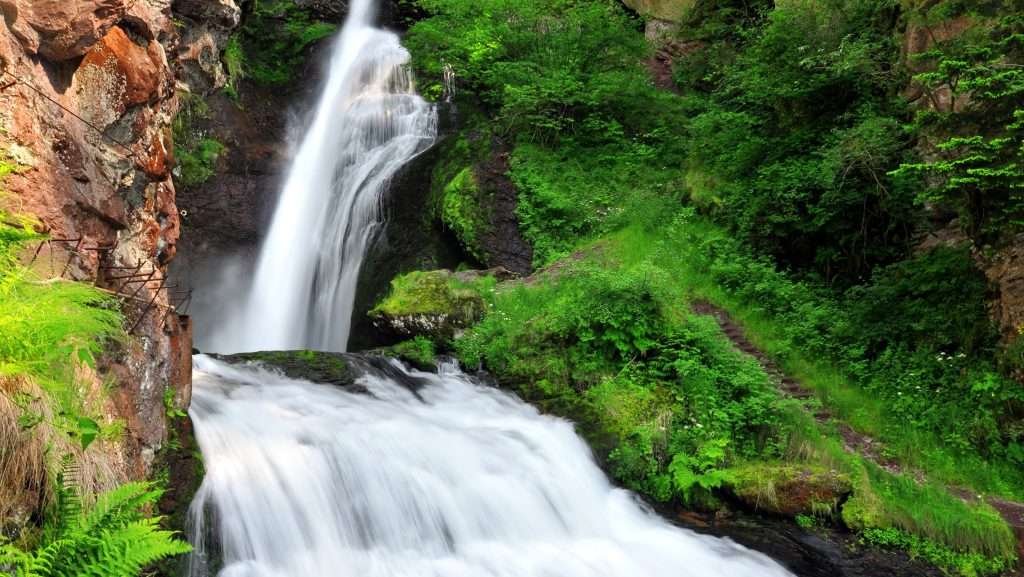
Below the centre, in the Parco della Pieve, is the church of Santa Maria Assunta, the oldest in town. Next to it, under a lime tree, is the Banc de la Reson: a ring of stone benches and a stone table where the prince-bishop’s vicar once held court. From the park an easy woodland walk leads to the Cavalese waterfall, good for families.
Alpe Cermis
From Cavalese a gondola climbs to Doss dei Laresi (1,280 m) and then to the Cermis (about 2,000 m); a chairlift continues to the Paion del Cermis, above 2,200 m. In winter this is Cavalese’s ski area; in summer it is the start of the walk to the Bombasel lakes. The Cermis cable car has a tragic history: two accidents, in 1976 and 1998, with 42 and 20 victims.
Tesero and the Stava 1985 Centre
Tesero, at around 1,000 m, has an old centre of narrow lanes, a few minutes from Cavalese. Above it, on 19 July 1985, the tailings dams of a mine collapsed, destroying the hamlet of Stava and killing 268 people. The documentation centre of the Stava 1985 Foundation tells the story in a visit of about an hour. The road continues to Pampeago, one of the gateways to the Latemar.
Lago di Tesero, the Olympic cross-country stadium
On the valley floor at Lago di Tesero is the “Fabio Canal” cross-country centre, opened in 1990. In February 2026 it hosted the Olympic cross-country races, followed by Paralympic cross-country and biathlon. It has a 3 km floodlit loop and almost 20 km of trails: in winter it is the valley’s main cross-country centre.
Predazzo and the Olympic ski jump
Predazzo is the largest village, where the Travignolo meets the Avisio. At Stalimen stands the ski jumping stadium, rebuilt for the 2026 Games: it hosted ski jumping and the jumping part of the Nordic combined. In summer the tourist board runs guided tours up to the start towers. On the main square, the Geological Museum of the Dolomites, a branch of Trento’s MUSE, explains how the mountains formed, with plenty for kids.
Latemar and the Dos Capèl Geotrail
From Predazzo a gondola rises to Gardonè (1,650 m) and a chairlift to Passo Feudo (2,200 m), below the Latemar spires. Here starts the Dos Capèl Geotrail, a 5.4 km geological loop, about 2 hours and 262 m of ascent, with 19 stations. Free; little shade, not suitable for pushchairs.
Paneveggio, the violin forest

Driving up from Predazzo towards the Rolle Pass you enter the Paneveggio – Pale di San Martino nature park. The Paneveggio forest is made of resonance spruce, the wood used by violin makers: tradition says Stradivari chose his trees here. At the visitor centre on the main road, near the Forte Buso reservoir, there is a deer enclosure and the Marciò trail, about an hour, open all year.
Rolle Pass and the Colbricon lakes

The Rolle Pass (1,984 m) links the Fiemme Valley with the Primiero, beneath the Cimon della Pala (3,184 m), the best-known peak of the Pale di San Martino. From the pass you reach the Colbricon lakes in about an hour, with little climbing. Another walk leads to the Baita Segantini hut, above 2,100 m, and down into the Val Venegia. From mid-June to mid-September the road to the Baita Segantini is closed to private cars. Over the pass lies San Martino di Castrozza.
Lavazè Pass and the Lagorai
Above Varena, the Lavazè Pass is a plateau of meadows and woods towards South Tyrol, with 80 km of cross-country trails in winter. On the other side of the valley runs the Lagorai, a long porphyry range (not dolomite), with many lakes and few roads. In the First World War it was a front line: trenches and military paths are still visible.
Villages of the Fiemme Valley

From the bottom of the valley upwards, in the order you meet them coming from Ora.
Castello-Molina di Fiemme
The first municipality after the San Lugano Pass. Molina sits low on the Avisio, at the end of the bike path; Castello is higher, on a panoramic terrace. Best for: lower budgets and quiet, with a car.
Cavalese
The main town: shops, services, bus station and the Cermis gondola from town. The Marcialonga finishes here. Best for: travellers without a car, Cermis skiers, anyone wanting a lively town, also off-season.
Ville di Fiemme (Carano, Daiano, Varena) and Capriana
Ville di Fiemme joins three villages on the sunny slope above Cavalese, on the road to the Lavazè Pass. Capriana is the lowest municipality, towards the Val di Cembra. Best for: cross-country skiers at Lavazè and anyone looking for an apartment in a small village.
Tesero and Panchià
Tesero has the most compact old centre in the valley, the Lago di Tesero and the road to Pampeago. Small Panchià lies on the valley floor between Tesero and Ziano. Best for: cross-country skiers, families, Latemar skiers via Pampeago.
Ziano di Fiemme
A flat, sunny village on the valley floor between Panchià and Predazzo, on the bike path and the Marcialonga route. Best for: families with small children, cross-country skiing and cycling without climbs.
Predazzo

The largest municipality, at the junction of the roads to the Fassa Valley and the Rolle Pass. Gondola to the Latemar and, via the hamlet of Bellamonte, access to the Alpe Lusia. Best for: skiers who want lifts from the village, hikers heading to Paneveggio and the Rolle Pass.
Valfloriana
A scattered municipality of small hamlets in the lower valley, away from the main road. Best for: silence and forest.
Skiing in the Fiemme Valley

The Val di Fiemme–Obereggen lift pass covers five areas, more than 110 km of slopes and 50 lifts, according to the tourist board:
- Alpe Cermis (Cavalese): about 27 km. The Olimpia run is 7.5 km long with about 1,400 m of vertical. Its upper part hosts the Final Climb, the last stage of cross-country skiing’s Tour de Ski.
- Latemar Dolomites (Predazzo, Pampeago and Obereggen in South Tyrol): over 50 km and 18 lifts, up to 2,400 m. 2026/27 season: from Predazzo 4 December 2026 to 4 April 2027, from Pampeago from 28 November.
- Bellamonte–Alpe Lusia: 26 km, with access from Bellamonte (Predazzo) and Moena.
- Passo Rolle: 15 km of wide runs below the Cimon della Pala.
- Oclini: a small area above the Lavazè Pass, with 5 lifts and a snow park.
Which lift pass to buy
For 2026/27 the Val di Fiemme–Obereggen day pass costs €67 for an adult in low season and €74 in high season (20 December to 9 January and 31 January to 13 March). The Dolomiti Superski pass costs €80 and €89 and also covers the Fassa Valley, the Sellaronda and the whole network: worth it if you plan to move around. Full prices: Latemar Dolomites and Dolomiti Superski.
Cross-country skiing and the Marcialonga
The valley hosted the Nordic World Ski Championships in 1991, 2003 and 2013 and the 2026 Olympic races. The two main centres are Lago di Tesero, with its floodlit loop, and the Lavazè Pass, with 80 km of high-altitude trails linked to Passo Oclini and a free car park.
The Marcialonga starts in Moena, climbs to Canazei, comes back down through the Fassa and Fiemme valleys and finishes in Cavalese: 70 km in classic technique. The 54th edition is scheduled for Sunday 31 January 2027, with a 45 km option too. Info: Marcialonga.
The 2026 Winter Olympics in the Fiemme Valley
At the Milano Cortina 2026 Games, from 6 to 22 February, the valley had two venues. Lago di Tesero hosted cross-country skiing, with equal distances for men and women for the first time. Predazzo, at the ski jumping stadium, hosted ski jumping and the jumping part of the Nordic combined; the Olympic village was in the Guardia di Finanza Alpine School. In March, Lago di Tesero hosted Paralympic cross-country and biathlon.
Summer in the Fiemme Valley
Summer lifts usually run from June to September: check the year’s dates with the tourist board. The valley’s Guest Card gives discounts on museums and services.
Bombasel lakes from the Cermis
Take the lifts from Cavalese to the Paion del Cermis, above 2,200 m. An easy, slightly rocky path leads to the Bombasel lakes in the heart of the Lagorai: a loop of about 5 km, about 200 m of ascent, under two hours’ walking.
Passo Feudo to the Torre di Pisa hut
From Passo Feudo (lifts from Predazzo) hike up to the Rifugio Torre di Pisa, at 2,671 m among the Latemar spires: about 500 m of ascent, half a day there and back. The hut usually opens from June to October.
Fiemme and Fassa Dolomites bike path

The bike path follows the Avisio for about 48 km, from Alba di Canazei to Molina di Fiemme, with about 650 m of height difference. In the Fiemme Valley it runs through Predazzo, Ziano, Panchià and Tesero down to Molina. Heading down-valley it is almost all downhill; to get back up there is the summer Bike Express, which carries bikes.
Walks with children
- Predazzo waterfall: 3.2 km loop, about an hour, 134 m of ascent, from the sports centre.
- Foresta dei Draghi at Gardonè: 1.4 km loop on a wide forest road, pushchair-friendly.
Day trips from the Fiemme Valley
- Fassa Valley: just above Predazzo, with Moena, Canazei and the Pordoi and Sella passes.
- San Martino di Castrozza: over the Rolle Pass, about 30 km from Predazzo, below the Pale di San Martino.
- San Pellegrino Pass: from Moena, slopes and trails between Trentino and the Veneto.
- Lake Carezza: over the Costalunga Pass in South Tyrol, with the Latemar reflected in the water.
- Bolzano: about 42 km, for a day in town.
Where to stay in the Fiemme Valley
Pick the village by what you plan to do.
- Cavalese: without a car and for the Cermis. Bus station, gondola from town, the widest choice.
- Predazzo and Bellamonte: for the Latemar and Alpe Lusia, Paneveggio, the Rolle Pass and the Fassa Valley.
- Tesero and Pampeago: for cross-country at Lago di Tesero and the Latemar via Pampeago.
- Ziano and Panchià: families and quiet stays on the bike path.
- Ville di Fiemme and Lavazè: cross-country skiers, apartments, lower prices.
- Castello-Molina, Capriana, Valfloriana: budget and quiet, with a car.
You will mostly find family-run hotels, apartments, B&B-style garni and farm stays (agritur). Book early for Christmas, Marcialonga week and August.
How to get to the Fiemme Valley
By car
On the Brenner motorway (A22) take the Ora/Egna exit and follow the SS48 Dolomites road over the San Lugano Pass: after about 20 km you are in Castello and Cavalese. In the valley there are two roads: the main road through Cavalese and the villages, and a faster one along the Avisio on the valley floor. From the Veneto you can come over the Rolle Pass or the San Pellegrino Pass. From 15 November to 15 April winter tyres or snow chains on board are compulsory. Italian motorways have tolls.
By train
The valley has no railway: the old Ora–Predazzo line closed in 1963. The nearest station is Ora/Auer, on the Brenner line; Trento and Bolzano also work.
By bus
Trentino Trasporti’s B104 intercity line links Trento, Ora station and Cavalese; many runs continue to Predazzo and the Fassa Valley. From Ora station to Cavalese takes about 47 minutes, with roughly one bus an hour during the day; Cavalese to Predazzo takes about 20 minutes. Timetables: Trentino Trasporti or the Mio Trentino app.
By plane
Distances from the valley: Bolzano about 46 km, Verona about 160 km, Innsbruck about 170 km, Venice about 220 km, Bergamo about 250 km, Munich about 310 km, Milan about 330 km. In winter, at weekends, shuttles run from northern Italian airports to the valley: dates and prices from the Fiemme Valley tourist board. Otherwise, take a train from Verona to Trento or Ora and the bus from there.
Parking
In Predazzo there is a large car park at the Latemar lift station in Stalimen. At the Lavazè Pass the cross-country centre car park is free, and the Guest Card gives free ski bus access. In high season, at the Rolle Pass and Passo Feudo, arrive early or take the bus.
Frequently asked questions about the Fiemme Valley
Where is the Fiemme Valley?
In Trentino, province of Trento, in the Italian Dolomites. It is the middle part of the Avisio valley, between the Fassa Valley and the Val di Cembra, about 42 km from Bolzano and 60 km from Trento.
What is the altitude of the Fiemme Valley?
The valley floor lies at about 800–1,000 m: Cavalese is at 1,000 m, Predazzo at 1,018 m. The slopes reach 2,400 m on the Latemar.
Which villages are in the Fiemme Valley?
Nine municipalities: Castello-Molina di Fiemme, Capriana, Valfloriana, Cavalese, Ville di Fiemme (Carano, Daiano, Varena), Tesero, Panchià, Ziano di Fiemme and Predazzo.
How many km of slopes does the Fiemme Valley have?
More than 110 km in five areas with the Val di Fiemme–Obereggen pass, €67–74 a day for an adult in 2026/27. The Dolomiti Superski (€80–89) covers the whole network.
Where were the 2026 Olympics held in the Fiemme Valley?
Cross-country skiing at Lago di Tesero; ski jumping and Nordic combined jumping at the Predazzo ski jumping stadium.
When is the Marcialonga 2027?
Sunday 31 January 2027: 70 km classic from Moena to Cavalese.
How do I get to the Fiemme Valley without a car?
By train to Ora/Auer, Trento or Bolzano, then Trentino Trasporti bus B104: about 47 minutes from Ora to Cavalese.
What are the easy hikes in the Fiemme Valley?
The Bombasel lakes from the Cermis, the Dos Capèl Geotrail, the Colbricon lakes and the Cavalese waterfall.
What is the difference between the Fiemme and Fassa valleys?
They are two sections of the Avisio valley. The Fassa Valley is the upper, Ladin part, from Moena to Canazei; the Fiemme Valley is lower, from Predazzo to Capriana, with Cavalese as its main town.
Weather: Val di Fiemme
Photos: Val di Fiemme


