


 Français
 Deutsch
 Italiano
HOUSING IN LOMBARDY
Discover the best Hotels, B&Bs and Apartments in the Mountains based on thousands of verified reviews.
Main areasValtellina, Valcamonica, Valchiavenna, Orobie
Highest pointPunta Perrucchetti, 4,020 m (Bernina)
Ski areasLivigno 115+ km · Bormio 50 km · Pontedilegno-Tonale 46 runs
Resorts in this guide6, incl. St. Moritz and Val di Sole across the border
AirportsBergamo Orio al Serio, Milan Linate and Malpensa
Ski seasonlate November 2026 – early May 2027 (Livigno)
Updated October 2026 · Sources: Skipass Livigno, Bormio Ski, Consorzio Pontedilegno-Tonale, Stelvio National Park, Trenord, Wikipedia
Find a place to stay in Lombardy
Lombardy’s mountains sit almost entirely in the north of the region, along the borders with Switzerland and Trentino. Their heart is Valtellina, the 120 km valley of the Adda river that runs down to Lake Como, with Sondrio as its main town. To the east is Valcamonica, in the province of Brescia; to the west, Valchiavenna; south of Valtellina, the Orobie Alps and the valleys above Bergamo. The highest point in the region is Punta Perrucchetti, 4,020 metres, in the Bernina massif.
For skiing, a few big names stand out: Livigno (more than 115 km of slopes), Bormio with its thermal baths and Olympic piste, and the Pontedilegno-Tonale area with the Presena glacier. From Milan they are 3 to 4 hours by car, and from Milan and Bergamo airports you can reach all of them in a day. In summer you have the Stelvio National Park, the highest road pass in Italy, mountain lakes, huts and some of cycling’s most famous climbs.
This page helps you choose: for each area you will find who it suits and a link to the full guide. All figures (slopes, prices, distances) match the individual resort guides and are up to date for the 2026/27 season.
In questa guida
The best mountain resorts in Lombardy
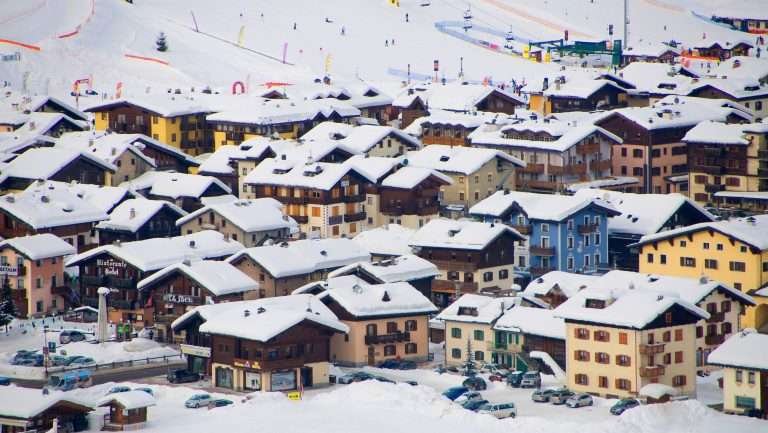 Livigno
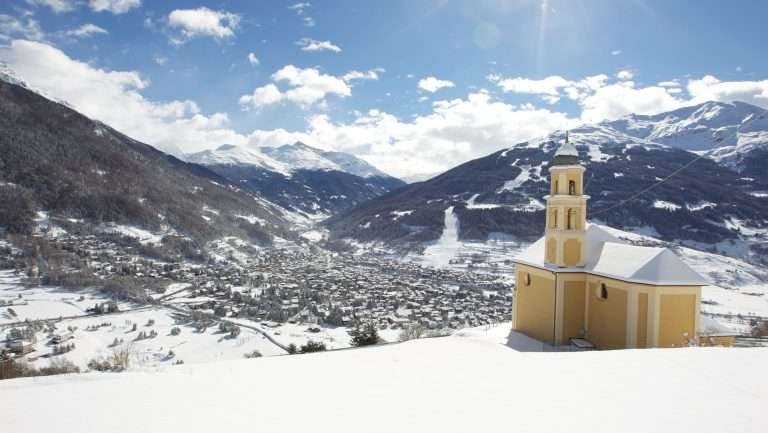 Bormio
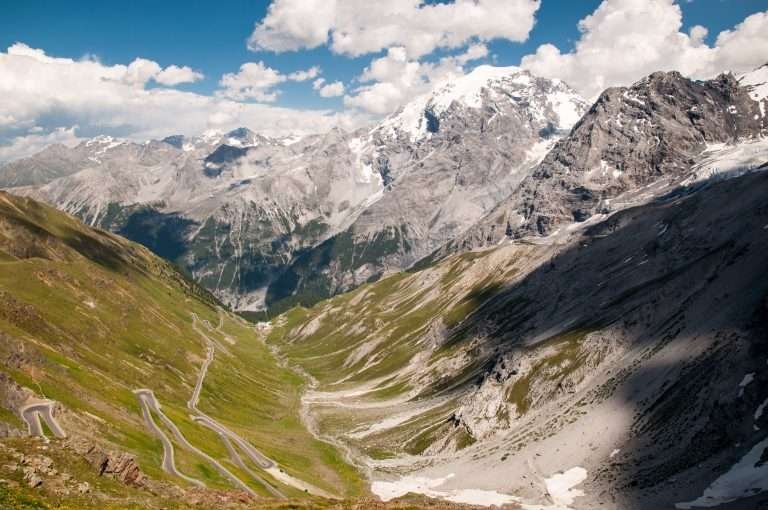 Stelvio Pass
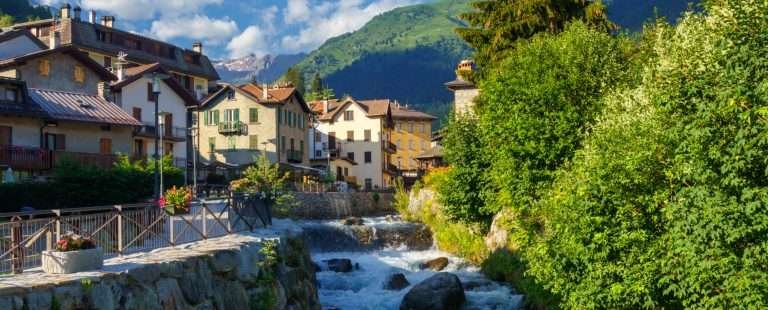 Ponte di Legno
 Val di Sole
 Saint Moritz
 Aprica
 Madesimo
 Valmalenco
 Santa Caterina Valfurva
Start with Upper Valtellina, the highest and snowiest part of the region, in the province of Sondrio. Livigno, Bormio and the Stelvio are all less than an hour apart.
Livigno

Livigno sits at 1,816 metres in a valley on the Swiss border, beyond the main Alpine watershed. It is a duty-free zone: no Italian VAT and cheaper fuel, with strict allowances when you leave. In winter it has more than 115 km of slopes and 31 lifts on two sides of the valley, Carosello 3000 and Mottolino, with a season from 28 November 2026 to 2 May 2027. At the Milano Cortina 2026 Olympics it hosted snowboard and freestyle skiing.
Best for skiers who want plenty of snow and slopes in one place, for young crowds and snowboarders; in summer, for cyclists and families. Everything else is in our Livigno guide.
Bormio
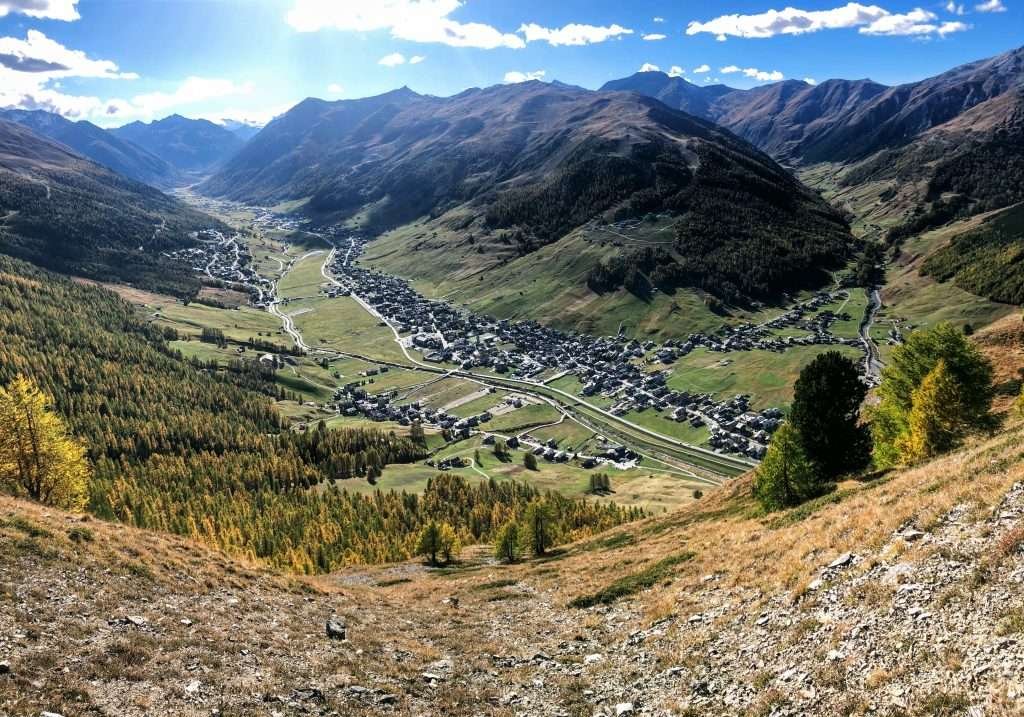
Bormio, at 1,225 metres, is the historic town of Upper Valtellina, with a medieval centre and three thermal spas. It has about 50 km of slopes and 12 lifts up to 3,017 metres, including the Stelvio piste where the men’s Olympic alpine races were held in 2026. The 2026/27 season runs from 4 December to 11 April.
The right pick if you want to mix skiing with hot springs, or prefer a real town to a purpose-built resort. In summer it is the base for the Stelvio and Gavia passes. Read the Bormio guide.
Stelvio Pass
The Stelvio Pass, 2,758 metres, is the highest road pass in Italy and the second highest in Europe after the Col de l’Iseran. From Bormio it is 21.5 km and 40 hairpins; the whole road has 88. It is closed in winter and usually open from late May to late October or early November.
You don’t stay here, you drive, ride or cycle up. The National Park lists Stelvio Bike Day for Saturday 28 August 2027, with the road closed to motor traffic. Buses, opening times and summer skiing are in the Stelvio Pass guide.
Heading south-east over the Gavia Pass (open in summer only), you reach Valcamonica, in the province of Brescia.
Ponte di Legno
Ponte di Legno lies at 1,258 metres at the top of Valcamonica, below the Tonale Pass. It is part of the Pontedilegno-Tonale ski area: 46 runs and 29 lifts between 1,121 and 3,000 metres, across Lombardy and Trentino, with the Presena glacier skiable well into spring. An adult day pass for 2026/27 costs €52 to €70 depending on the period.
Of the big resorts it is the closest to Bergamo airport, about 2 hours away. Good for families and anyone who likes a village with a pedestrian centre. Full guide: Ponte di Legno.
Two destinations outside Lombardy that visitors here always consider: the Tonale and Val di Sole, just over the border in Trentino, and the Engadine in Switzerland.
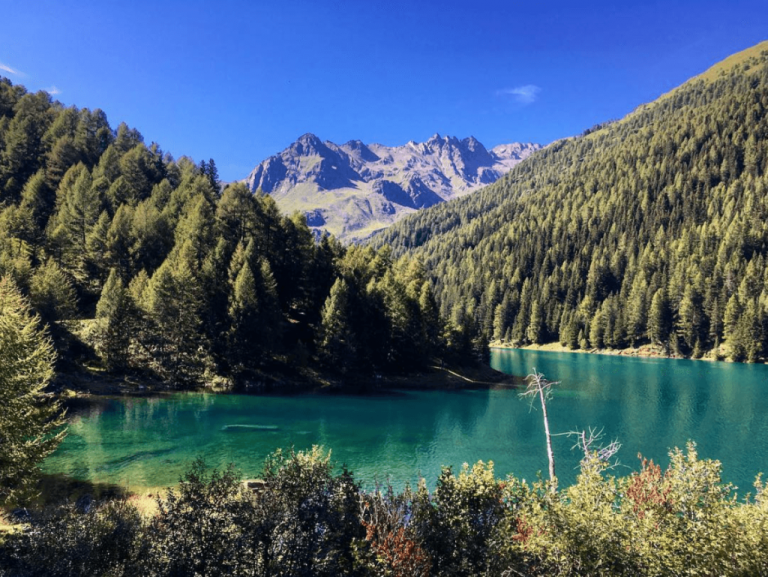
Val di Sole and the Tonale Pass (Trentino)
Val di Sole is the valley of the Noce river, running down from the Tonale Pass (1,884 metres) towards Val di Non. The Tonale is 12 km from Ponte di Legno and forms the Trentino side of the same ski area. Further down are Folgarida-Marilleva, linked to Madonna di Campiglio and Pinzolo (about 150 km of slopes), and Pejo 3000.
For skiers who want lots of mileage, plus rafting in summer and spas at Pejo and Rabbi. You can get there without a car on the Trento–Malè–Mezzana railway. Read the Val di Sole guide.
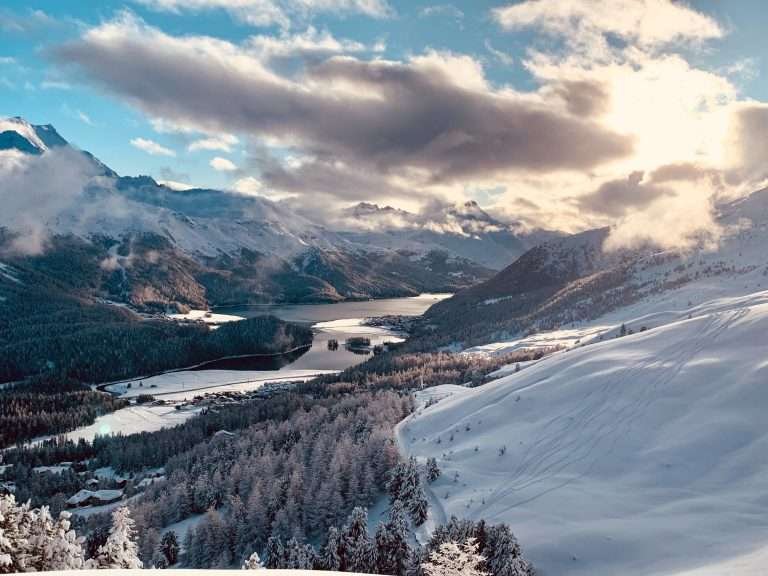
St. Moritz, the trip across the border
St. Moritz is in Switzerland, in the canton of Graubünden, at 1,822 metres in the Upper Engadine. From Milan it is about 169 km via Chiavenna and the Maloja Pass; from Tirano the Bernina Express takes about 2 hours 15 minutes on a UNESCO World Heritage line (seat reservation required). In summer Livigno is about 44 km away.
It hosted the Winter Olympics twice, in 1928 and 1948. A day trip from Valtellina or a holiday in its own right, paid in Swiss francs. Full guide: St. Moritz.
The following areas don’t have their own guide on this site yet, but they are worth knowing.
Valmalenco
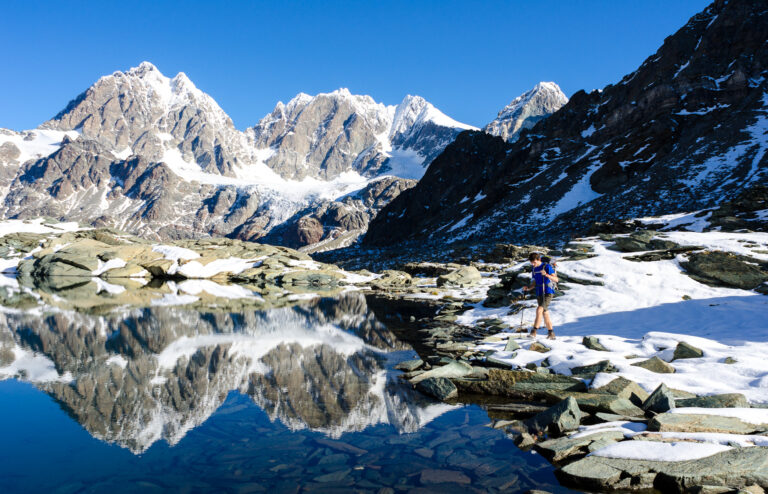
Valmalenco climbs north from Sondrio towards the Bernina massif, the highest group in Lombardy. The main village is Chiesa in Valmalenco, at 960 metres. A cable car runs from the village up to Alpe Palù and its ski area. In summer it is hut-to-hut and high-mountain country: the Alta Via della Valmalenco loops around the valley in eight stages.
Madesimo and Valchiavenna
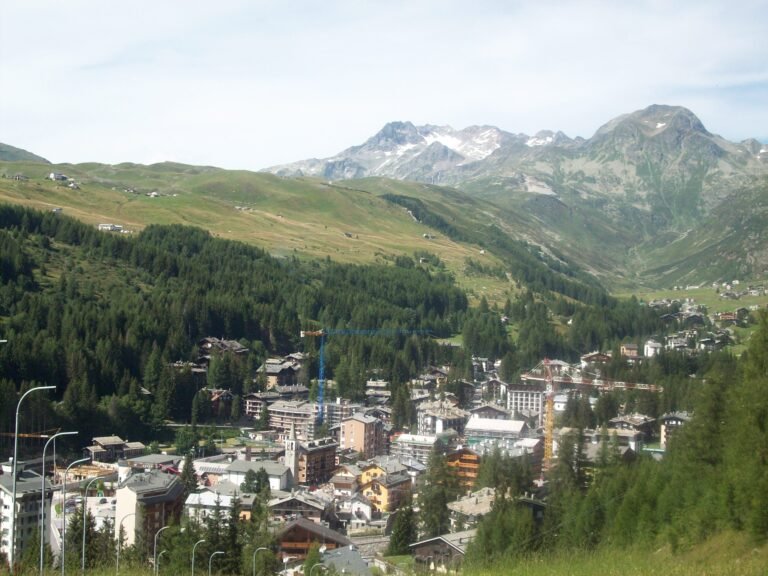
Madesimo sits at about 1,550 metres in Valle Spluga, the upper part of Valchiavenna (province of Sondrio). Its ski area is the Skiarea Valchiavenna, known among experts for a demanding off-piste run, the Canalone. Above it the Splügen Pass (2,117 metres) leads to Splügen in Switzerland; it is usually closed from November to May.
Aprica
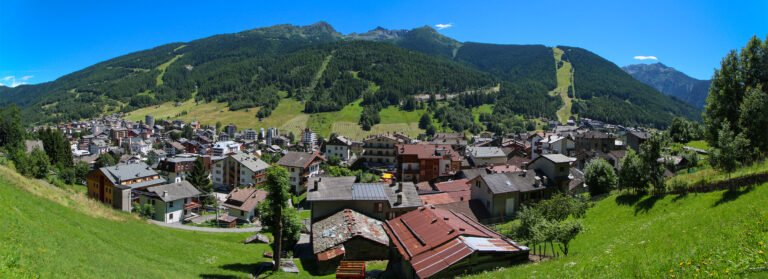
Aprica, at 1,181 metres, sits on the easiest crossing between Valtellina and Valcamonica. It is a traditional ski resort with the Aprica-Corteno area, easy to reach from both valleys. In summer there are walks in the Pian di Gembro nature reserve and the Orobie Valtellinesi park.
Valcamonica
Below Ponte di Legno, Valcamonica follows the Oglio river down to Lake Iseo. Its rock carvings have been a UNESCO World Heritage Site since 1979: more than 300,000 figures carved into the rock, with the main concentration at Naquane, in Capo di Ponte. Above the valley rises the Adamello group (3,554 metres), protected by a regional park.
The Orobie Alps and the Bergamo valleys
The Orobie Alps separate Valtellina from the valleys above Bergamo. The highest peak is Pizzo Coca, 3,050 metres. On the Bergamo side are Val Brembana, Val Seriana and Val di Scalve. In Val Brembana the main town is San Pellegrino Terme, with its spa and Art Nouveau buildings; higher up, Foppolo and Piazzatorre are small ski resorts. These are the mountains closest to Milan and Bergamo, ideal for a day trip.
Skiing in Lombardy
There are three major ski areas, all with official 2026/27 data:
- Livigno: more than 115 km of slopes, 31 lifts, up to almost 2,800 metres. Adult day pass €51.50 to €74.50. Season 28 November 2026 to 2 May 2027.
- Bormio: about 50 km, 12 lifts, from 1,200 to 3,017 metres. Adult day pass €40 to €65 (dynamic pricing: buy online in advance to pay less). A multi-day pass covers Bormio, Santa Caterina Valfurva and Cima Piazzi–San Colombano. Season 4 December 2026 to 11 April 2027.
- Pontedilegno-Tonale: 46 runs, 29 lifts, from 1,121 to 3,000 metres, with the Presena glacier. Adult day pass €52 to €70. Children born in 2019 or later ski free with a paying family member.
How to choose: Livigno for the biggest area and the longest season; Bormio for vertical (about 1,800 metres) and a World Cup black run; Pontedilegno-Tonale for the glacier and the shortest transfer from Bergamo airport. Livigno and Bormio also offer free passes for young children with a paying adult: check the rules in each guide.
There are also mid-sized resorts such as Aprica, Madesimo, Valmalenco and the small ski areas in the Bergamo valleys. We don’t list their kilometres or prices here because sources disagree: check the official websites before you go.
Cross-country: in Upper Valtellina, the Pista Viola at Valdidentro and the Pista Valtellina at Santa Caterina; at Ponte di Legno, the Valsozzine centre; in Livigno, loops along the valley floor.
Summer in Lombardy
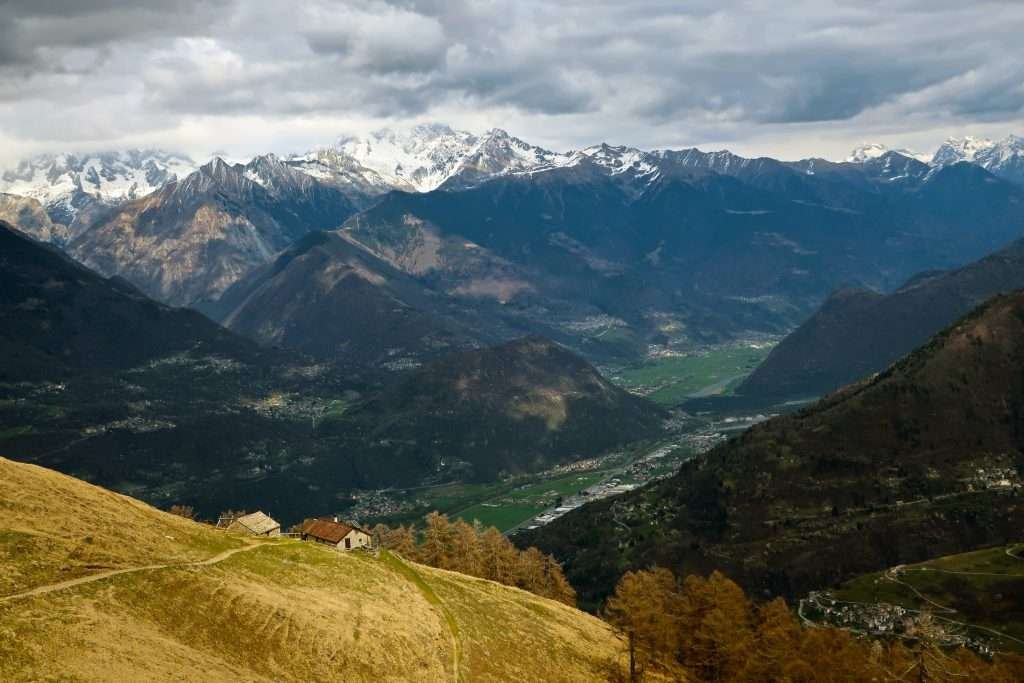
In summer, Lombardy’s mountains mean above all the Stelvio National Park: more than 1,300 km² across the provinces of Sondrio, Brescia, Trento and Bolzano, established in 1935. You can enter it from Bormio, Valfurva, Ponte di Legno and the Tonale.
- Passes by bike and motorbike: Stelvio (2,758 m), Gavia (over 2,600 m), Mortirolo, Foscagno. The Stelvio and Gavia are open in summer only.
- Easy walks: in Livigno, the lakeside path and the 10 km cycle and footpath; in Bormio, the four-churches walk; at Ponte di Legno, the Pezzo wildlife area.
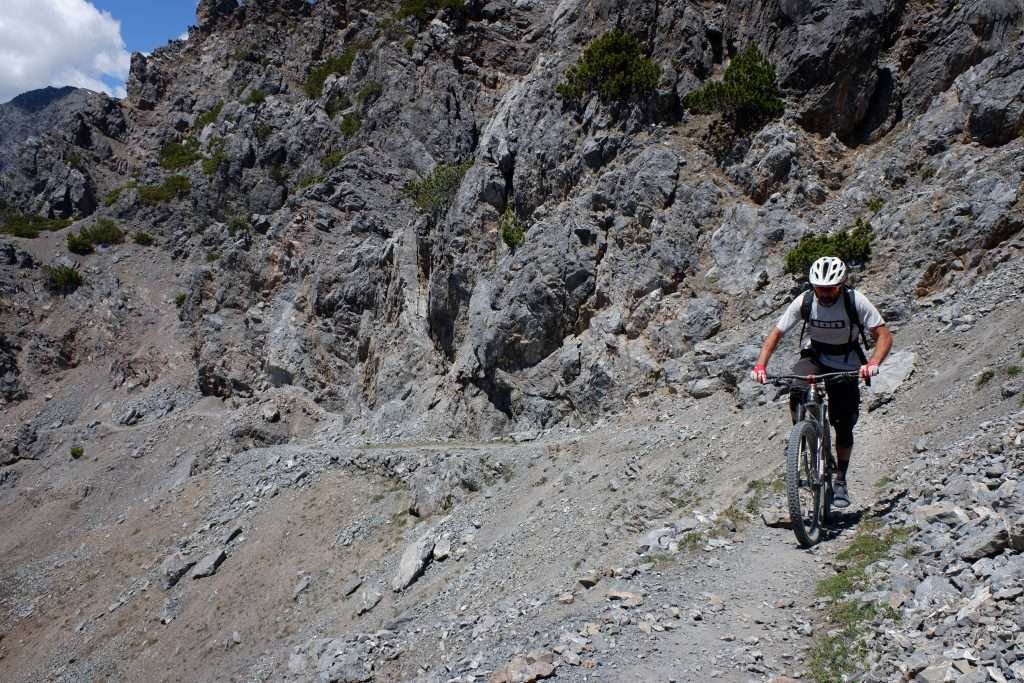
- Harder hikes: the Bei Laghetti from Bormio 3000, the First World War trails at the Tonale, the Sentiero dei Fiori on the Presena (a via ferrata for experienced hikers).
- Bike parks: Livigno has dozens of kilometres of trails on both sides of the valley, usually from mid-June.
- Summer skiing: on the Livrio glacier at the Stelvio, between about 2,800 and 3,400 metres, when the pass is open (in 2026 suspended from 15 August because of the heat).
- Spas: Bormio all year round; just over the border, Pejo and Rabbi in Val di Sole.
Outside the park, Valmalenco and Valchiavenna are for huts and high altitude; the Orobie and Val Brembana for day hikes from Bergamo and Milan.
How to choose the right resort
- Families: Ponte di Legno (free ski passes for kids with a family member, pedestrian centre) or Livigno (free village bus, 10 km cycle path, Baby Free offer).
- Expert skiers: Bormio with the Stelvio piste and 1,800 metres of vertical; the Presena at the Tonale; the Canalone at Madesimo with a guide.
- No car: train Milan–Tirano, then bus to Bormio and Livigno; train Brescia–Iseo–Edolo, then bus to Ponte di Legno; Trento–Malè railway to Val di Sole.
- Weekend from Milan: Aprica, Valmalenco and the Bergamo valleys are closest; Bormio and Ponte di Legno are about 3 hours away.
- Budget: early and late season weeks, when day passes drop to €40 (Bormio) and €51.50 (Livigno). In Livigno you also save on shopping thanks to the duty-free status.
- Luxury and events: St. Moritz, across the border.
- Nature and quiet: the Stelvio National Park in summer, Valfurva, Val di Rabbi, Valmalenco.
The mountain ranges of Lombardy
Lombardy’s mountains fall into four main groups, from north to south:
- Rhaetian Alps: the highest part, along the Swiss and Trentino borders. They include the Bernina massif with Punta Perrucchetti (4,020 m), the region’s highest point; the main summit of Piz Bernina (4,048 m) is just across the border in Switzerland. Further east is the Ortles-Cevedale group around the Stelvio, and to the south-east the Adamello (3,554 m) above Valcamonica.
- Lepontine Alps: west of Valchiavenna. The Splügen Pass (2,117 m) traditionally marks the boundary between the Lepontine and Rhaetian Alps.
- Orobie Alps: the range between Valtellina and the Bergamo valleys, from Lake Como to the Aprica Pass. Highest peak: Pizzo Coca, 3,050 m.
- Lombard Prealps: the lower mountains above the big lakes and the plain, such as the Grigne and the Resegone above Lecco.
The main valleys are Valtellina (Adda), Valchiavenna, Valcamonica (Oglio), Val Brembana (Brembo), Val Seriana and Val di Scalve. Side valleys branch off Valtellina, including Valmalenco, Val Masino, Valfurva and Val Grosina.
Mountain lakes in Lombardy

Lombardy’s famous lakes, Como, Iseo and Garda, lie at the foot of the mountains. Higher up, the lakes worth seeing are mostly in Upper Valtellina:
- Lago di Livigno: a reservoir at about 1,805 metres, held by the Punt dal Gall dam on the Swiss border. Almost flat lakeside path, kayak and pedalo hire.
- Cancano and San Giacomo lakes: in Valle di Fraele above Bormio. The loop around the lakes works by mountain bike with children too; in summer car access is regulated.
- Bei Laghetti: about ten small lakes above Bormio, reached by the Bormio 3000 cable car.
- Lago Bianco: at the Gavia Pass, on the summer-only road between Bormio and Ponte di Legno.
What to eat in Lombardy's mountains
Mountain food in Lombardy is mostly from Valtellina. Pizzoccheri are buckwheat noodles with cabbage, potatoes and cheese, typical of Teglio. Sciatt are buckwheat fritters with a melted cheese centre. Then there is bresaola, Bitto and Casera cheeses, and red wines from Nebbiolo grapes grown on terraces: Valtellina Superiore and Sforzato, made from dried grapes.
Where to stay in Lombardy
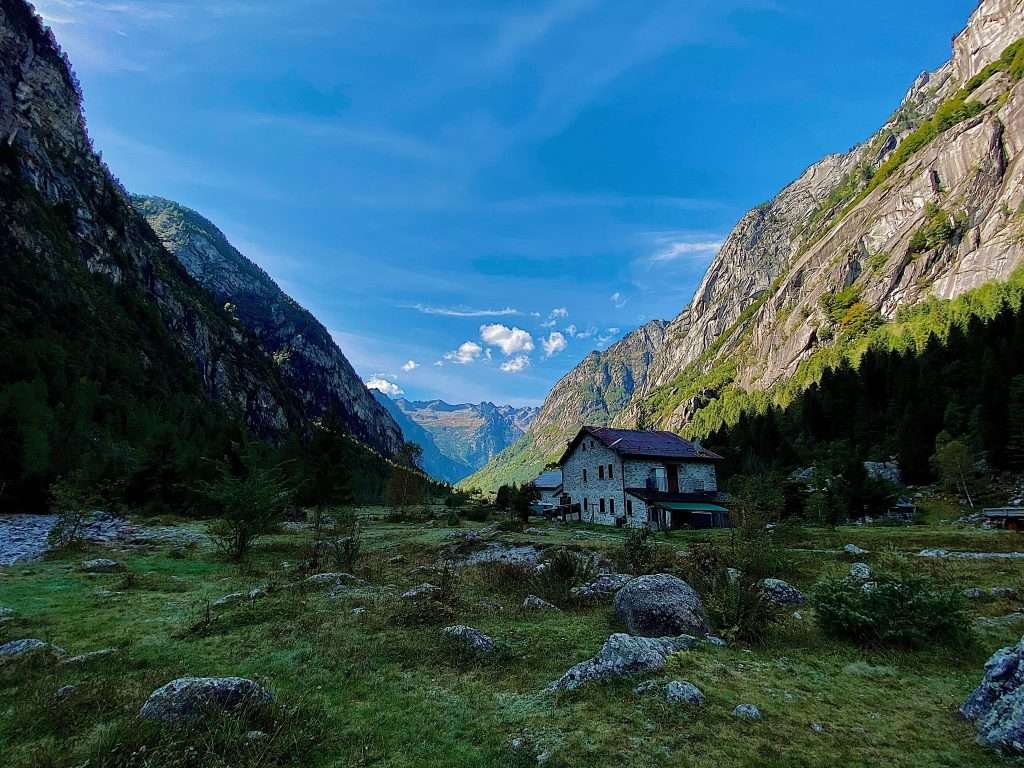
- For maximum skiing: Livigno, near the Carosello 3000 or Mottolino lifts, or along the free bus stops.
- Skiing and spas: Bormio, in the centre or near the gondola; the Bagni Vecchi and Bagni Nuovi are just outside town, at Premadio.
- Families arriving via Bergamo or Brescia: Ponte di Legno or Temù, or the Tonale Pass if you want ski-in, ski-out.
- No car: Bormio and Livigno (bus from Tirano), Ponte di Legno (bus from Edolo), Val di Sole along the railway.
- Short breaks: Aprica, Valmalenco and Val Brembana, closer to Milan.
- Budget: apartments and residences, ideally early or late in the season when ski passes are cheaper too.
You’ll find hotels, apartments, chalets and farm stays. For Christmas, New Year and February, book early.
How to get to Lombardy's mountains
By car. From Milan to Upper Valtellina take the SS36 to Lecco and Colico, then the SS38 via Sondrio and Tirano to Bormio: about 200 km to Bormio (3.5 hours) and about 235 km to Livigno (4 hours) over the Foscagno, open all year. For Ponte di Legno take the A4 to Brescia and the SS42 up Valcamonica: just under 3 hours from Milan. For Livigno and the Foscagno, winter tyres or chains are compulsory from 15 October to 30 April.
By train. Trenord’s Milano Centrale–Tirano train runs via Sondrio in about 2.5 hours, roughly every hour; from Tirano take the bus to Bormio and Livigno. For Valcamonica there is the Brescia–Iseo–Edolo line (about 2 hours), then a bus to Ponte di Legno. For Val di Sole, the Trento–Malè–Mezzana railway. From Tirano the Bernina Express runs to St. Moritz.
By plane. The handiest airport is Bergamo Orio al Serio: about 2 hours from Ponte di Legno and 3 hours from Bormio. Then Milan Linate and Malpensa. For Livigno, Zurich and Innsbruck also work, via Switzerland; for Val di Sole, Verona and Bolzano. In winter Livigno and Ponte di Legno run airport shuttles: check the timetables on their official sites.
Frequently asked questions about Lombardy's mountains
What is the highest mountain in Lombardy?
Punta Perrucchetti, 4,020 metres, in the Bernina massif. The main summit of Piz Bernina (4,048 m) is in Switzerland.
What are the mountain ranges of Lombardy?
The Rhaetian Alps (Bernina, Ortles-Cevedale, Adamello), the Lepontine Alps west of Valchiavenna, the Orobie Alps between Valtellina and the Bergamo valleys, and the Lombard Prealps above the lakes.
What is the biggest ski resort in Lombardy?
Livigno, with more than 115 km of slopes and 31 lifts. Next come Pontedilegno-Tonale (46 runs, 29 lifts, partly in Trentino) and Bormio (about 50 km).
Which ski resorts are closest to Milan?
The small resorts in the Bergamo valleys, Aprica and Valmalenco are the nearest. Bormio and Ponte di Legno are about 3 hours by car, Livigno about 4.
Livigno or Bormio?
Livigno for more slopes, a longer season and duty-free shopping; Bormio for the old town, the spas and the vertical. They are 38 km apart.
Can I reach Lombardy's mountains without a car?
Yes: train Milan–Tirano and bus to Bormio and Livigno, or train Brescia–Iseo–Edolo and bus to Ponte di Legno. Check timetables before you travel.
Is the Stelvio Pass open in winter?
No. It usually opens between late May and June and closes between late October and early November. The Gavia is also closed in winter.
Where can I ski on a glacier in Lombardy?
On the Presena glacier in the Pontedilegno-Tonale area, up to 3,000 metres; in summer on the Livrio glacier at the Stelvio, when the pass is open.
How far is St. Moritz from Valtellina?
Not far: about 2 hours 15 minutes from Tirano on the Bernina Express, or about 44 km from Livigno in summer. It is in Switzerland, so bring valid ID and Swiss francs.
Photos: Lombardia


