


 Français
 Deutsch
 Italiano
ACCOMMODATIONS IN DAVOS
Discover the best Hotels, B&Bs and Apartments in Mountain based on thousands of verified reviews.
Altitude1,560 m
WhereLandwasser valley, canton of Graubünden
From Zurich Airport2 h 40 by train, about 160 km by car
Pistes5 areas: Parsenn 97 km, Jakobshorn 55 km, Rinerhorn 39 km, Madrisa 31 km
Ski passregional 1-day CHF 94 (high season 2026/27)
SeasonParsenn 20/11/2026 – 4/4/2027, Jakobshorn to 11/4/2027
Updated October 2026 · Sources: Davos Klosters Mountains, davos.ch, Rhaetian Railway, SBB timetable
Davos is in eastern Switzerland, in the canton of Graubünden, in the Landwasser valley. The town sits at 1,560 metres (Davos Platz station at 1,540 m) and has about 10,700 residents. The municipality is huge: 284 km², from 1,051 to 3,145 metres, made up of Davos Dorf, Davos Platz, Frauenkirch, Glaris, Monstein and Wiesen. Klosters, the other village of the Davos Klosters resort, is 12 km away.
Zurich is the gateway. From Zurich Airport the train takes 2 hours 40 to 2 hours 50 with two changes; from Zurich main station it is 2 hours 20 with one change at Landquart. By car it is about 160 km from the airport, around 2 hours 10. Milan is about 240 km away, roughly 3 and a half hours by road.
Davos is a real mountain town, not a purpose-built resort. In winter you get five ski areas on one regional pass, more than 190 km of cross-country trails and the Spengler Cup ice hockey tournament between Christmas and New Year. In summer there is a lake for swimming, quiet side valleys such as Sertig and Dischma, high-level trails and the Rhaetian Railway to some of the best-known viaducts in the Alps.
What to see in Davos
Davos Platz and Davos Dorf
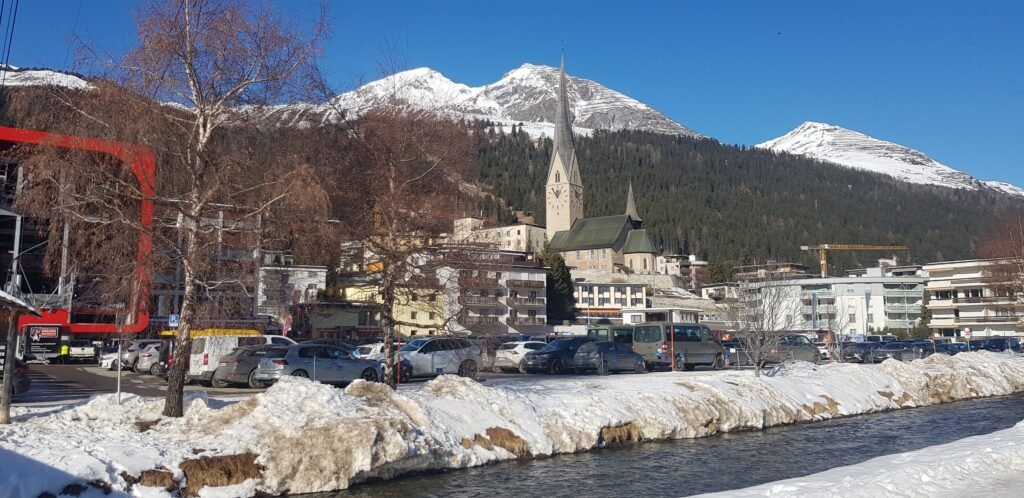
Davos stretches for several kilometres along the valley floor and has two centres, each with its own station. Davos Platz, to the south, is the busier part: the Promenade with its shops, the Congress Centre, the ice stadium, the Kirchner Museum and the Jakobshorn cable car. Davos Dorf, to the north, is quieter and close to the lake and the Parsenn funicular. Local buses link the two; with the guest card (Premium Card) local buses and trains are free from your first night.
Lake Davos (Davosersee)
The lake lies just north of Davos Dorf. A nearly flat path loops around it: about 5 km, just over an hour, 50 metres of ascent. In summer people swim, sail, windsurf and paddleboard here.
Schatzalp
Schatzalp is a sunny, car-free terrace about 300 metres above Davos Platz, four minutes up by funicular. At the top stands the former sanatorium opened in 1900, now a hotel. It is the setting that inspired Thomas Mann’s “The Magic Mountain” (Der Zauberberg, 1924), the novel set in Davos.
Next door, the Alpinum is an alpine garden with more than 1,300 plant species. In winter a toboggan run of almost 3 km with 18 bends leads back down to Davos Platz: free to use and lit until 11 pm. Sledges can be hired at the funicular’s valley station.
Kirchner Museum
The expressionist painter Ernst Ludwig Kirchner lived in Davos from 1917 to 1938. The museum devoted to him opened in 1992, designed by Zurich architects Annette Gigon and Mike Guyer, and is still seen as a landmark of modern museum design. It holds many of his most important works.
Address: Promenade 82, Davos Platz. Open Tuesday to Sunday, 10 am to 6 pm, closed on Mondays. Exhibitions and prices on the Kirchner Museum website.
The ice stadium, HC Davos and the Spengler Cup
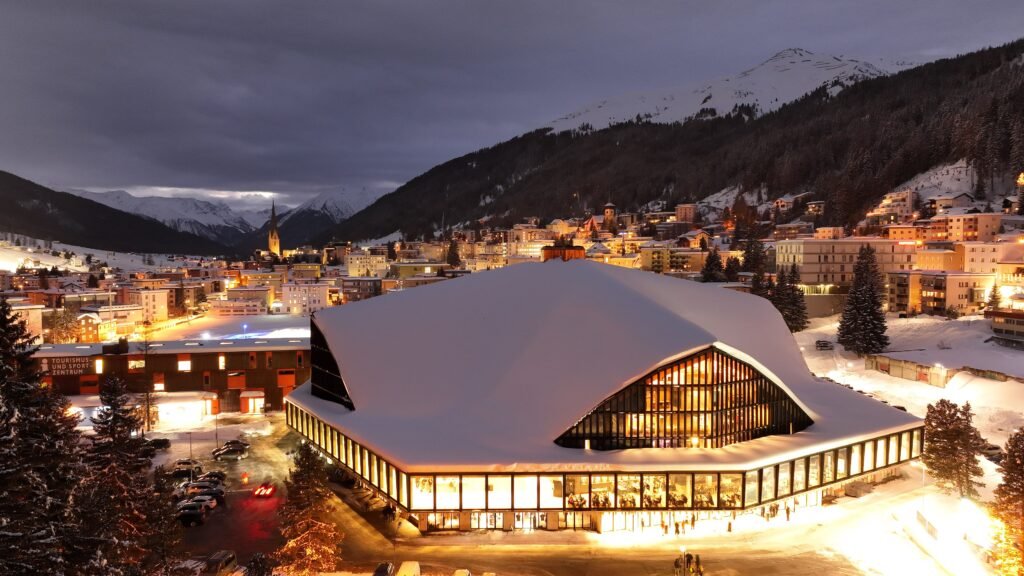
Ice hockey is a big deal here. HC Davos, founded in 1921, holds the record for Swiss championship titles: 31. The team plays in the covered arena in Davos Platz, a striking timber structure from 1979. Next to it is the historic natural ice rink of 1894, once famous for speed-skating world records.
Since 1923 the Spengler Cup, an international club tournament, has been played here between Christmas and New Year. The 2026 edition runs from 26 to 31 December, with two games a day and the final on the 31st. Davos is full that week, so book accommodation and tickets early.
Sertig and Dischma, the side valleys
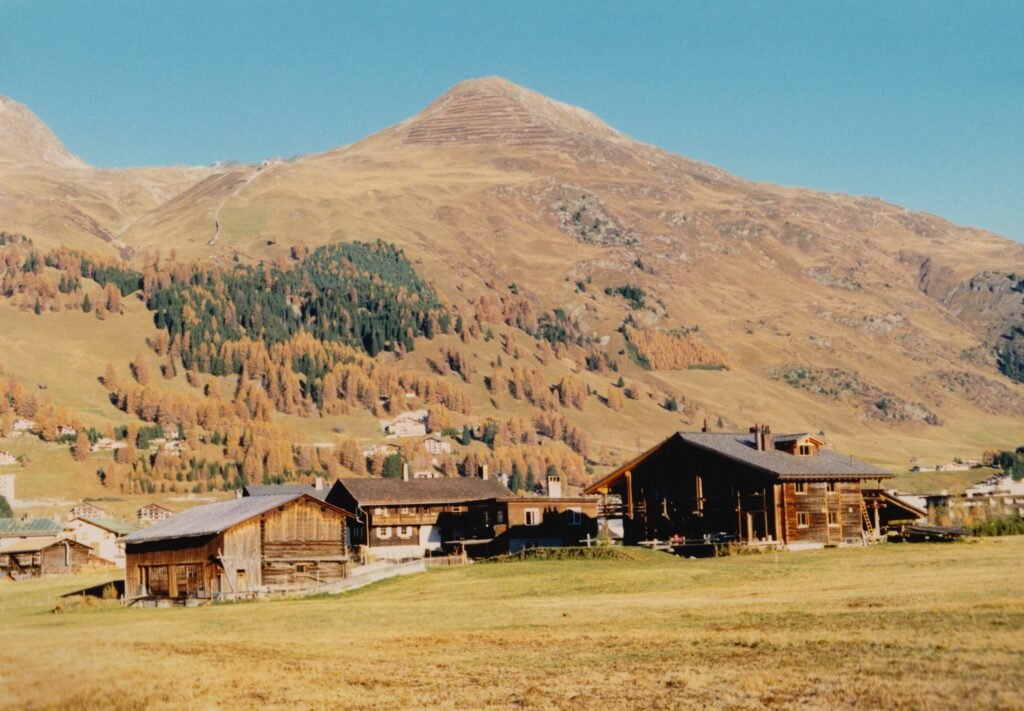
South of Davos, quiet side valleys open up with old farmhouses and hay meadows and almost no traffic. The easiest to reach is Sertig: a bus from Davos Platz station takes about 17 minutes to Sertig Dörfli (around 1,860 m), the start of the walk to the Ducan waterfall.
The parallel Dischma valley is even quieter: walking in summer, cross-country skiing and snowshoeing in winter.
The Wiesen Viaduct and the line to Filisur
Down the Landwasser valley are the smaller villages of Frauenkirch, Glaris, Monstein and Wiesen, linked by the Rhaetian Railway’s Davos–Filisur line: 19 km, open since 1909. Its highlight is the Wiesen Viaduct, 89 metres high and about 210 metres long, over the Landwasser gorge. The regional train takes 25 minutes to Filisur and runs every hour. At Filisur you join the Albula line, a UNESCO World Heritage site together with the Bernina line, and the Landwasser Viaduct.
The WEF in January
Every January the World Economic Forum brings heads of state and business leaders to Davos. The 2027 Annual Meeting runs from 18 to 22 January at the Congress Centre. For holidaymakers that means security checks, almost no free beds, and the Rinerhorn and Pischa ski areas closed. If you can, pick another week.
Skiing in Davos
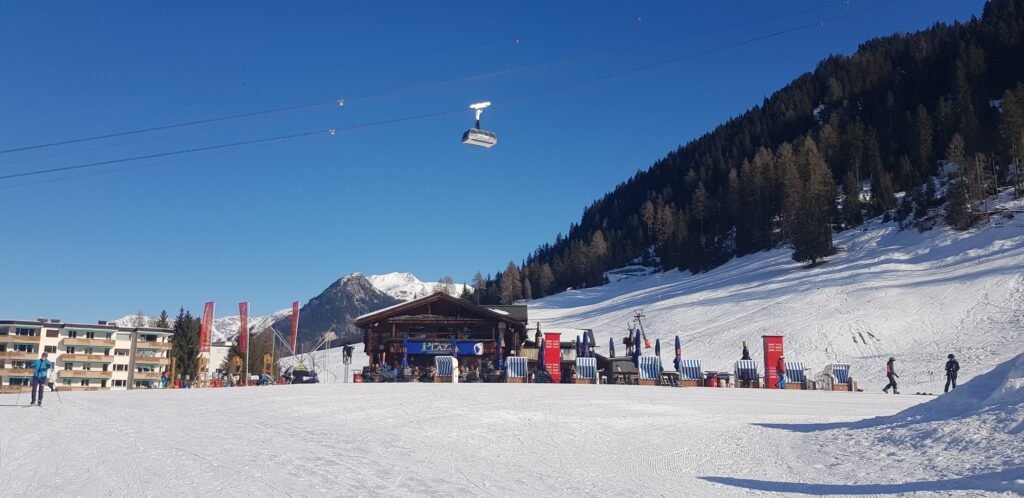
The ski region is called Davos Klosters Mountains and has five mountains: Parsenn, Jakobshorn, Rinerhorn, Pischa and Madrisa. The regional pass covers them all. They are not linked on skis, but buses and trains connect them. Schatzalp is a small separate area with its own ticket.
Parsenn
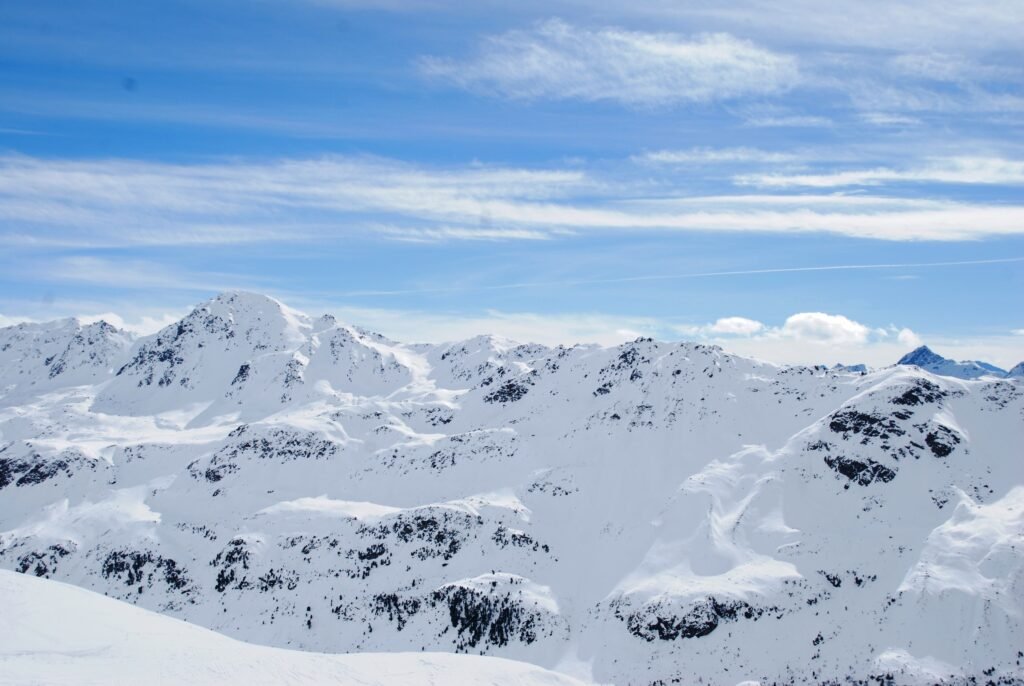
The largest and most traditional area, with about 97 km of pistes. You go up from Davos Dorf on the Parsenn funicular, or from Klosters on the Gotschna cable car. The top is the Weissfluhgipfel at 2,844 metres. Wide runs for all levels and long descents into the Prättigau: the best known runs about 12 km down to Küblis, from where you take the train back. The Swiss Institute for Snow and Avalanche Research (SLF) is based on the Weissfluhjoch.
Jakobshorn
Right above Davos Platz, with a cable car from the centre. About 55 km of pistes from blue to black, up to around 2,600 metres. It is the freestyle mountain, with the Jatzpark and marked freeride routes. At its foot, the Bolgen has easy slopes for beginners: the world’s first T-bar lift opened here in 1934.
Rinerhorn, Pischa and Madrisa
- Rinerhorn (Davos Glaris): about 39 km of mostly blue and red runs, five lifts. Family-friendly, with a 3.5 km toboggan run (24 bends) and night skiing on Wednesdays and Fridays from 7 pm to 10.30 pm.
- Pischa (Flüela valley, about 10 minutes’ drive from Davos Dorf): no groomed pistes, only freeride, winter walking and snowshoeing. Avalanche gear or a guide is essential.
- Madrisa (Klosters Dorf): about 31 km of pistes between 1,887 and 2,611 metres. The children’s mountain, with Madrisa-Land, magic carpets and four lifts reserved for kids. An 8.5 km toboggan run goes down to Saas.
Season dates 2026/27
- Parsenn (Davos side): weekend opening 13–15 November 2026, then daily from 20 November 2026 to 4 April 2027.
- Jakobshorn: weekend opening 27–29 November, then daily from 4 December 2026 to 11 April 2027.
- Rinerhorn and Madrisa: 18 December 2026 to 29 March 2027.
- Pischa: 26 December 2026 to 29 March 2027.
Rinerhorn and Pischa close during the WEF. Everything depends on snow: check the lift status on davosklostersmountains.ch.
Ski pass prices
Davos uses fixed prices with a low and a high season. Official 2026/27 high-season prices (18 December 2026 – 29 March 2027), adults / teens 13–17 / children 6–12:
- Regional pass, 1 day (all mountains): CHF 94 / 66 / 38.
- Regional pass, 6 days: CHF 390 / 273 / 156.
- Parsenn & Jakobshorn, 1 day: CHF 87 / 61 / 35.
- Rinerhorn, 1 day: CHF 69 (adult). Madrisa: CHF 73. Pischa (freeride): CHF 54.
In low season (20 November – 17 December 2026 and 30 March – 11 April 2027) a Parsenn & Jakobshorn day pass costs CHF 81. Children under 6 ski free with an adult, except on village and practice lifts. Seniors (women 64+, men 65+) get 10% off. If you also ski Arosa Lenzerheide and LAAX, look at the TopCard season pass (CHF 1,550 for adults).
Ski schools, cross-country and tobogganing
Davos and Klosters have several ski and snowboard schools, with children’s classes at the Bolgen and in Madrisa-Land. Cross-country: 79 km of classic and 57 km of skating trails around Davos and Wiesen, nearly 30 km in Klosters, more than 190 km in total. Thanks to snow farming, a trail along the Flüela road opens as early as November. A floodlit 2.8 km loop is open every evening from 6.30 to 9 pm.
Three classic toboggan runs: Schatzalp (almost 3 km, free), Rinerhorn (3.5 km) and Madrisa (8.5 km to Saas). Marked snowshoe trails on the Jakobshorn (2–3 hours to Rossboden), Pischa and Madrisa.
Summer in Davos
The lifts take you above 2,000 metres and the side valleys have easy paths, even with children. The guest card makes lifts cheaper: in summer 2026 a return trip on one mountain cost CHF 13 in low season and CHF 20 in high season.
- Sertig Dörfli – Ducan waterfall: easy 3.8 km loop, about an hour, 54 m of ascent. Pushchair-friendly almost to the falls.
- Lake Davos loop: about 5 km on the flat, just over an hour.
- Rinerhorn – Sertig: from the Rinerhorn top station to the Sertig valley, 7.3 km, about 2 hours. Or Rinerhorn – Monstein: 8.7 km, about 2.5 hours.
- Schatzalp – Strela Alp: short but steep, about 3.6 km and 358 m of ascent, also possible in winter.
- Davos Klosters High-Altitude Trail: from the Weissfluhjoch to the Höhenweg mid-station, 13.3 km above 2,200 m, 266 m up and 712 m down. Moderate with rocky sections; walkers need well over the 2 hours 25 given for trail runners.
Mountain bikers ride the Alps Epic Trail, a long singletrack from the Jakobshorn past the Rinerhorn and Monstein to Filisur, returning by train. For children, Madrisa in Klosters has a big mountain playground.
Day trips from Davos
- Klosters (12 km, 26–32 minutes by train): smaller and quieter, with the Gotschna cable car and Madrisa.
- Filisur and the Landwasser Viaduct (25 minutes by train): the Albula line (UNESCO), also used by the Glacier Express to Zermatt.
- St. Moritz (68 km, 1 hour 24 by train with a change at Filisur): the Upper Engadine lakes and the Bernina. See our St. Moritz guide.
- Zernez and the Lower Engadine (34 km over the Flüela Pass): gateway to the Swiss National Park; Scuol is about 48 km away.
- Livigno (about 62 km via Zernez and the Munt la Schera tunnel): Livigno in Italy, a duty-free area.
- Chur (59 km, about an hour by car): the capital of Graubünden, with its old town.
Where to stay in Davos
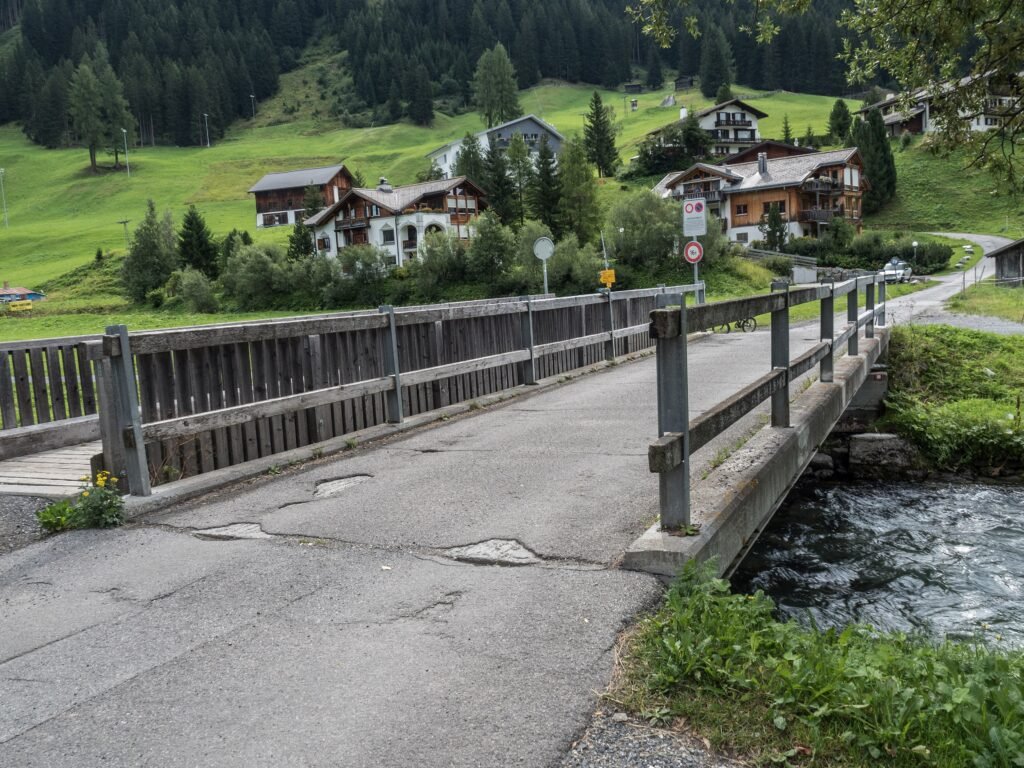
Davos is spread out, so choose the area that fits your plans.
- Davos Platz: shops, restaurants, nightlife, the Jakobshorn and Schatzalp on your doorstep. The widest choice, from large hotels to apartments.
- Davos Dorf: for Parsenn skiers and anyone who wants it quieter, near the lake and cross-country trails. Good for families.
- Klosters: smaller and more village-like, with access to Parsenn via the Gotschna and to Madrisa. Great for families.
- Glaris, Frauenkirch, Monstein: peaceful and often cheaper, handy for the Rinerhorn, on the railway line.
- Without a car: stay near Davos Platz or Davos Dorf station. With the guest card, local buses and trains are free.
For a week, an apartment is better value; for a weekend, a hotel near the lifts. During the WEF (18–22 January 2027) and the Spengler Cup (26–31 December 2026) beds go fast and prices rise sharply.
How to get to Davos
By car
From Zurich: motorway to Landquart, then through the Prättigau and Klosters to Davos, about 150 km in 2 hours. From Milan: about 240 km via Lugano, the San Bernardino tunnel and Thusis, around 3 and a half hours. From Munich: about 300 km, around 3 and a half hours.
Swiss motorways need a vignette. In winter you need winter tyres; the Flüela Pass can close after snowfall, so check road conditions before you set off.
By train
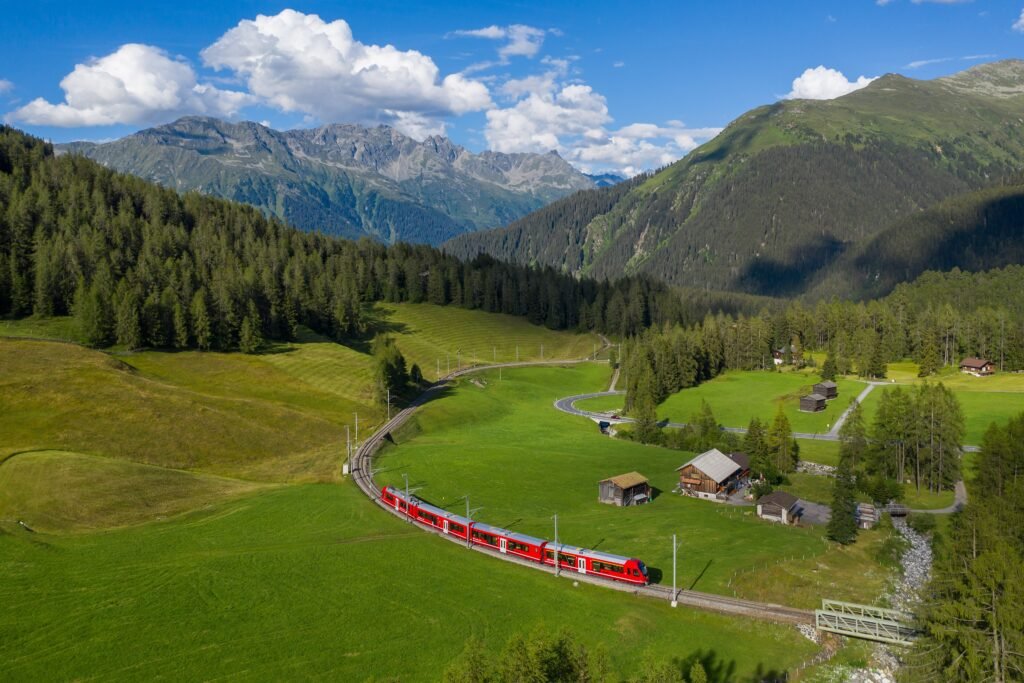
Davos has two Rhaetian Railway stations, Davos Dorf and Davos Platz. Zurich HB to Davos Platz takes 2 hours 20 to 2 hours 25 with one change at Landquart; Zurich Airport 2 hours 40 to 2 hours 50 with two changes. From Chur it is about 1 hour 30, changing at Landquart. From Italy you can take the Trenord train Milan – Tirano (about 2 hours 30) and continue on the Bernina line: Tirano to Davos takes 3 and a half to 4 and a half hours with one or two changes. Timetables at SBB and Rhaetian Railway.
By bus
Local buses link Davos Dorf, Davos Platz, the lift stations and the side valleys (Sertig, Dischma, Clavadel), free with the guest card. There is also a direct bus from Chur to Davos (about 1 hour 40).
By plane
Zurich is the nearest major airport: 2 hours 40 to 2 hours 50 by train or about 160 km by car (2 hours 10). Milan Malpensa is about 230 km by road, around 3 hours 20. Private transfers from Zurich are available if you prefer not to change trains.
Parking
Davos Platz and Davos Dorf have paid public car parks, and there is parking at the lift stations. During the WEF traffic is restricted, so arrive by train.
Frequently asked questions about Davos
Where is Davos?
In eastern Switzerland, in the canton of Graubünden, in the Landwasser valley between Chur and the Engadine. Klosters is 12 km away, St. Moritz about 68 km.
How high is Davos?
The town is at 1,560 metres; Davos Platz station at 1,540 metres. The municipality ranges from 1,051 to 3,145 metres.
What is the difference between Davos Platz and Davos Dorf?
They are the two centres of town, each with its own station. Platz, to the south, is livelier and serves the Jakobshorn; Dorf, to the north, is near the lake and the Parsenn.
How do I get from Zurich Airport to Davos?
By train in 2 hours 40 to 2 hours 50 with two changes (Zurich HB and Landquart), or about 160 km by car, around 2 hours 10.
How much is a ski pass in Davos?
In 2026/27 a one-day regional pass costs CHF 94 for adults in high season; Parsenn & Jakobshorn CHF 87 (CHF 81 in low season). Children under 6 ski free.
When does the 2026/27 ski season start?
Parsenn opens on the weekend of 13–15 November 2026 and daily from 20 November; Jakobshorn from 4 December. The season ends on 4 April (Parsenn) and 11 April 2027 (Jakobshorn).
When is the WEF in Davos?
In 2027, from 18 to 22 January. The town is fully booked and under tight security, so for a holiday choose another week.
When is the Spengler Cup?
Every year between Christmas and New Year: in 2026 from 26 to 31 December, at the Davos ice stadium.
What is there to do in Davos in summer?
The lake and its loop walk, Schatzalp and its alpine garden, the Kirchner Museum, the Sertig valley and Ducan waterfall, high trails on Parsenn and Rinerhorn, and the Alps Epic Trail for bikers.
Photos of Davos
Photos from Wikimedia Commons: MadGeographer (CC BY-SA 3.0), Armineaghayan (CC BY-SA 4.0), Snow-world.ch (CC BY-SA 4.0), Christian Boss 1965 (CC BY 4.0), Armineaghayan (CC BY-SA 4.0), Matthias v.d. Elbe (CC BY 3.0), Jag9889 (CC BY-SA 4.0), Kabelleger / David Gubler (CC BY-SA 4.0).


