


 Français
 Deutsch
 Italiano
Updated October 2026 · Sources: FOCBS (vignette), SBB, Rhaetian Railway, Glacier Express, Switzerland Tourism, Magic Pass, Engadin St. Moritz, Zermatt Bergbahnen, Gstaad Saanenland Tourismus
Find a place to stay in Svizzera
Switzerland has 48 peaks over 4,000 metres, 41 of them in the canton of Valais. The highest is the Dufourspitze, 4,634 m, in the Monte Rosa massif; the most famous is the Matterhorn, 4,478 m, on the Italian border. The Alps cover more than half the country, so there are mountain resorts for every season, from the car-free villages of Valais to the lakes of the Engadine.
Most visitors fly into Zurich or Geneva, and both airports have their own railway station. By train from Zurich main station you reach St. Moritz in 3 h 05 and Zermatt in 3 h 15, each with one change. From Geneva, Verbier is about 2 hours by car and Zermatt about 3 h 45 by train. From Milan, St. Moritz is about 169 km by road and Zermatt’s car park at Täsch about 230 km.
On this page: the mountains to see, the resorts and who they suit, the scenic trains, skiing, real costs in Swiss francs and how to get there, including the 2026 motorway vignette. Switzerland is expensive, so further down you will find official prices and practical ways to spend less.
What to see in Switzerland
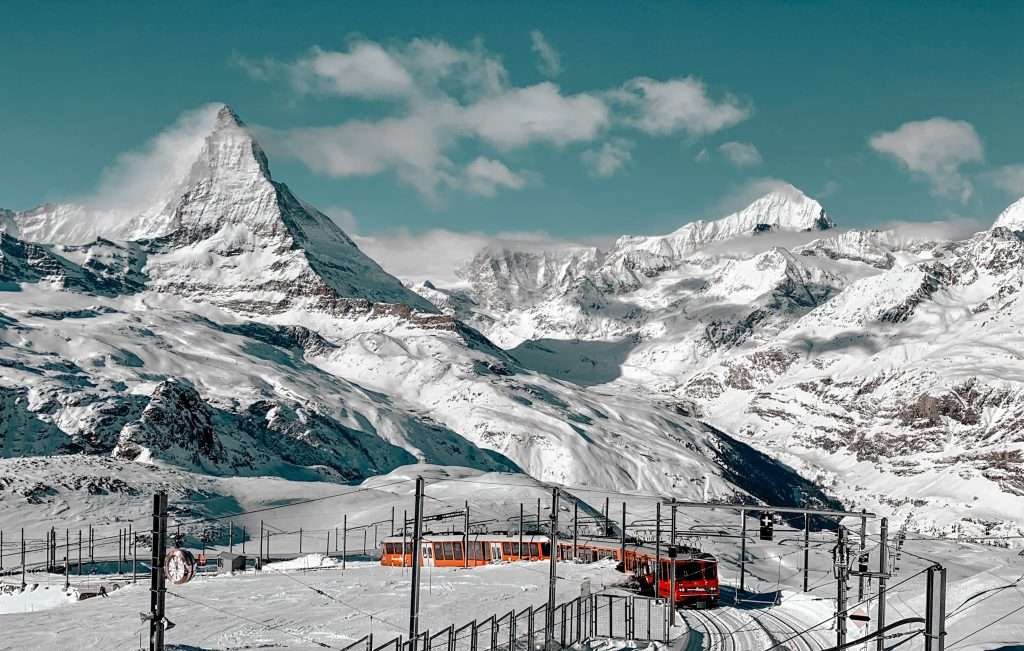
The mountains and high-altitude sights worth the trip. Almost all of them can be reached by train or cable car.
The Matterhorn from Zermatt
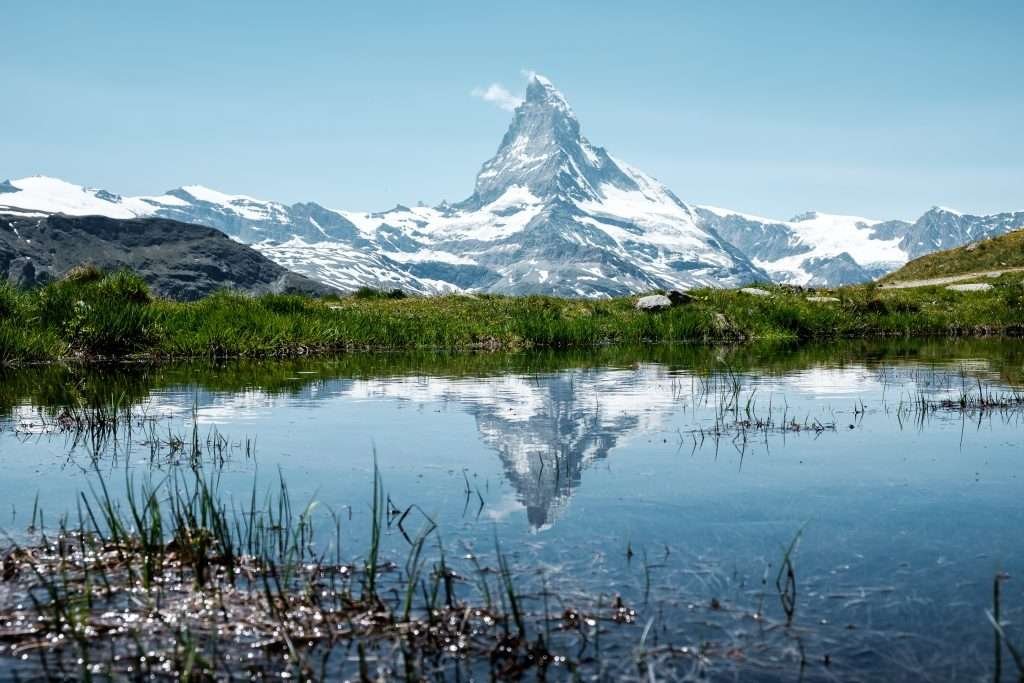
The Matterhorn, 4,478 m, sits on the border between Valais and Italy’s Aosta Valley. From Zermatt you see its almost free-standing pyramid. The best viewpoints are the Gornergrat (3,089 m), the Riffelsee, the Stellisee and the Schwarzsee. The Matterhorn is not part of the Monte Rosa massif: they are two separate mountains.
Monte Rosa and the Dufourspitze
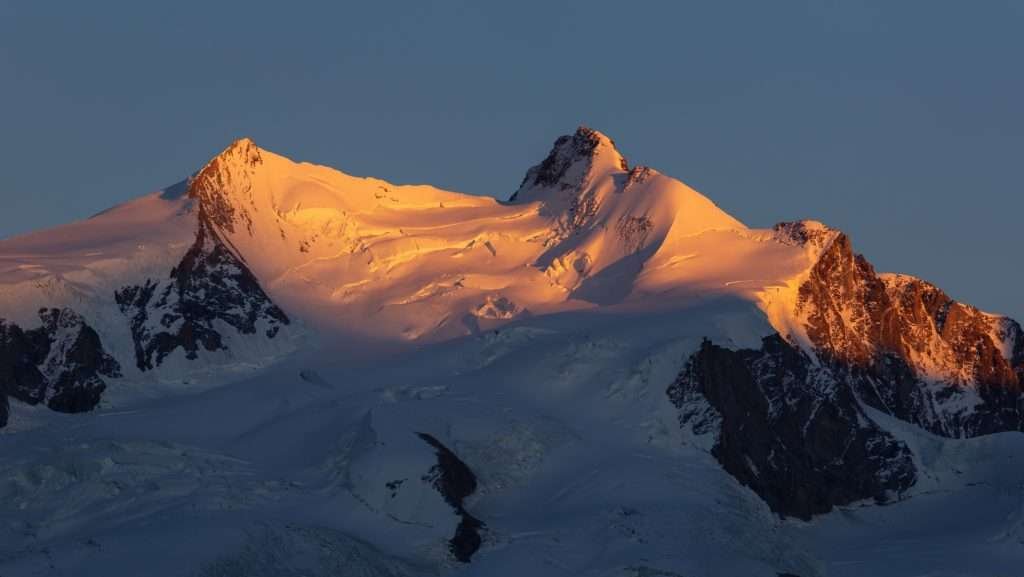
The Dufourspitze, 4,634 m, is the highest point in Switzerland, within the municipality of Zermatt near the Italian border. Monte Rosa is shared with Italy; on the Swiss side the best view is from the Gornergrat, with the Gorner glacier below you.
Matterhorn Glacier Paradise
On the Klein Matterhorn the panoramic station is at 3,883 m, the highest cable car station in Europe. It is open all year, with an ice palace inside the glacier. It is also where the Matterhorn Alpine Crossing starts: opened in 2023, it takes you by cable car over the border at 3,480 m to Breuil-Cervinia in Italy, in 1.5 to 2 hours.
Jungfraujoch, Eiger and Grindelwald
The Bernese Oberland is home to Switzerland’s best-known trio: Eiger, Mönch and Jungfrau. The train climbs to the Jungfraujoch, 3,454 m, the highest railway station in Europe. From Interlaken Ost it takes about 1 h 30; from Grindelwald Terminal, with the Eiger Express gondola and then the train, about 45 minutes. It is an expensive trip; the Swiss Travel Pass gives a discount.
The Aletsch Glacier
The longest glacier in the Alps, about 22 km long and up to about 900 m thick. The Jungfrau-Aletsch area was the first natural UNESCO World Heritage Site in the Alps. You see it from above at the Jungfraujoch, or from the viewpoints above the Rhône valley in Valais.
Glacier 3000 and the Peak Walk
Near Gstaad, cable cars climb from the Col du Pillon (1,546 m) to almost 3,000 m in 15 minutes. At the top, the Peak Walk is a suspension bridge 107 m long and 80 cm wide linking two summits. On clear days you can see the Matterhorn, Mont Blanc and the Eiger. Winter 2026/27 return ticket: CHF 95 per adult.
The Engadine and St. Moritz
The Upper Engadine, in Graubünden, is a high valley at about 1,800 m with a chain of lakes: Sils, Silvaplana, St. Moritz. In winter the lakes freeze; in summer there is sailing, kitesurfing and flat walking trails. Above the valley, the ski areas of Corviglia, Corvatsch and Diavolezza face the Bernina range.
The best mountain resorts in Switzerland
Swiss resorts are very different from each other: car-free villages, mountain towns, chalet villages. These are the main ones.
Zermatt (Valais)

At 1,608 m, below the Matterhorn, car-free since 1931. You leave the car at the Matterhorn Terminal in Täsch and take the shuttle train (12 minutes, CHF 17.20 return). The ski area, linked with Cervinia in Italy, has 360 km of slopes; the Zermatt-only pass covers up to 200 km. Day pass 2026/27 from CHF 89. Full details in our Zermatt guide.
Gstaad (Bernese Oberland)
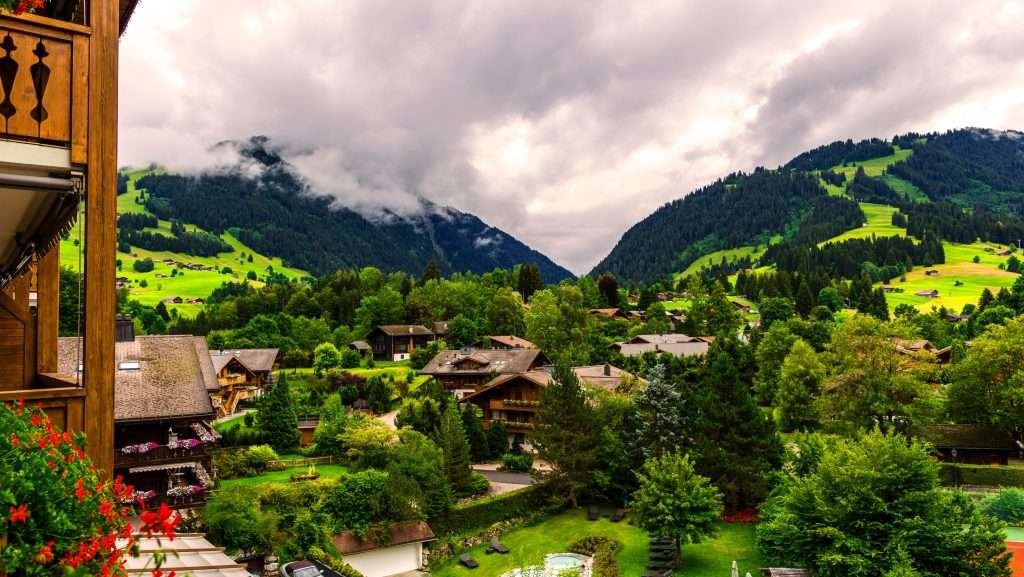
At 1,050 m, in the municipality of Saanen, canton of Bern. The resort of quiet luxury: a pedestrian centre, wooden chalets by building rule, grand hotels. It also has a practical side: overnight guests travel free on local public transport with the Gstaad Card, and the Magic Pass is valid here. 200 km of slopes including Glacier 3000. Read our Gstaad guide.
St. Moritz (Engadine)

At about 1,800 m (1,822 m) in Graubünden. It hosted the Winter Olympics in 1928 and 1948 and is known for events on its frozen lake, such as snow polo. The Engadine has up to 88 groomed runs and 58 lifts. From Zurich it is just over 3 hours by train via Chur. Read our St. Moritz guide.
Other famous resorts
- Verbier (Valais): hub of the 4 Vallées ski area, 410 km of slopes, top point 3,330 m. About 2 hours by car from Geneva.
- Davos (Graubünden): a mountain town rather than a village, with several ski areas around it; 2 h 20 by train from Zurich.
- Grindelwald (Bernese Oberland): below the Eiger north face, the base for the Jungfraujoch.
- Engelberg (Central Switzerland): below the Titlis, with a glacier and panoramic cable cars, about 1 h 15 by car from Zurich.
- Saas-Fee (Valais): car-free since 1951, at about 1,800 m, glacier up to about 3,600 m, included in the Magic Pass.
- LAAX (Graubünden): the freestyle resort, with five snow parks.
Scenic trains in Switzerland
For the three best-known routes you need a normal ticket (or the Swiss Travel Pass) and, for the Glacier and Bernina Express, a paid seat reservation.
Glacier Express
Zermatt to St. Moritz in about 8 hours, 291 km, over 291 bridges and through 91 tunnels. The highest point is the Oberalp Pass at 2,033 m. Seat reservation is compulsory. Bookings for trains from 5 December 2026 open on 13 October 2026 at 9:00; in peak season seats go fast. You can also ride just one section.
Bernina Express
The red train runs from Chur via St. Moritz and the Bernina Pass (over 2,200 m) to Tirano in Italy. About 4 hours from Chur, about 2 h 15 from St. Moritz. It crosses 196 bridges and runs through 55 tunnels, including the Landwasser Viaduct and the spiral viaduct at Brusio. The Albula and Bernina lines have been a UNESCO World Heritage Site since 2008.
Reservation is compulsory and everyone pays the full supplement, children included. To save money, regional trains with no supplement run on the same line between St. Moritz and Tirano in 2 h 10 to 2 h 35. From Tirano, the Bernina Express bus continues to Lugano.
GoldenPass Express
Montreux to Gstaad and Interlaken Ost with no change in 3 h 15. At Zweisimmen the bogies change gauge while the train stands still. Three classes: Prestige, first and second. It is the easiest way to link Lake Geneva, Gstaad and the Bernese Oberland; book ahead in peak season.
Skiing in Switzerland
Switzerland has some of the biggest and highest ski areas in the Alps: the Matterhorn Ski Paradise of Zermatt and Cervinia (360 km, up to 3,899 m), Verbier’s 4 Vallées (410 km), Gstaad with Glacier 3000 (200 km) and the Engadine around St. Moritz. In Zermatt and Saas-Fee you can ski on the glacier outside the main season.
Prices are high and increasingly dynamic, depending on date and how early you buy. Official examples for 2026/27: Zermatt day pass from CHF 89, with Cervinia from CHF 104; Gstaad 5 days CHF 420, with day passes back to fixed prices from 2026/27. In Zermatt children up to 8 ski free; in Gstaad up to 5.
Magic Pass
The Magic Pass is a season pass valid at over 100 mountain destinations in Switzerland, France and Italy, summer and winter. For 2026/27 it costs CHF 576 for adults and CHF 314 for children, price guaranteed until 3 November 2026 at 12:00, valid 1 May 2026 to 30 April 2027. Gstaad and Saas-Fee are included (Glacier 3000 and Metro Alpin in winter only), along with many mid-sized and small resorts. It pays off from about 7 to 8 ski days at included resorts.
Sleep + Ski in the Engadine
Stay at one of about 100 participating hotels and the ski pass costs CHF 55 per person per day, from 17 October 2026 to 2 May 2027. It must be booked for the whole stay (ski days equal nights) and includes public transport in the Upper Engadine.
Summer in the Swiss mountains
In summer Switzerland is made for walking: marked trails, open lifts, trains and buses to the trailheads.
- Zermatt: the 5 Lakes Walk from Blauherd to Sunnegga, 9.8 km in about 2 h 30, with the Matterhorn reflected in the Stellisee.
- Gstaad: Wispile to the Lauenensee, 9.3 km in about 3 hours, mostly downhill.
- Engadine: the lakes of Sils and Silvaplana, flat trails and water sports.
- Rigi, Stanserhorn and Stoos: Central Switzerland mountains included free with the Swiss Travel Pass.
- Glaciers: Glacier 3000, Matterhorn Glacier Paradise and the Jungfraujoch, for snow even in August.
How much does a mountain holiday in Switzerland cost?
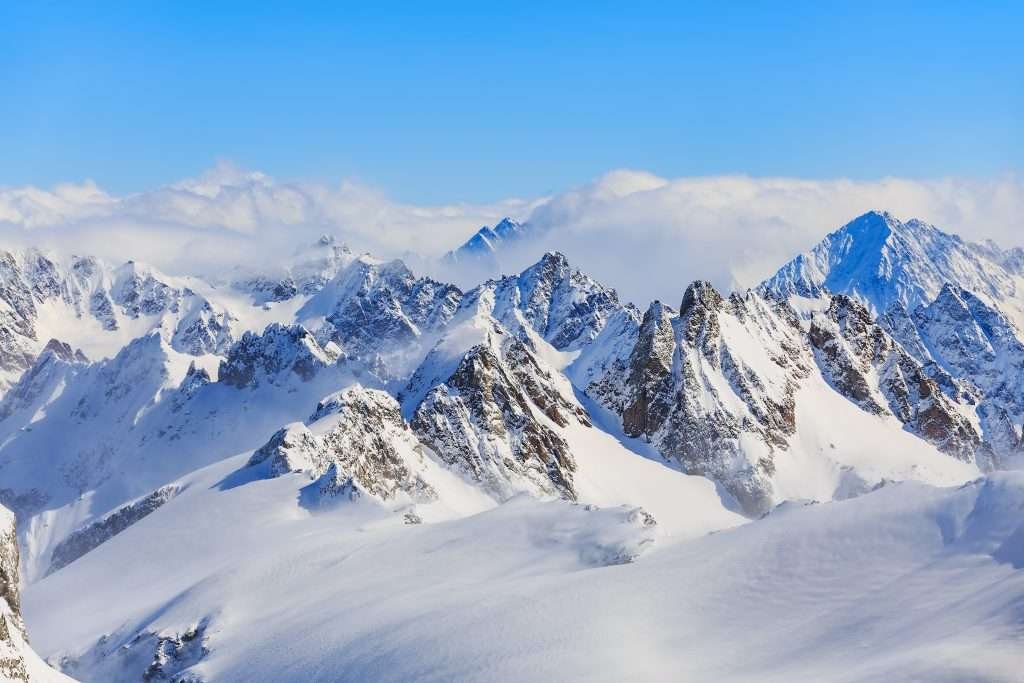
You pay in Swiss francs (CHF). Lifts, trains, food and accommodation all cost more than in most of Europe. Some official 2026/27 prices:
- Motorway vignette: CHF 40 per year.
- Zermatt: Täsch car park about CHF 16–17 per day, shuttle train CHF 17.20 return.
- Gornergrat return from Zermatt: CHF 102 in winter, CHF 132 in summer.
- Zermatt day ski pass: from CHF 89.
- Swiss Travel Pass 3 days, 2nd class: CHF 254.
How to save money
- Swiss Travel Pass: unlimited trains, buses and boats for 3, 4, 6, 8 or 15 consecutive days (CHF 254 to 499 in 2nd class, prices valid until 31 December 2026). It includes over 500 museums, free trips up the Rigi, Stanserhorn and Stoos, and up to 50% off many mountain railways. Only for people living outside Switzerland and Liechtenstein.
- Swiss Family Card: free; children aged 6 to 15 travel free with a parent holding a ticket, and under-6s travel free anyway.
- Guest cards: in many regions overnight guests get free local transport, as with the Gstaad Card or Sleep + Ski in the Upper Engadine.
- Stay next door: Täsch instead of Zermatt, Saanen or Zweisimmen instead of Gstaad, Pontresina or Samedan instead of St. Moritz.
- Buy ski passes early: with dynamic pricing, the earlier you buy, the less you pay.
- Regional trains instead of scenic trains with supplements.
Where to stay in Switzerland
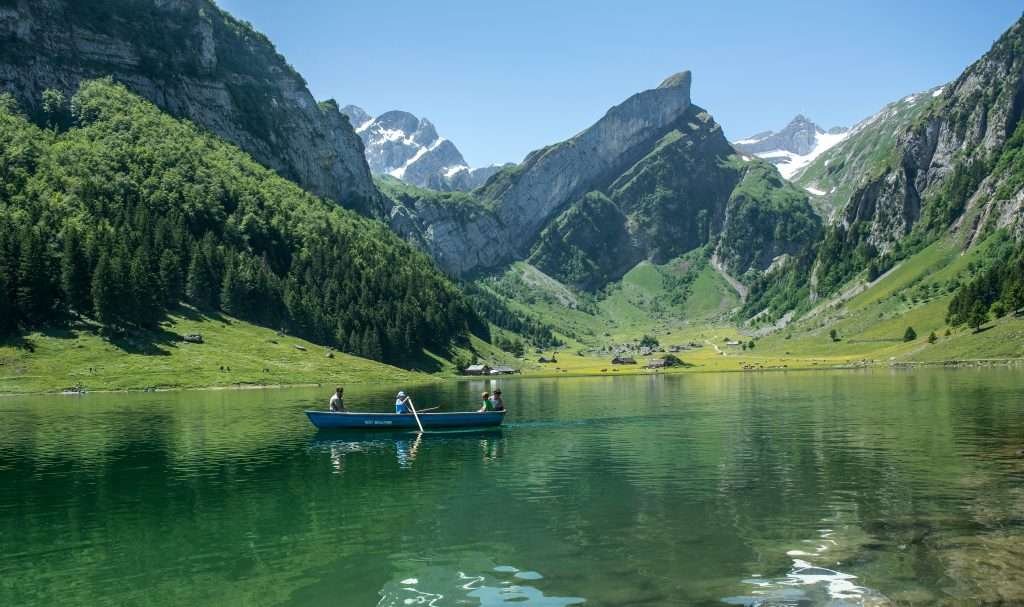
Choosing the right resort matters more than choosing the hotel. Here is which one suits you.
- Luxury: Gstaad and St. Moritz are the classic grand-hotel resorts; Zermatt combines luxury with high mountains.
- Families: car-free villages such as Zermatt and Saas-Fee; Gstaad for free public transport and free lifts for under-6s; the Engadine for lakes and flat trails.
- Budget: Magic Pass resorts, valley villages such as Täsch, Saanen, Zweisimmen or Samedan, apartments instead of hotels.
- No car: Zermatt, Saas-Fee and resorts on the main rail lines (Gstaad, St. Moritz, Grindelwald, Davos, Engelberg). You can do the whole holiday by train and bus.
In peak season (Christmas, February, August) book well ahead.
How to get to Switzerland
By plane
The main airports are Zurich and Geneva, both with a railway station in the terminal; Basel is handy for the north. From Zurich airport you reach Graubünden and Central Switzerland by train; from Geneva, the Vaud and Valais Alps. Milan Malpensa is an option for Valais and Ticino: about 3 hours by car to Täsch. Sion, Lugano, Bern and Samedan are small airports with few flights.
By train
- Zurich – St. Moritz: 3 h 05, one change in Chur.
- Zurich – Zermatt: 3 h 15, one change in Visp.
- Zurich – Davos: 2 h 20, one change.
- Geneva – Zermatt: 3 h 45, one change in Visp; Geneva – Verbier about 2 h 30.
- From Italy: 26 EuroCity trains a day Milan – Zurich (3 h 15 to 3 h 45); Milan – Tirano with Trenord in about 2 h 30, then the Bernina Express.
- From France: TGV Lyria Paris – Geneva about 3 h 20, Paris – Zurich about 4 hours.
Always check the SBB timetable for your travel date.
By car and the 2026 motorway vignette
Swiss motorways require a vignette: CHF 40, as a sticker or e-vignette. The 2026 vignette is valid from 1 December 2025 to 31 January 2027; the 2027 one from 1 December 2026. Driving without one means a CHF 200 fine plus buying the vignette on the spot.
Buy the e-vignette only from the official e-vignette.ch shop of the Federal Office for Customs and Border Security; it is linked to your number plate. Beware of resellers charging more. Stickers are sold at customs, post offices and petrol stations. Some tunnels and car-carrying trains (Lötschberg, Furka, Vereina) cost extra.
Frequently asked questions about the Swiss mountains
The Dufourspitze in the Monte Rosa massif, 4,634 m, in the municipality of Zermatt. The Matterhorn, 4,478 m, is lower but far more famous.
48, of which 41 are in the Valais Alps.
No. The summit is on the border between France and Italy. Only the end of the massif reaches into Switzerland, above the Val Ferret in Valais. The Matterhorn and Monte Rosa, on the other hand, are shared by Switzerland and Italy.
For size and altitude: Zermatt (360 km with Cervinia), Verbier (410 km in the 4 Vallées), the Engadine around St. Moritz and Gstaad with Glacier 3000. For freestyle, LAAX; for car-free villages, Zermatt and Saas-Fee.
CHF 40. The 2026 vignette is valid from 1 December 2025 to 31 January 2027. Buy the e-vignette only at e-vignette.ch. The fine without one is CHF 200.
Only to Täsch, 5 km before. Park in the covered car park and take the shuttle train: 12 minutes, every 20 minutes.
The Glacier Express takes about 8 hours from Zermatt to St. Moritz. The Bernina Express takes about 4 hours from Chur, or 2 h 15 from St. Moritz, to Tirano. Both require a seat reservation.
Yes if you move around a lot by train, between several resorts or on scenic trains: from CHF 254 for 3 days in 2nd class, with museums, some mountains included and up to 50% off many mountain railways. For a ski week in a single resort it is rarely worth it.
Photos of Svizzera